CM Himanta hails Modi's 12 years of youth empowerment
Synopsis
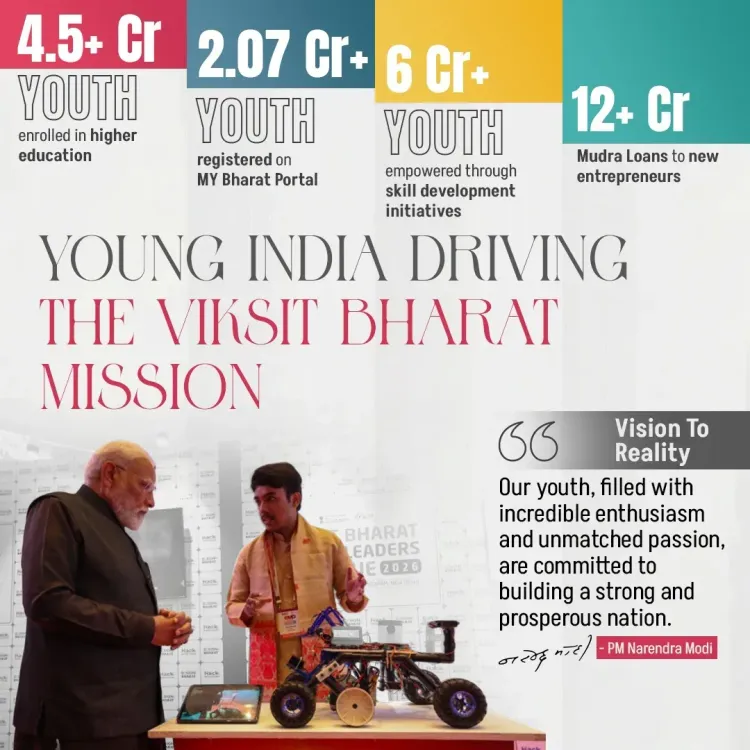
Assam Chief Minister Himanta Biswa Sarma marked twelve years of PM Modi's government by crediting it with transforming India's youth from future-ready aspirants into active builders of the nation, invoking the Viksit Bharat vision and the Amrit Peedhi generation.
Key Takeaways
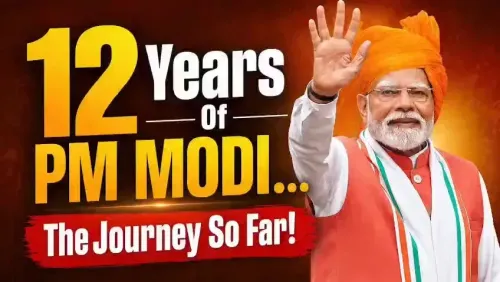
CM Himanta Biswa Sarma posted on 13 June 2026 under #12YearsOfYuvaShakti to mark twelve years of PM Modi 's government.
He credited Modi 's leadership for empowering the Amrit Peedhi across education, skilling, entrepreneurship, and innovation.
The post connects to flagship schemes including Skill India (2015), Startup India (2016), and the National Education Policy (2020).
The overarching Viksit Bharat framework targets developed-nation status for India by 2047 .
CM Sarma , as NEDA convenor, has consistently aligned North-East state programmes with this central youth-development architecture.
Progress metrics for Skill India and Startup India are expected to be reviewed in the upcoming budget cycle and NITI Aayog assessments.
Assam Chief Minister Himanta Biswa Sarma on Saturday, 13 June 2026, lauded Prime Minister Narendra Modi's twelve-year record on youth development, saying India's young generation is no longer merely preparing for the future but is actively building it.
Context
Posting under the hashtag #12YearsOfYuvaShakti, CM Sarma framed the occasion as a milestone in the BJP-led central government's engagement with India's youth. He credited Modi's leadership for channelling the energy of what the government calls the Amrit Peedhi — the generation of Indians who will witness the country's centenary of independence in 2047 — across four pillars: education, skilling, entrepreneurship, and innovation.
The post is part of a coordinated celebration marking twelve years since Narendra Modi assumed office as Prime Minister in May 2014, with party leaders and allied chief ministers amplifying a common narrative of youth as active agents of national transformation rather than passive beneficiaries of welfare.
Policy Backdrop
The claims rest on a layered architecture of central schemes. The Skill India Mission, launched in July 2015, set out to provide vocational training and industry-linked certification to hundreds of millions of young Indians. The Startup India programme, announced in January 2016, extended tax benefits and early-stage funding support to young entrepreneurs, seeding a startup ecosystem that has grown substantially over the decade.
The National Education Policy (NEP), approved in July 2020, added a structural dimension by mandating multidisciplinary curricula, vocational integration from the school level, and a greater emphasis on critical thinking and innovation. Together, these programmes operate under the twin umbrellas of Atmanirbhar Bharat and the Viksit Bharat vision — the government's 25-year roadmap first articulated during the 2022 Independence Day address, targeting developed-nation status by 2047.
CM Sarma, as convenor of the North-East Democratic Alliance (NEDA), has consistently aligned Assam's state-level youth and skilling initiatives with this central framework, making his endorsement both politically and programmatically significant for the region.
Stakeholders and Impact
India's demographic dividend — a working-age population projected to remain the world's largest through the 2040s — sits at the centre of the Viksit Bharat calculus. If the linked skilling, education, and startup programmes achieve their stated targets, economists argue the multiplier effect on GDP growth could be substantial. Young entrepreneurs and first-generation workers in Tier-2 and Tier-3 cities are among the most direct beneficiaries.
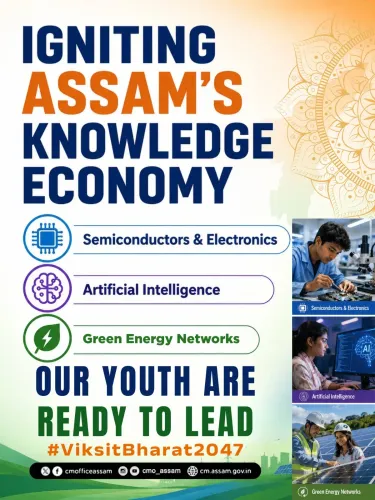
For Assam and the broader North-East, where youth unemployment has historically exceeded the national average, the narrative of active participation over passive welfare carries particular resonance. State-level schemes in Assam have been progressively dovetailed with central missions to expand access to skilling centres and startup incubators in the region.
What's Next
Progress benchmarks for Skill India and Startup India are expected to be updated during the forthcoming annual budget cycle and in periodic NITI Aayog reviews. The Viksit Bharat roadmap will face its next major policy stress-test during these assessments, with youth employment and entrepreneurship metrics likely to feature prominently. CM Sarma's public endorsement signals that allied state governments will continue to amplify the central government's youth-centric messaging as the 2047 target horizon draws incrementally closer.
Point of View
Designed to consolidate the BJP's ownership of the youth-empowerment narrative ahead of electoral cycles. By invoking the Amrit Peedhi framing, he links Assam's regional identity to a pan-India aspiration, reinforcing NEDA solidarity and his own stature as a trusted amplifier of central government priorities. The shift in language — from youth as beneficiaries to youth as builders — reflects a broader strategic move to reframe welfare-state optics into an agency-and-aspiration narrative. Whether the underlying schemes deliver on their metrics will ultimately determine how durable this messaging proves with the electorate.
NationPress
27 Oct 2026
Frequently Asked Questions
What is the Amrit Peedhi referred to by CM Himanta?
Amrit Peedhi, meaning 'nectar generation,' is the term the Indian government uses for the cohort of young Indians who will be active citizens when India celebrates 100 years of independence in 2047. The government frames this generation as the primary driver of the Viksit Bharat vision.
What is Viksit Bharat and when was it announced?
Viksit Bharat is the Indian government's overarching goal to achieve developed-nation status by 2047. PM Modi first articulated this 25-year roadmap in his Independence Day address in 2022, and it has since become a central organising theme across multiple ministries and state governments.
What schemes make up India's youth empowerment framework under Modi?
The key schemes include Skill India (launched July 2015 for vocational training), Startup India (announced January 2016 for entrepreneurship support), and the National Education Policy (approved July 2020 for education reform). These operate under the broader Atmanirbhar Bharat and Viksit Bharat frameworks.
Why did CM Himanta Biswa Sarma post about Modi's youth policy?
CM Sarma posted under the hashtag #12YearsOfYuvaShakti to mark twelve years since PM Modi assumed office in May 2014. As a senior BJP ally and NEDA convenor, he regularly amplifies central government milestones, particularly those tied to development and youth themes.
What is the significance of 12 years of Modi government for Assam's youth?
For Assam and the North-East, where youth unemployment has historically been above the national average, the central skilling and startup schemes have been significant. State-level programmes in Assam have been progressively aligned with Skill India and Startup India to expand access to vocational training and entrepreneurship support in the region.