CM Himanta Takes Government to Assam's Doorstep

Synopsis
Assam Chief Minister Himanta Biswa Sarma declared on November 21, 2026 that citizens need not travel to Dispur — his administration comes to them through regular district tours, a practice he vowed to sustain indefinitely.
Key Takeaways
Himanta Biswa Sarma reaffirmed on 21 November 2026 that he conducts regular district tours to hear citizens' concerns firsthand.
He stated explicitly that citizens need not travel to Dispur , Assam's capital, to access their government.
Sarma has maintained this district-outreach practice since taking office as Assam CM in May 2021 .
The approach aims to decentralise grievance redressal in a state with remote tea-garden, riverine, and border communities.
Indian chief ministers across parties have long used district tours to project accessibility, but Sarma frames the practice as a permanent structural commitment.
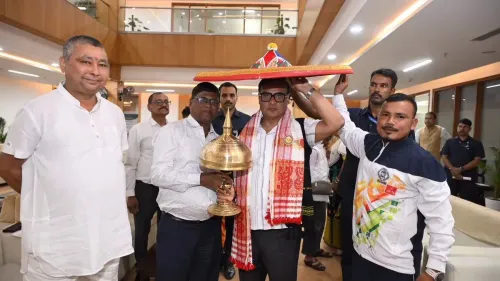
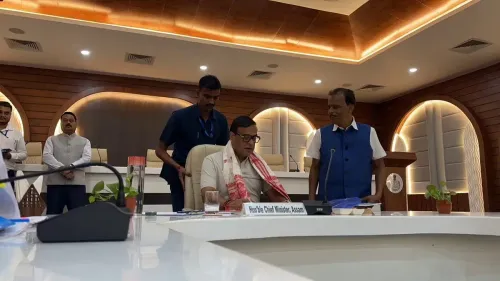
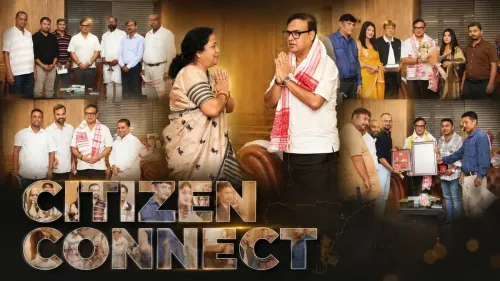
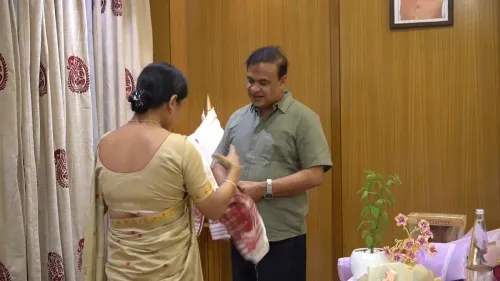
Assam Chief Minister Himanta Biswa Sarma has a simple message for citizens who feel government is out of reach: the government will reach them first. In a post on Saturday, November 21, 2026, Sarma reaffirmed his commitment to regular district tours as a cornerstone of his governance approach — framing the practice not as a photo opportunity, but as a structural alternative to the state capital's gravitational pull.
When Dispur comes to the village
Dispur, Assam's capital and the seat of its sprawling state secretariat, has historically been the destination citizens and local officials travel to in order to get anything done. Sarma is explicitly inverting that logic. 'You needn't travel to Dispur. Your government comes to you,' he wrote — a pointed declaration that positions his district visits as a deliberate policy stance, not a campaign ritual.
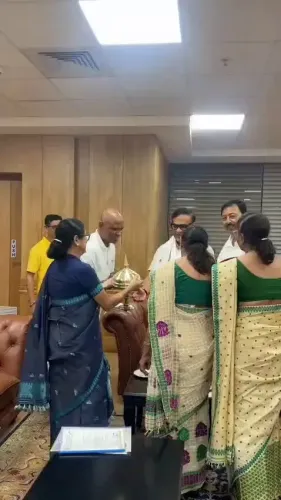
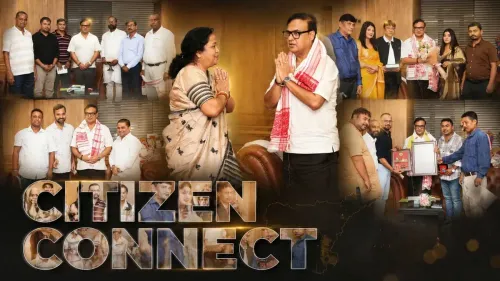
Since taking office in May 2021, Sarma has made district-level outreach a defining habit of his administration. The idea is straightforward: meet residents where they live, hear grievances firsthand, and compress the distance — physical and institutional — between citizen and administration.
A pattern bigger than one CM
The approach is hardly new to Indian politics. Chief ministers across parties and states have long used district tours to project accessibility and demonstrate that governance extends beyond capital-city corridors. What gives Sarma's iteration some weight is persistence — he frames it not as a seasonal exercise but as something that 'will always continue.'
In Assam, a state that spans remote tea-garden communities, riverine islands, and forested border districts, the gap between secretariat and street can be vast. Direct outreach, when sustained, can surface complaints that never make it through formal channels — land disputes, stalled welfare transfers, local infrastructure failures. The question, as always with such initiatives, is what administrative action follows the listening.
What accountability looks like on the road
The real test of district visits is the paper trail they leave behind: specific grievances raised, schemes announced, follow-up orders issued. Sarma's post is a statement of intent and practice — it sets a standard his administration will now be measured against. Every promised visit that does not happen, every concern raised without a resolution, sharpens the contrast.
For now, the signal from Guwahati is clear: in Sarma's Assam, the burden of travel belongs to the government, not the governed.
Point of View
High-visibility signal that an administration is accessible rather than entrenched. For a BJP government navigating a diverse, geographically sprawling state ahead of future assembly cycles, sustained outreach helps anchor the party's connect beyond urban Guwahati. The real analytical question is whether the visits generate measurable administrative outcomes — orders issued, schemes activated, officials held accountable — or remain primarily performative. If the former, it represents a genuine decentralisation of executive attention; if the latter, it is a durable but hollow brand proposition.
NationPress
21 Nov 2026
Frequently Asked Questions
What did Himanta Biswa Sarma say about district tours in November 2026?
On November 21, 2026, Sarma posted that citizens need not travel to Dispur because his government comes to them — he meets people directly in every district he visits and pledged this practice would always continue.
What is Dispur and why does it matter in Assam governance?
Dispur is the capital of Assam and houses the state secretariat, making it the administrative hub where government decisions are made. Sarma's district tours are designed to reduce citizens' dependence on travelling to Dispur to access government services or raise grievances.
When did Himanta Biswa Sarma become Assam Chief Minister?
Himanta Biswa Sarma became Chief Minister of Assam in May 2021, leading a BJP-led coalition government in the state.
Why do Indian chief ministers conduct district tours?
District tours allow chief ministers to hear local grievances firsthand, project accessibility, and demonstrate that governance reaches beyond the state capital. The practice reflects broader efforts to decentralise grievance redressal across India.
What is the North-East Democratic Alliance that Sarma convenes?
The North-East Democratic Alliance (NEDA) is a BJP-led political coalition of parties in India's northeastern states. Himanta Biswa Sarma serves as its convenor alongside his role as Assam Chief Minister.