Tharoor: Delimitation a bigger disaster than Demonetisation
Synopsis
Congress MP Dr. Shashi Tharoor has called delimitation a potential disaster worse than 2016 Demonetisation, warning that redrawing Lok Sabha seats after the post-2026 census without broad national consensus could permanently skew India's federal balance against southern states that achieved lower population growth.
Key Takeaways
Shashi Tharoor posted on 21 November 2026 calling delimitation 'a bigger disaster than Demonetisation' with longer-lasting effects.
Tharoor urged deferral of delimitation until the government holds a 'grand national conversation' on all issues involved.
The 84th Constitutional Amendment (2001) froze Lok Sabha seat allocation at 1971 census levels until after the first post-2026 census, which is now due.
A population-proportional redraw risks reducing parliamentary representation for southern states that achieved lower fertility rates over five decades.
Demonetisation — the 8 November 2016 invalidation of Rs 500 and Rs 1,000 notes — is invoked by Tharoor as a cautionary example of a disruption whose costs outlasted its stated purpose.
Tharoor has previously raised delimitation concerns in the Lok Sabha in April , calling for broad dialogue before any formal process begins.
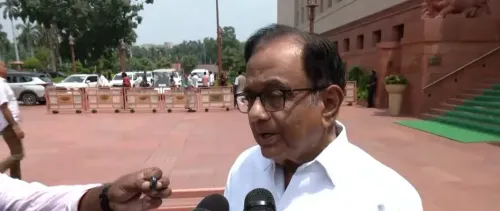
A constitutional redrawing of India's electoral map, warns Congress MP Dr. Shashi Tharoor, could inflict damage far more lasting than the economic shock of Demonetisation — and the country is nowhere near ready for it. Posting on X on Saturday, 21 November 2026, Tharoor backed calls to defer delimitation entirely until the government commits to a genuine, wide-ranging national conversation on the subject.
Tharoor was unambiguous: 'Some solutions are worse than the problems they seek to address.' He argued that delimitation — the constitutional process of redrawing Lok Sabha and state assembly constituency boundaries to reflect fresh census data — would be 'a bigger disaster than Demonetisation was, and its effects would last longer.' He also recalled raising the issue on the floor of the Lok Sabha in April, where he called for a broad national dialogue before any formal process begins.
Why the freeze on seats is about to thaw
The anxiety is rooted in a decades-old constitutional bargain. The 84th Constitutional Amendment of 2001 froze the allocation of Lok Sabha seats at their 1971 census levels until the first census conducted after 2026 — a deliberate incentive for states to control population growth. That freeze is now expiring. With a fresh census due, the question of redrawing constituencies based on current population data is no longer theoretical; it is imminent.
The stakes are acutely federal. Southern states — including Tharoor's home state of Kerala and others such as Tamil Nadu, Andhra Pradesh, Telangana, and Karnataka — achieved significantly lower fertility rates over the past five decades. A straight population-proportional redraw would reward higher-population northern states with more seats while effectively reducing the parliamentary weight of the south. Critics argue this would punish states for succeeding at the very demographic goals the Constitution once incentivised.
The Demonetisation parallel — and what Tharoor means by it
Tharoor's choice of comparison is pointed. Demonetisation — the 8 November 2016 decision to invalidate Rs 500 and Rs 1,000 currency notes — is widely regarded by its critics as a policy whose short-term disruption caused lasting economic harm to informal sectors and small businesses, far outweighing its stated aim of curbing black money. By invoking it here, Tharoor is drawing a direct line: a structurally flawed 'solution' imposed without adequate deliberation, the consequences of which the country spent years unwinding. His implication is that delimitation, done hastily or without political consensus, could embed an asymmetry in Indian democracy that lasts not months but generations.
The case for a grand national conversation — and deferral
Tharoor's prescription is deferral — not permanent avoidance — until the government is 'prepared to have such a conversation.' The demand echoes a broader chorus from opposition parties and southern state governments who have argued that any delimitation exercise must be preceded by cross-party consultations, constitutional amendments to protect proportional representation for high-performing states, or alternative formulas that decouple seat allocation from raw population counts.
The tension is as old as the republic itself. India navigated a similar debate in the 1970s, when seats were frozen precisely to prevent demographic divergence from creating permanent political winners and losers. The current moment asks whether a country with one of the world's most complex federal structures can find a formula that is both arithmetically fair and politically sustainable. Tharoor's answer, for now, is that it cannot — not without talking it through first.
The real test arrives the moment the government publishes census results and signals whether it intends to move a delimitation bill. When that clock starts, the conversation Tharoor is calling for will either have happened — or the country will find out what happens when it hasn't.
Point of View
Designed to shift the debate from a technical constitutional exercise to a civilisational question about whether demographic success should be politically penalised. The Demonetisation analogy is strategically loaded — it invokes a policy the opposition has long used as evidence of governance-by-shock — and signals that Congress intends to make the north-south seat asymmetry a defining electoral fault line heading into the census cycle. The demand for a 'grand national conversation' before any bill is introduced serves a dual purpose: it creates a procedural bar the government must clear, and it gives southern state parties — several of them Congress rivals — a common platform. The broader arc is clear: delimitation is becoming the next terrain on which the opposition will contest the federal compact itself.
NationPress
21 Nov 2026
Frequently Asked Questions
What is delimitation and why is it controversial in India?
Delimitation is the constitutional process of redrawing Lok Sabha and state assembly constituency boundaries based on updated census data. It is controversial because a population-proportional redraw after the post-2026 census could significantly increase seats for high-population northern states while reducing the effective parliamentary weight of southern states that achieved lower fertility rates over decades.
Why does Tharoor compare delimitation to Demonetisation?
Tharoor uses Demonetisation — the November 2016 invalidation of Rs 500 and Rs 1,000 notes — as a reference point for a policy whose disruption far outlasted its stated benefits. He argues delimitation, if done without adequate national consensus, would cause structural damage to India's federal balance that lasts not months but generations.
What was the 84th Constitutional Amendment and why does it matter now?
The 84th Constitutional Amendment of 2001 froze the allocation of Lok Sabha seats at 1971 census levels until after the first census conducted post-2026, as an incentive for states to control population growth. That freeze is now expiring, making a fresh delimitation exercise imminent.
Which states are most at risk from delimitation?
Southern states including Kerala, Tamil Nadu, Andhra Pradesh, Telangana, and Karnataka are most at risk. These states achieved significantly lower fertility rates and would likely see their proportional share of Lok Sabha seats fall under a population-based redraw, while higher-population northern states gain more seats.
What is Tharoor asking the government to do on delimitation?
Tharoor is asking the government to defer any formal delimitation process until it is prepared to hold a broad, inclusive national conversation covering all the constitutional, demographic, and federal issues involved. He has previously raised this demand on the floor of the Lok Sabha.