CM Himanta Urges Assam to Prepare Early as Disaster Risk Looms

Synopsis
Assam Chief Minister Himanta Biswa Sarma on 23 July 2026 called on citizens to prepare in advance for potential disasters, responding to an MLA's appeal. He emphasised that early warning is the most effective tool for reducing the impact of calamities amid the active monsoon season.
Key Takeaways
CM Himanta Biswa Sarma issued a public preparedness appeal on 23 July 2026 in response to a concern raised by an unnamed MLA.
He stated that 'early warning plays a helpful role in mitigating the impact of disasters.' Assam faces annual flooding from the Brahmaputra and its tributaries during the June-September monsoon season.
The state's disaster management framework is anchored in the Disaster Management Act, 2005 and coordinated through the ASDMA and NDMA .
Follow-up government orders on evacuation and NDRF/SDRF deployment are expected as monsoon intensity updates emerge from the IMD .
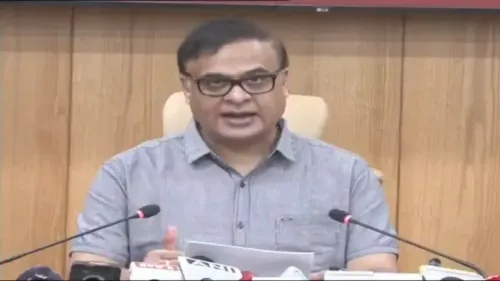
Assam Chief Minister Himanta Biswa Sarma on Thursday, 23 July 2026, issued a public appeal urging citizens across the state to prepare in advance for potential disasters, responding to a concern raised by an MLA. The Chief Minister underscored that early warning and advance preparedness are the most effective tools for reducing the impact of calamities.
Writing in Assamese, CM Sarma stated: 'Early warning plays a helpful role in mitigating the impact of disasters. The appeal made by the honourable MLA is important. Recognising the threat of disaster, I call upon everyone to be prepared in advance.'
Context
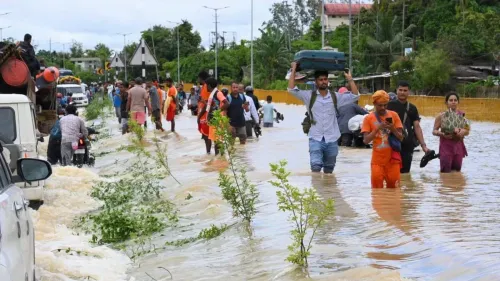
Assam is among India's most flood-prone states, with the Brahmaputra and its tributaries inundating large swathes of the Brahmaputra valley almost every monsoon season between June and September. The Chief Minister's post came in direct response to a concern flagged by a legislator, signalling that ground-level political representatives are actively tracking emerging weather risks.
The post's timing — mid-monsoon — is consistent with the period when flood alerts and preparedness drives are most urgently needed across low-lying districts.
Policy Backdrop
India's Disaster Management Act, 2005 established state disaster management authorities, including the Assam State Disaster Management Authority (ASDMA), to coordinate early-warning dissemination, resource pre-positioning, and community preparedness. These bodies work in tandem with the National Disaster Management Authority (NDMA) and receive support from National Disaster Response Force (NDRF) teams deployed seasonally.
Successive Assam governments have prioritised early-warning systems and embankment maintenance as the twin pillars of annual flood management. CM Sarma's administration has continued this framework, stressing community-level readiness alongside institutional response.
Stakeholders and Impact
Flood-prone communities in the Brahmaputra valley — spanning districts such as Dhubri, Barpeta, Morigaon, Majuli, and others — are the primary audience for such appeals. Timely public messaging can prompt households to move livestock and valuables, stock essential supplies, and identify safe evacuation routes before water levels rise.
The mention of an MLA's appeal highlights the role of local legislators as early-warning nodes, relaying ground realities from constituencies to the state's political leadership and enabling faster administrative response.
What's Next
Observers will watch for follow-up directives from the state government, including orders on evacuation protocols, pre-positioning of relief materials, and deployment of NDRF or State Disaster Response Force (SDRF) teams. Updates from the India Meteorological Department (IMD) on monsoon intensity over Assam and the Northeast will shape the urgency of subsequent government orders.
With the monsoon season far from over, the Chief Minister's call for advance readiness signals that the administration is in active alert mode and expects communities to act on early warnings without waiting for official evacuation notices.
Point of View
Lending political weight to what might otherwise be routine bureaucratic circulars. The explicit acknowledgement of the MLA's role also signals a deliberate effort to keep ruling-party legislators visible as responsive local representatives ahead of any potential flood crisis. Taken together, the post reflects how disaster communication in India is increasingly personalised through executive social media, blurring the line between administrative directive and political messaging.
NationPress
21 Oct 2026
Frequently Asked Questions
Why is Assam Chief Minister Himanta Biswa Sarma asking people to prepare for disasters?
CM Sarma issued the appeal on 23 July 2026 in response to an MLA's concern about rising disaster risk, urging citizens to be ready in advance as Assam enters the peak monsoon flood season.
Which areas of Assam are most at risk of flooding during the monsoon?
Districts along the Brahmaputra valley, including Dhubri, Barpeta, Morigaon, and Majuli, are historically the most flood-prone areas of Assam during the June-September monsoon.
What does early warning mean in the context of Assam floods?
Early warning refers to advance alerts issued by agencies such as the India Meteorological Department and the Assam State Disaster Management Authority, enabling communities to evacuate, secure assets, and pre-position relief before floodwaters rise.
What is the Assam State Disaster Management Authority?
The Assam State Disaster Management Authority (ASDMA) was established under the Disaster Management Act, 2005 to coordinate preparedness, early-warning dissemination, and disaster response across the state.
What should Assam residents do to prepare for floods?
Residents in flood-prone areas are advised to identify safe evacuation routes, stock essential supplies, move livestock and valuables to higher ground, and stay updated on alerts from the IMD and ASDMA.