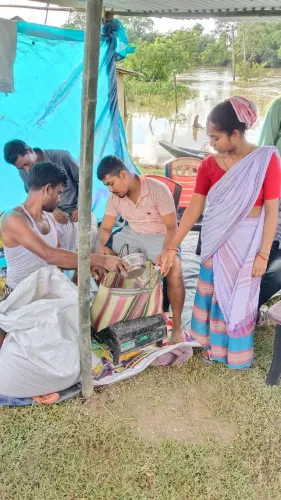
CM Himanta Inspects Flood Relief Food in Darrang Camps
Synopsis
Assam Chief Minister Himanta Biswa Sarma visited flood relief camps in Darrang on August 8, 2026, inspecting food prepared for displaced residents and ordering officials to uphold hygiene and nutritional standards as part of the state's ongoing flood response.
Key Takeaways
Himanta Biswa Sarma personally inspected food at flood relief camps in Darrang district on August 8, 2026 .
He issued direct instructions to officials to ensure hygiene and correct nutritional standards in meals served to displaced residents.
Darrang is a central Assam district that faces recurrent monsoon flooding and routinely hosts state-run relief camps.
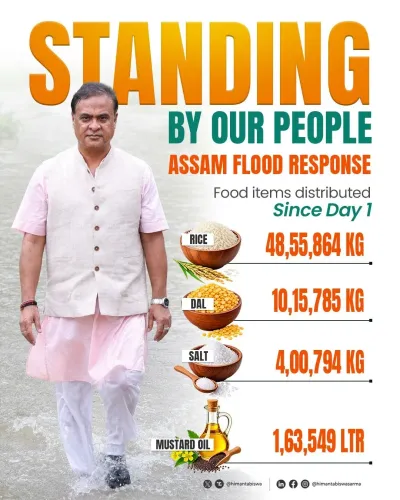
The inspection is part of the state government's #AssamFloodResponse operations during the 2026 monsoon season.
The Chief Minister shared images from the visit, making camp food quality a point of public accountability.
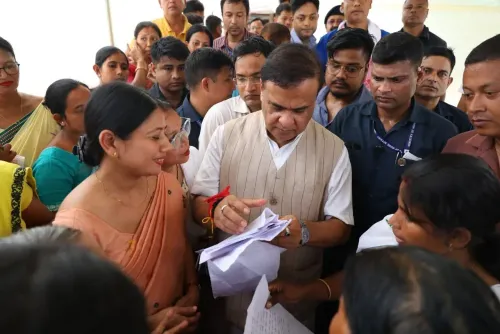
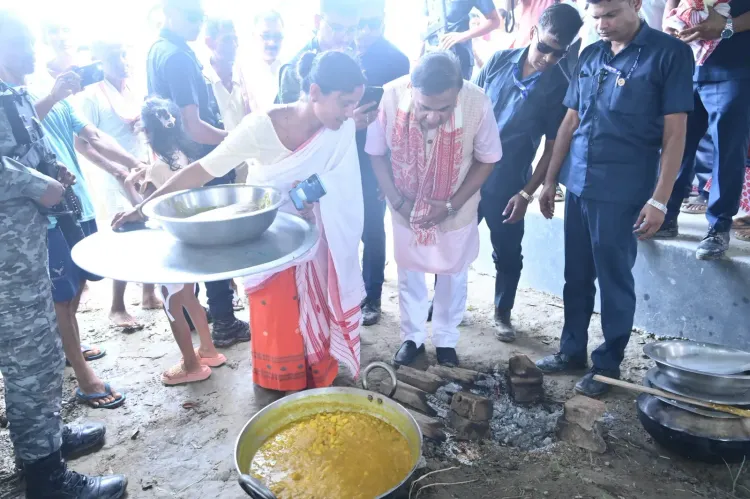
On the ground in flood-hit Darrang, Assam Chief Minister Himanta Biswa Sarma walked through relief camp kitchens on Saturday, August 8, 2026, personally checking the food being prepared for displaced residents — and issuing direct instructions to officials on hygiene and nutritional standards.
What the CM found — and ordered — at Darrang's relief camps
Sarma inspected the meals being served to flood-affected people sheltered in state-run relief camps in Darrang district, a stretch of central Assam that sits squarely in the Brahmaputra basin's annual flood corridor. He directed officials to maintain hygiene protocols and ensure the food met correct nutritional standards — a signal that the administration is not treating camp catering as an afterthought.
The Chief Minister shared images from the inspection, putting a visible face on what is often an invisible part of disaster management: the daily logistics of feeding thousands of uprooted people under monsoon conditions.
Darrang's recurring flood burden
Darrang is no stranger to this cycle. Every monsoon, rising Brahmaputra waters push communities off their land and into government relief camps, where the state's disaster-response machinery takes over basic sustenance. Chief ministers have periodically made such inspections a public part of flood management — both to enforce standards and to signal political accountability to affected constituents.
Sarma's hands-on visit fits that pattern, but the explicit focus on hygiene and nutrition — not just the presence of food — points to a deliberate quality benchmark being set for camp operations this season.
With flood waters still affecting Darrang and other districts, the state's relief infrastructure will remain under pressure. The real test is whether the standards Sarma mandated on Saturday hold across every camp, every meal, for as long as the monsoon keeps people from going home.
Point of View
Low-cost, and high-signal. By personally focusing on food hygiene and nutrition rather than just announcing relief numbers, he is framing the BJP-led Assam government as operationally accountable, not merely reactive. It also pre-empts a common criticism of relief camps: that food quality deteriorates once cameras leave. Whether the directive translates into sustained standards across all affected districts will determine whether this visit is remembered as governance or optics.
NationPress
22 Sept 2026
Frequently Asked Questions
Why did Assam CM Himanta Biswa Sarma visit Darrang?
He inspected food being prepared for flood-affected people sheltered in relief camps in Darrang, directing officials to maintain hygiene and nutritional standards in the meals served.
Which district in Assam is affected by floods in 2026?
Darrang district in central Assam is among the flood-affected areas, with displaced residents housed in state-run relief camps during the 2026 monsoon season.
What instructions did CM Himanta give at the Darrang relief camps?
Sarma instructed officials to ensure hygiene and correct nutritional standards in the food being offered to flood-affected people at the relief camps.
How often does Assam face flooding?
Assam faces annual monsoon flooding driven by the Brahmaputra basin, with the state government operating relief camps as a standard part of its disaster response every year.
What is AssamFloodResponse?
'AssamFloodResponse' is the hashtag used by the Assam government to track and communicate its official relief and disaster management activities during the 2026 monsoon flood season.