CM Himanta vows to keep anti-child marriage drive relentless
Synopsis
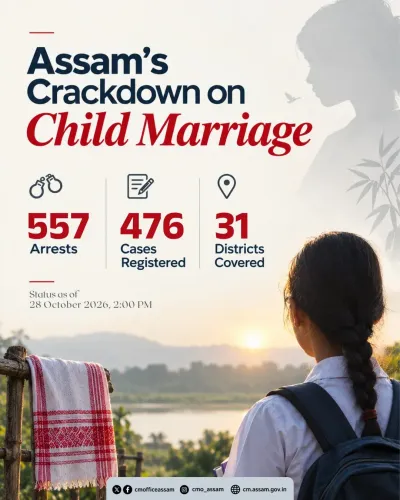
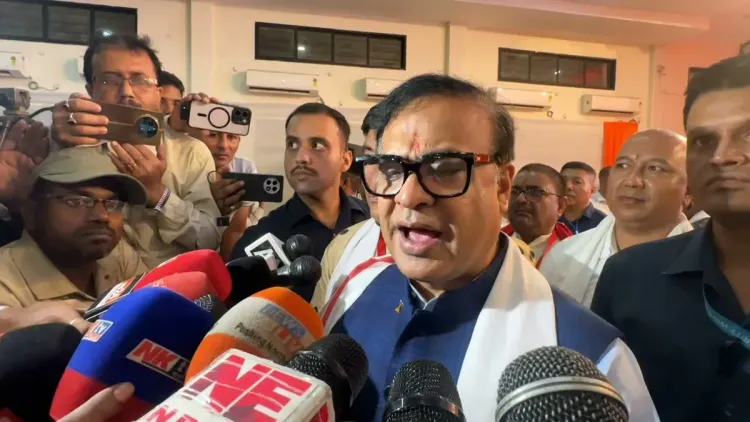
Assam Chief Minister Himanta Biswa Sarma reaffirmed on October 28, 2026 that the state's drive against child marriage will continue with full resolve, vowing that no one will shackle the dreams of Assam's daughters.
Key Takeaways
CM Himanta Biswa Sarma on October 28, 2026 publicly vowed relentless continuation of Assam's anti-child marriage crackdown.
India's Prohibition of Child Marriage Act, 2006 sets the legal marriage age at 18 for women and 21 for men , the statute underpinning the drive.
Assam's approach combines police-led enforcement — arrests and FIRs — with community awareness campaigns targeting social norms.
The push aligns with the Centre's Beti Bachao Beti Padhao scheme, launched in 2015 , linking delayed marriage to girls' education and empowerment.
Assam has historically recorded higher child marriage rates than the national average, making enforcement both urgent and politically salient.
Upcoming state-level data on cases registered and convictions will serve as the key measure of whether the declared resolve translates into outcomes.
No chain will bind the dreams of Assam's daughters — that is the unambiguous promise Assam Chief Minister Himanta Biswa Sarma renewed on Wednesday, October 28, 2026, reaffirming that the state's crackdown on child marriage will press forward without pause.
Posting in Hindi, the Chief Minister declared: 'बाल विवाह के खिलाफ हमारा Action पूरी दृढ़ता से जारी रहेगा। हमारी बेटियों के सपनों को अब कोई बेड़ियों में नहीं जकड़ सकेगा।' — 'Our action against child marriage will continue with full resolve. No one will be able to shackle our daughters' dreams in chains any longer.'
A crackdown built on a legal foundation
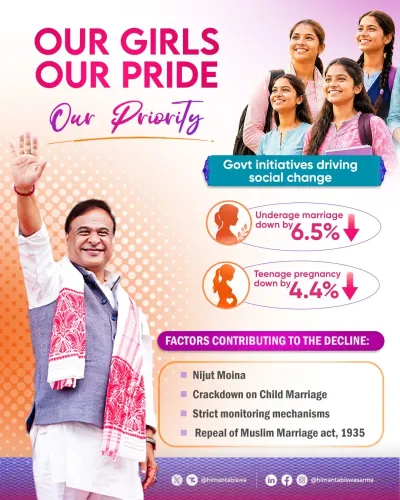
India's Prohibition of Child Marriage Act, 2006 sets the minimum age of marriage at 18 for women and 21 for men, with criminal penalties for those who solemnise, permit, or participate in underage unions. Assam's drive under Sarma has leaned hard into those provisions — combining police-led enforcement with social messaging aimed at shifting community norms around early marriage.
The approach is deliberate. Arrests and FIRs generate visible deterrence; awareness campaigns aim at the demand side of the problem. Together, they mirror a wider national pattern in which state governments have moved from passive compliance with child-marriage law to active, headline-generating enforcement operations.
Where Beti Bachao fits into Assam's push
The state's messaging aligns closely with the Centre's Beti Bachao Beti Padhao scheme, launched in 2015, which links the fight against child marriage to broader goals: improving child sex ratios, keeping girls in school longer, and expanding the window of opportunity before marriage forecloses it. For Assam — a state where child marriage rates have historically been among the higher ones in the country — that alignment matters both politically and practically.
Sarma has consistently framed the issue not merely as law enforcement but as an act of liberation: the argument that a girl married at 14 or 15 is a girl robbed of education, agency, and economic independence. That framing is what Wednesday's post reinforces — and it is a framing that cuts across party lines in public opinion even when the politics around it are contested.
What comes next in the enforcement calendar
The signals to watch are concrete: state-level data on child marriage cases registered and convictions secured, and the rollout of any new district-level awareness or enforcement campaigns in the months ahead. Each data point will test whether the resolve the Chief Minister promises in words is matched by results on the ground.
In Assam's villages, the daughters whose futures hang on that answer are watching too.
Point of View
Insulating it from criticism that it targets specific communities. That framing also reinforces the Centre's Beti Bachao narrative, keeping Assam's push legible within a national BJP policy arc. The real test, as always, will be conviction rates and sustained district-level action — not just the temperature of the messaging.
NationPress
28 Oct 2026
Frequently Asked Questions
What is Assam's action against child marriage?
Assam under Chief Minister Himanta Biswa Sarma has pursued a strict enforcement drive under the Prohibition of Child Marriage Act, 2006, involving police arrests, FIRs, and community awareness campaigns to end underage marriages.
What is the legal age of marriage in India?
Under the Prohibition of Child Marriage Act, 2006, the minimum legal age of marriage is 18 years for women and 21 years for men.
What is Beti Bachao Beti Padhao and how does it relate to child marriage?
Beti Bachao Beti Padhao is a Central government scheme launched in 2015 to improve child sex ratios and promote girls' education; it is closely linked to anti-child marriage efforts by encouraging families to keep daughters in school and delay marriage.
Why is child marriage a particular concern in Assam?
Assam has historically recorded child marriage rates higher than the national average, making enforcement of the law especially urgent and a recurring political and welfare priority for the state government.
What did CM Himanta Biswa Sarma say about child marriage on October 28, 2026?
He declared that action against child marriage will continue with full resolve, and that no one will be able to shackle the dreams of Assam's daughters any longer.