CM Himanta's Three-Word Warning on Illegal Entry into Assam

Synopsis
Assam Chief Minister Himanta Biswa Sarma posted a three-word immigration doctrine on X — 'Detect. Detain. Deport.' — declaring zero tolerance for illegal entry and invoking the 'Yeh Naya Assam' brand in a sharp, multilingual warning aimed at would-be border crossers.
Key Takeaways
Assam CM Himanta Biswa Sarma posted a zero-tolerance warning on September 29, 2026 , directing: Detect.
The post used English, Hindi, and Urdu-inflected phrases — 'Yeh Naya Assam hai.
Khalas.' — signalling a multilingual, wide-reach communication strategy.
Assam's anti-illegal-immigration framework traces back to the Assam Accord of 1985 , which set 24 March 1971 as the citizenship cut-off date.
The National Register of Citizens (NRC) update completed in 2019 excluded approximately 1.9 million people from Assam's citizens' list.
Foreigners Tribunals and detention infrastructure have been strengthened in Assam under the BJP government since 2021 .
Bangladesh is identified in official records as the primary source of undocumented cross-border movement into Assam.
The message from Assam Chief Minister Himanta Biswa Sarma landed on Tuesday, September 29, 2026, in three blunt words — and left zero room for interpretation: Detect. Detain. Deport. In a sharply worded post on X, the Chief Minister signalled that Assam's zero-tolerance posture on illegal immigration is not softening, not negotiating, and not waiting.
The three-word doctrine and what it signals
'Peeking through the fence? Don't mistake it for an invitation,' the CM wrote, before dropping into a register that was equal parts policy declaration and street-level dare: 'Yeh Naya Assam hai. Illegal entry? Tata. Bye-bye. Khalas.' — 'This is the New Assam. Illegal entry? Done. Finished.' The switch from English to Hindi to Urdu-inflected slang was deliberate — a multilingual signal aimed at every potential entrant along the porous frontier.
Assam shares a long border with Bangladesh, identified in official records as the primary source of undocumented cross-border movement into the state. Decades of demographic anxiety, land disputes, and electoral roll controversies have made illegal immigration the most combustible political fault-line in the Brahmaputra Valley — and the issue that, more than any other, defines Sarma's political identity.
The policy architecture behind the rhetoric
The three-word formula did not emerge from nowhere. The Assam Accord of 1985 first codified the detect-delete-deport framework, mandating the identification and removal of foreigners who entered after 24 March 1971. Thirty-four years later, the National Register of Citizens (NRC) update completed in 2019 excluded approximately 1.9 million people from the citizens' list — the largest such exercise in Indian history — and set the stage for a reinvigorated Foreigners Tribunals process under the state's BJP administration.
Since 2021, when Sarma took charge, the state government has consistently framed border security and deportation enforcement as non-negotiable governance priorities — aligned with national-level citizenship and security policy. Foreigners Tribunals were strengthened, border fencing coordination with the Border Security Force (BSF) intensified, and detention infrastructure expanded.
'Yeh Naya Assam' — a brand, a warning, a bet
The phrase 'Yeh Naya Assam' — 'This is the New Assam' — is more than a slogan. It is Sarma's governing thesis: that the state has moved decisively beyond the era of ambiguity, slow tribunals, and political second-guessing that allowed illegal immigration to fester for decades. The casual, almost conversational tone of the post — 'Tata. Bye-bye. Khalas' — is part of the strategy: make the message viral, make it memorable, and make it land in the language of everyday life rather than bureaucratic circulars.
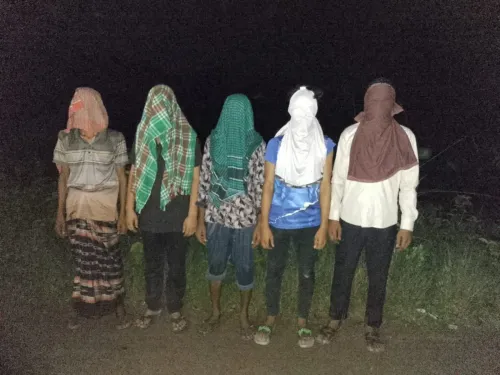
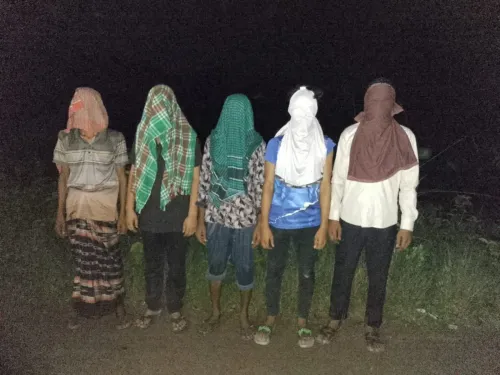
The post accompanies an image, reinforcing the visual framing of a border that is watched, fenced, and enforced. Whether the message is paired with fresh operational announcements — new deportation figures, border infrastructure milestones, or central agency coordination updates — will be the measure of whether rhetoric converts to record.
Assam has been here before: big declarations, slow machinery, contested outcomes. What's different now is the political will is louder, the administrative architecture is deeper, and the Chief Minister is betting the 'New Assam' brand on the gap between the two staying closed.
Point of View
Meme-ready three-word formula simultaneously functions as a public deterrent, a signal to the BJP's national leadership, and a pre-emptive benchmark against which his administration will be judged. The 'Yeh Naya Assam' framing is doing heavy ideological lifting: it positions all prior Assam governments as complicit in demographic drift and frames the current dispensation as the corrective break. The risk is equally clear — bold rhetoric that outruns deportation statistics will become a liability; the metric to watch is not the post's reach but the Foreigners Tribunals' disposal rate and verified deportation numbers. In the broader BJP governance arc, Assam is being projected as the model state for border-state immigration enforcement — a template the party would like replicated wherever it governs along India's eastern frontier.
NationPress
30 Sept 2026
Frequently Asked Questions
What did Assam CM Himanta Biswa Sarma say about illegal immigration?
Sarma posted a sharp warning on X on September 29, 2026, stating his government's policy in three words: 'Detect. Detain. Deport.' He declared 'Yeh Naya Assam hai' — meaning 'This is the New Assam' — signalling zero tolerance for illegal border crossings.
What is the NRC in Assam and how many people were excluded?
The National Register of Citizens (NRC) is an Assam-specific list updated in 2019 to identify genuine Indian citizens and exclude those who entered after 24 March 1971. Approximately 1.9 million people were excluded from the final list.
What is the Assam Accord and how does it relate to illegal immigration?
The Assam Accord, signed in 1985, mandated the detection and deportation of foreigners who entered Assam after 24 March 1971. It remains the foundational legal framework for Assam's anti-illegal-immigration policy.
Which country is the main source of illegal immigration into Assam?
Bangladesh is identified in official Indian government records as the primary source of undocumented cross-border movement into Assam, given the two territories share a long and historically porous border.
What steps has the Assam government taken against illegal immigrants since 2021?
Since Chief Minister Sarma took office in 2021, Assam has strengthened Foreigners Tribunals, expanded detention infrastructure, intensified border fencing coordination with the BSF, and aligned state enforcement with national citizenship priorities.