CM Himanta draws sharp BJP-Congress contrast on community welfare
Synopsis
Assam Chief Minister Himanta Biswa Sarma accused the Congress of using communities as vote banks, contrasting it with BJP's self-described 'family-first' governance model — reviving a central BJP rhetorical frame with renewed sharpness ahead of future electoral cycles.
Key Takeaways
Himanta Biswa Sarma posted in Hindi on 9 November 2026 , accusing the Congress of treating communities as vote banks.
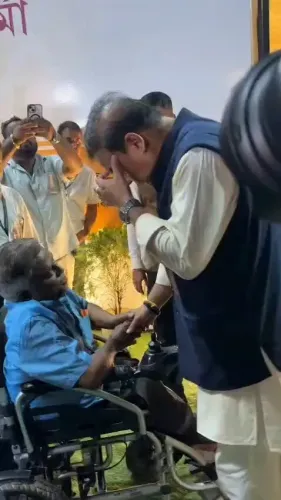
He positioned BJP's approach as treating those communities as 'parivaarjan' (family members), not electoral tools.
The post draws a contrast between 'rashtravadi' (nationalist) and 'parivarvaadi' (dynastic) thinking — a dual-edged phrase targeting both Congress ideology and its family dynasty.
This rhetorical frame has been central to BJP's national messaging since the 2014 Lok Sabha elections .
As NEDA convenor , Sarma's messaging carries strategic weight across north-eastern states ahead of future electoral cycles.
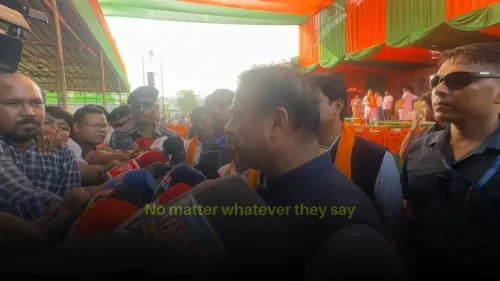
A line that cuts to the heart of one of Indian politics' sharpest ongoing debates: Assam Chief Minister Himanta Biswa Sarma on Monday, 9 November 2026, drew a pointed distinction between what he called the BJP's familial approach to governance and the Congress's alleged habit of treating communities as mere vote banks.
Posting on X in Hindi, Sarma wrote: 'जिन लोगों को कांग्रेस पार्टी केवल वोट बैंक के रूप में इस्तेमाल करती है, हम उन्हें अपना परिवारजन मानकर उनकी सेवा करते हैं।' ('Those whom the Congress party uses merely as a vote bank — we treat them as our own family and serve them.') He then framed the contrast in ideological terms: 'This is the difference between a nationalist mindset and a dynastic one.'
A rhetorical contrast with deep electoral roots
The 'vote bank' charge against the Indian National Congress is not new — it has been a cornerstone of BJP's national messaging since the 2014 Lok Sabha elections, when Prime Minister Narendra Modi made 'appeasement politics' a central campaign theme. What Sarma does here is give that charge a warmer, more personal counter-image: not just 'we don't exploit communities', but 'we see them as family.' The emotional register is deliberate.
In Assam specifically, that framing lands in layered terrain. The state has long been at the crossroads of debates over demographics, citizenship, and welfare delivery — from the National Register of Citizens to direct-benefit transfers targeting marginalised communities. Sarma's government has consistently positioned its outreach to minority and indigenous groups as governance-driven rather than electorally transactional.
Nationalism versus 'parivarvaad' — unpacking the contrast
Sarma's choice of the word 'parivarvaadi' (dynastic) as the antonym of 'rashtravadi' (nationalist) is a double-edged phrase. On one level it invokes the familiar BJP critique of Congress's Gandhi-family dynasty. On another, it reclaims the word 'family' — parivaarjan — and reattaches it to citizens rather than to a political clan. It is compact, shareable, and built for the social-media cycle.
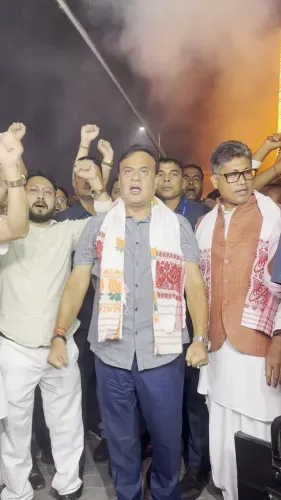
As NEDA convenor, Sarma's voice carries weight across north-eastern India, where similar messaging has been deployed by BJP allies to highlight perceived differences in governance philosophy. The post, accompanied by a video, signals that this line of argument is likely to be amplified ahead of future electoral cycles in the region.
The Congress has not yet responded publicly to this specific post. Whether it chooses to engage — or stay silent — will itself be a political signal worth watching.
Point of View
Where welfare delivery and identity politics are deeply intertwined, this framing helps Sarma's government pre-empt opposition critiques of its own demographic and citizenship policies. The post's social-media-first format — compact, bilingual in impact, accompanied by video — suggests it is a tested message being refreshed for the next electoral cycle rather than a spontaneous observation.
NationPress
9 Nov 2026
Frequently Asked Questions
What did Himanta Biswa Sarma say about Congress and vote bank politics?
Sarma accused the Congress of treating communities merely as vote banks, while asserting that the BJP treats those same communities as 'parivaarjan' — family members — and serves them accordingly.
What does 'parivarvaadi' mean in Sarma's post?
'Parivarvaadi' means 'dynastic' or 'family-centric' (in the sense of a ruling political family), and Sarma used it as the opposite of 'rashtravadi' (nationalist), implying Congress prioritises its own dynasty over the nation.
Why is the vote bank politics debate significant in Assam?
Assam sits at the intersection of debates over demographics, citizenship (including the NRC process), and welfare delivery to minority and indigenous communities, making the 'vote bank vs. genuine welfare' framing especially politically charged in the state.
What is NEDA and what is Himanta Biswa Sarma's role in it?
NEDA — the North-East Democratic Alliance — is a BJP-led coalition of north-eastern parties. Sarma serves as its convenor, giving him a platform that extends his political messaging well beyond Assam's borders.
Has BJP used the vote bank criticism against Congress before?
Yes. The 'vote bank politics' charge has been a central plank of BJP's national rhetoric since the 2014 general elections, and BJP leaders across north-eastern states have consistently used similar framing to contrast their governance approach with that of the Congress.