CM Himanta Extends Devshayani Ekadashi Greetings

Synopsis
Assam Chief Minister Himanta Biswa Sarma marked Devshayani Ekadashi on 25 July 2026 with a public message invoking Lord Vishnu's blessings for happiness, peace, prosperity, and spiritual energy for all — signalling the start of the sacred Chaturmas period.
Key Takeaways
Assam Chief Minister Himanta Biswa Sarma posted Devshayani Ekadashi greetings on 25 July 2026 .
He invoked the blessings of Lord Shri Hari Vishnu for peace, prosperity, and spiritual well-being for all.
Devshayani Ekadashi marks the start of the four-month Chaturmas period in the Hindu calendar.
The message was addressed broadly to 'all' ( sabhī ), reflecting an inclusive tone across Assam's multi-religious population.
As NEDA convenor, Sarma's cultural messaging carries reach across multiple northeastern states governed by BJP-allied parties.
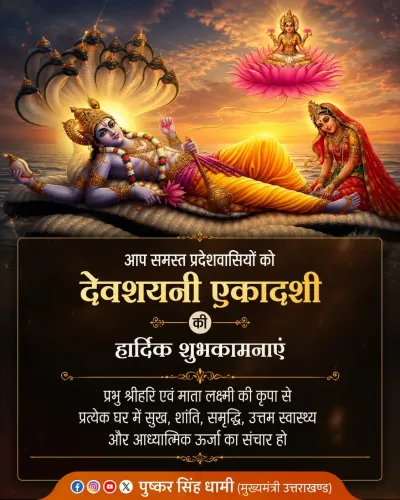
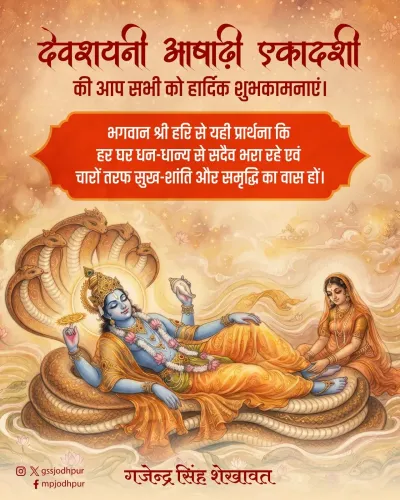
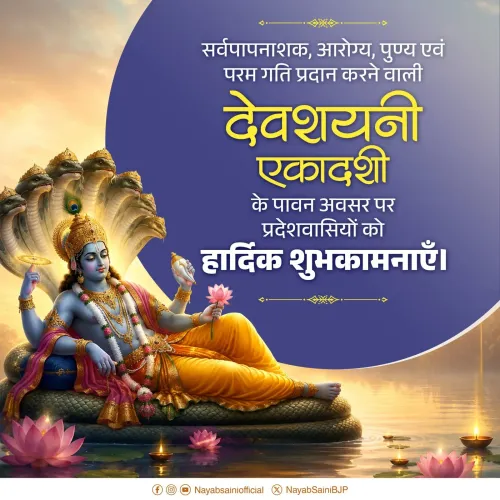
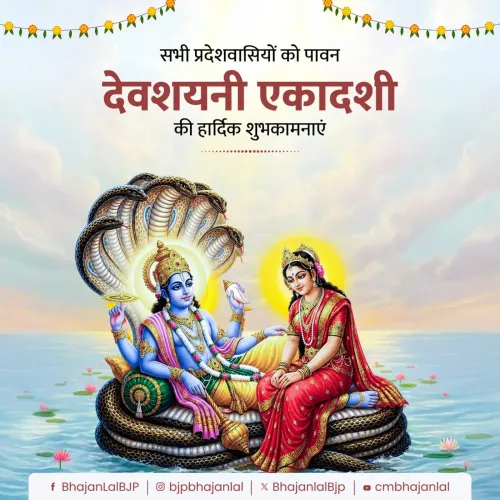
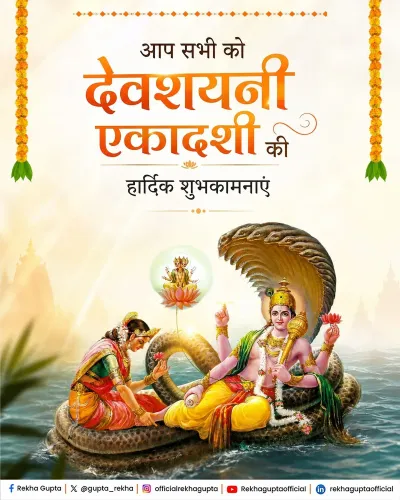
Assam Chief Minister Himanta Biswa Sarma on Saturday, 25 July 2026, extended greetings to the public on the occasion of Devshayani Ekadashi, invoking the blessings of Lord Shri Hari Vishnu for peace, prosperity, and spiritual well-being.
In his post, the Chief Minister wrote: 'सभी को पवित्र देवशयनी एकादशी की हार्दिक शुभकामनाएँ' ('Heartfelt greetings to all on the auspicious Devshayani Ekadashi'), adding that his prayer was for everyone's life to be filled with happiness, peace, prosperity, and spiritual energy through the infinite grace of Lord Vishnu.
Context
Devshayani Ekadashi is a significant Hindu observance that marks the beginning of the Chaturmas period — a four-month window during which Lord Vishnu is traditionally believed to enter a state of yogic rest. Falling on the eleventh day (Ekadashi) of the bright fortnight of the Hindu lunar month of Ashadha, the festival is observed by millions of devotees across India with fasting, prayer, and temple visits.
The Chaturmas period that follows is considered sacred by Vaishnavas and is traditionally associated with intensified religious observance, with restrictions on certain auspicious activities such as weddings and long journeys.
Policy Backdrop
Indian chief ministers across party lines routinely use social media platforms to extend greetings on major religious and cultural occasions, treating such outreach as a standard form of public communication. For BJP-governed states like Assam, engagement with Hindu religious traditions forms a consistent thread in the party's public messaging strategy.
Assam has a majority Hindu population alongside significant indigenous communities and religious minorities, a demographic reality shaped by decades of historical migration. Chief Minister Sarma, who has led the state since May 2021, has consistently used cultural and religious occasions to communicate directly with constituents via his social media presence.
Stakeholders and Impact
The message is addressed to the general public, with Hindu devotees and residents of Assam as the primary audience. As convenor of the North-East Democratic Alliance (NEDA), Sarma's public communications also carry relevance across the broader northeastern region, where BJP and allied parties govern multiple states.
Such greetings serve a dual function: reaffirming cultural solidarity with a large section of the electorate while projecting a tone of inclusive well-wishing through phrases such as 'all' (sabhī) rather than addressing a specific community.
What's Next
With the Chaturmas period now underway, attention will turn to whether the Assam government announces any state-supported cultural or religious programmes in the weeks ahead. Opposition parties and community organisations in the state may also respond to the seasonal messaging cycle as the political calendar progresses through the months ahead.
Point of View
The inclusive framing ('all') is notable, signalling an attempt to project broad goodwill rather than narrow communal appeal. As NEDA convenor, Sarma's messaging also functions as a soft signal of cultural alignment to alliance partners across the northeast. The Chaturmas period itself, traditionally a time of heightened religious activity, may see the state government follow up with programmatic announcements tied to the season.
NationPress
25 Jul 2026
Frequently Asked Questions
What is Devshayani Ekadashi?
Devshayani Ekadashi is a Hindu observance falling on the eleventh day of the bright fortnight of the lunar month of Ashadha, marking the start of the four-month Chaturmas period during which Lord Vishnu is believed to enter yogic rest.
What did Assam CM Himanta Biswa Sarma say on Devshayani Ekadashi 2026?
Chief Minister Himanta Biswa Sarma extended heartfelt greetings to all on Devshayani Ekadashi and prayed that everyone's life be filled with happiness, peace, prosperity, and spiritual energy through the grace of Lord Vishnu.
When is Devshayani Ekadashi in 2026?
According to this post by Assam Chief Minister Himanta Biswa Sarma, Devshayani Ekadashi fell on Saturday, 25 July 2026; exact dates follow the Hindu lunar calendar and vary each year.
What is Chaturmas and why does it start on Devshayani Ekadashi?
Chaturmas is a sacred four-month period in the Hindu calendar beginning on Devshayani Ekadashi, during which Lord Vishnu is traditionally believed to be in a state of rest; it is associated with intensified religious observance and certain social restrictions.
Who is Himanta Biswa Sarma?
Himanta Biswa Sarma is the Chief Minister of Assam since May 2021 and a senior BJP leader who also serves as convenor of the North-East Democratic Alliance (NEDA), a coalition of BJP-allied parties in northeastern India.