Chhattisgarh CMO: 7,153 Illegal Mining Cases in One Year
Synopsis
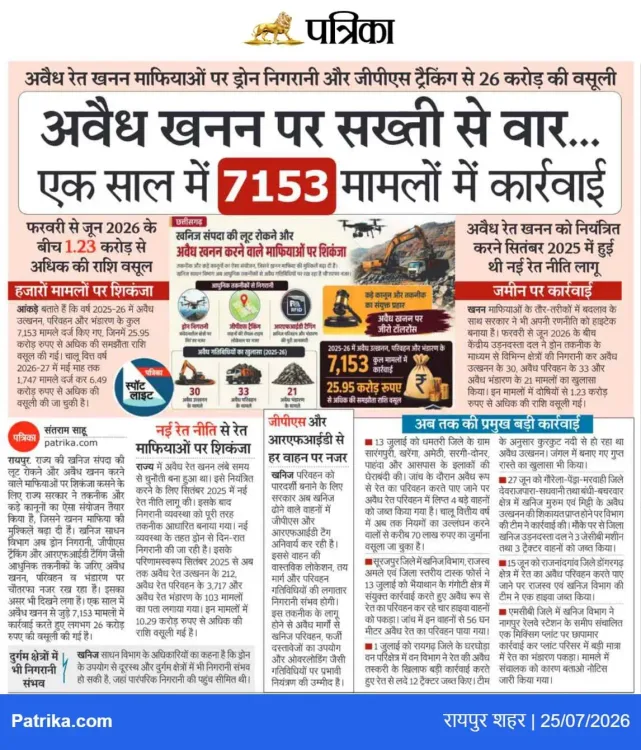
The Chhattisgarh Chief Minister's Office says drone surveillance and GPS tracking have driven action in 7,153 illegal mining cases in a single year, positioning the state as a technology-led enforcement model in India's mineral-rich heartland.
Key Takeaways
The Chhattisgarh CMO announced on 25 July 2026 that 7,153 illegal mining cases were acted upon in one year.
Drone surveillance and GPS tracking were cited as the primary tools enabling the enforcement drive.
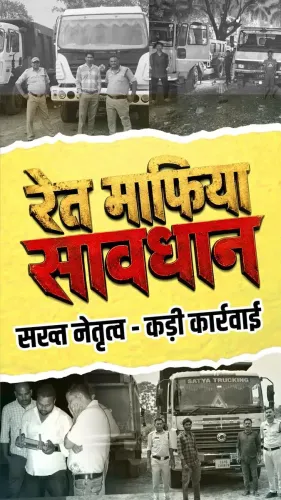
The campaign is framed under a zero-tolerance policy, with the administration branding it a 'strict strike' against illegal extraction.
Chhattisgarh holds major reserves of coal, iron ore, and bauxite, making illegal mining a significant revenue and governance challenge.
The 2015 amendments to the Mines and Minerals (Development and Regulation) Act provide the legal backbone for state-level enforcement action.
The Directorate of Geology and Mining is the nodal body responsible for lease regulation and enforcement coordination in the state.
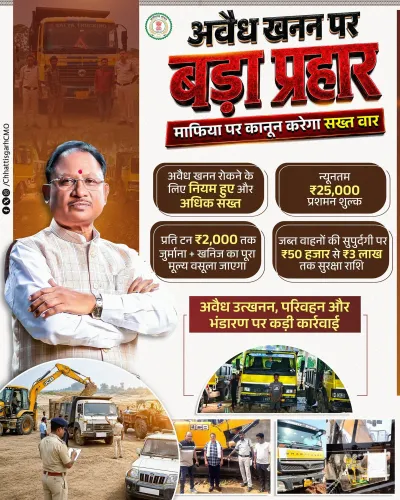
The Chief Minister's Office of Chhattisgarh announced on Saturday, 25 July 2026 that the state government has taken action in 7,153 illegal mining cases over the past year, crediting drone surveillance and GPS tracking as the primary enforcement tools driving the crackdown.
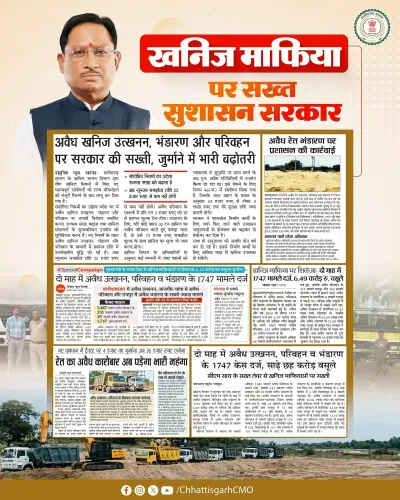
The post, shared on the CMO's official X account, declared a 'strict strike against illegal mining' — ('Avaidh khanan par sakht prahar') — and flagged the use of technology-driven monitoring as central to the effort. The hashtags #ZeroTolerance, #TechDriven, and #DroneMonitoring underscored the administration's intent to frame the campaign as a governance milestone.
Context
Chhattisgarh is among India's most mineral-rich states, holding major deposits of coal, iron ore, and bauxite. Regulation of mining activity falls under state jurisdiction, making enforcement capacity a direct reflection of state governance quality. Illegal extraction has long been associated with revenue leakage, environmental degradation, and organised crime in mineral-belt districts.
The announcement places the one-year enforcement window within the current administration's tenure, signalling a push to demonstrate measurable outcomes in a sector historically prone to opaque operations.
Policy Backdrop
The legal framework for action against unauthorised mining was significantly strengthened by amendments to the Mines and Minerals (Development and Regulation) Act in 2015, which expanded state powers to penalise illegal extraction and enhanced royalty-collection mechanisms. Those amendments gave state agencies clearer authority to seize vehicles, equipment, and minerals involved in unlicensed operations.
Across India, states with large mineral endowments have increasingly turned to drones, GPS trackers, and satellite imagery to monitor lease boundaries and detect encroachments. The Directorate of Geology and Mining in Chhattisgarh is the nodal body responsible for issuing leases and coordinating enforcement with district administrations and police.
Stakeholders and Impact
Local communities in mining districts stand to benefit from tighter enforcement through reduced environmental damage and a potential increase in royalty revenue that funds local development. Mining operators holding valid leases also gain, as illegal competitors undercut legitimate businesses and depress the incentive for compliance.
The deployment of drone surveillance and GPS tracking marks a shift from reactive, complaint-driven enforcement to proactive, technology-enabled monitoring. When applied consistently, such tools reduce the discretionary space that has historically allowed illegal operations to persist through local-level arrangements.
What's Next
The state's Directorate of Geology and Mining is expected to publish detailed enforcement and revenue reports that would allow independent assessment of the 7,153 cases — including the breakdown by district, mineral type, and stage of legal proceedings. Any further government notifications expanding the technology integration to additional lease areas or introducing real-time dashboards would be the next policy signal to watch.
If sustained, the technology-led enforcement model could be cited as a replicable template for other mineral-rich states grappling with similar challenges, adding a national-governance dimension to what is currently a state-level initiative.
Point of View
Using a concrete enforcement number to signal administrative seriousness in a sector long associated with opacity. The deployment of drone and GPS technology is consistent with a broader national pattern of states using digital tools to demonstrate accountability without requiring structural overhaul of enforcement agencies. The figure of 7,153 cases over one year is significant if verified, but the political value of the announcement lies as much in the framing — 'zero tolerance', 'tech-driven', 'good governance' — as in the underlying data. Independent publication of case outcomes by the Directorate of Geology and Mining will be the real test of whether enforcement translated into deterrence or remained largely procedural.
NationPress
25 Jul 2026
Frequently Asked Questions
How many illegal mining cases has Chhattisgarh acted on in the past year?
The Chhattisgarh Chief Minister's Office stated that action was taken in 7,153 illegal mining cases over a one-year period, as announced on 25 July 2026.
How is Chhattisgarh monitoring illegal mining?
The state government is using drone surveillance and GPS tracking to monitor mining activity, detect unauthorised extraction, and enforce compliance with lease boundaries.
What law governs illegal mining enforcement in Chhattisgarh?
Enforcement is primarily governed by the Mines and Minerals (Development and Regulation) Act , strengthened by 2015 amendments that expanded state powers to penalise illegal extraction and seize equipment.
Which minerals are most at risk from illegal mining in Chhattisgarh?
Chhattisgarh holds major deposits of coal, iron ore, and bauxite , all of which are targets for illegal extraction given their high commercial value.
Which state body oversees mining enforcement in Chhattisgarh?
The Directorate of Geology and Mining is the nodal agency responsible for issuing leases, monitoring compliance, and coordinating enforcement with district administrations and police.