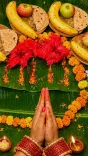
CM Himanta Extends Kharna Greetings to Chhath Devotees
Synopsis
Assam Chief Minister Himanta Biswa Sarma greeted all Chhath devotees on Kharna, the second day of the four-day Chhath Mahapav, praying for happiness, peace, good health, and prosperity. He called the festival a symbol of folk faith, purity, and gratitude towards nature.
Key Takeaways
Assam CM Himanta Biswa Sarma extended greetings on Kharna , the second day of Chhath Puja , on 14 November 2026 .
He described Chhath as a symbol of 'folk faith, purity, and gratitude towards nature' and invoked blessings of Chhathi Maiya .
Kharna involves a day-long fast broken after sunset with a ritual meal prepared without salt or spices.
Chhath Puja is a four-day festival dedicated to the Sun God, rooted in Bihar and eastern Uttar Pradesh and observed by diaspora communities across India.
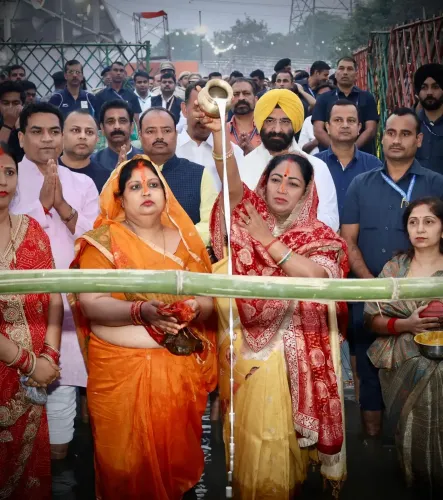
Significant Bihari and Purvanchali communities in Assam celebrate Chhath at river ghats and water bodies across the state.
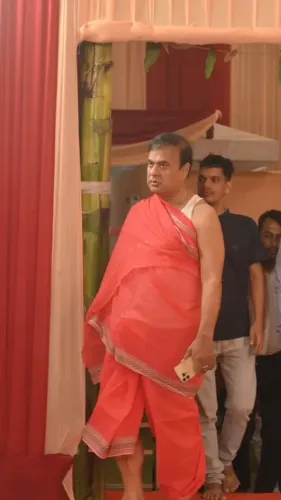
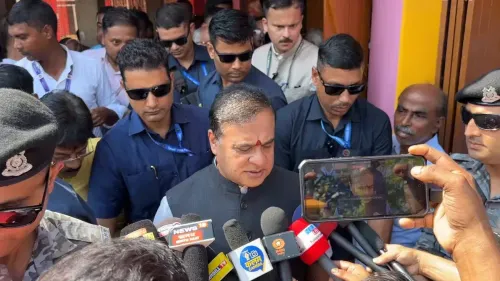
On the auspicious morning of Kharna — the ritual that marks the second and perhaps most intimate day of Chhath Mahapav — Assam Chief Minister Himanta Biswa Sarma extended heartfelt wishes to all Chhath devotees across the country, invoking the blessings of Chhathi Maiya for happiness, peace, good health, and prosperity.
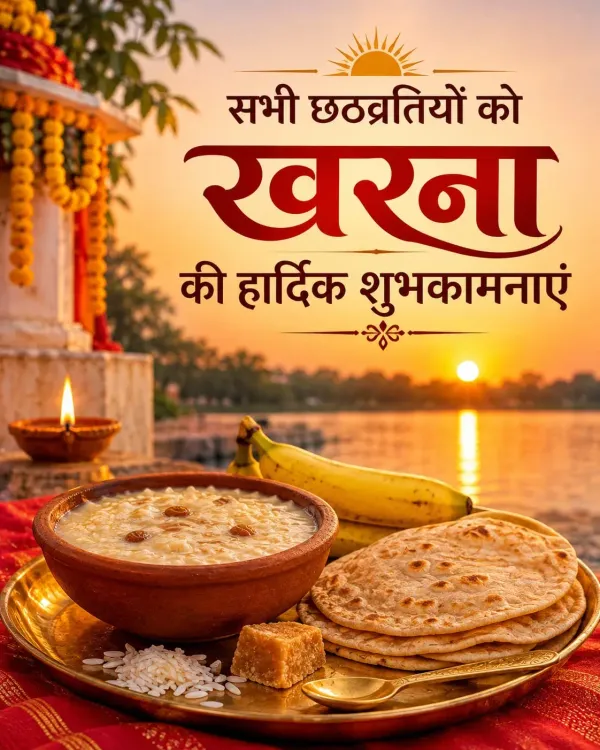
Posting on Saturday, 14 November 2026, CM Sarma wrote in Hindi: 'खरना के पावन अवसर पर सभी छठव्रतियों को हार्दिक शुभकामनाएँ' — 'Heartfelt greetings to all Chhath devotees on the sacred occasion of Kharna.' He described the festival as a symbol of 'folk faith, purity, and gratitude towards nature,' and prayed that Chhathi Maiya's grace continue to shine upon all.
What Kharna means — and why it matters
Kharna is the second day of the four-day Chhath Puja cycle, dedicated to the Sun God and Chhathi Maiya. Devotees — known as Chhathvratis — observe a strict day-long fast, breaking it only after sunset with a ritual meal of rice pudding, fruits, and sweets prepared entirely without salt or spices. It is considered a moment of deep spiritual purification before the central offering rituals at river or pond ghats that follow over the next two days.
The festival is observed with particular fervour by Bihari and Purvanchali communities — including significant migrant populations settled across Assam — making Sarma's outreach a pointed acknowledgement of their presence and cultural identity in the state.
Chhath in Assam — a diaspora festival finding its footing
While Chhath Puja has its roots in Bihar and eastern Uttar Pradesh, it has travelled far with migrant communities and is now visible at river ghats and water bodies in several Assam towns. The scale of public celebrations has grown steadily, reflecting the demographic footprint of Purvanchali workers and families in the state.
For a Chief Minister who also convenes the North-East Democratic Alliance (NEDA), greetings like these serve a dual purpose: they honour genuine cultural plurality while reinforcing the BJP-led outreach to communities whose electoral weight has grown in Assam's urban and semi-urban constituencies.
Chhath, more than most festivals, rewards public acknowledgement — its devotees are known for their intense communal solidarity, and a word from a sitting Chief Minister on Kharna morning lands with real warmth.
Point of View
The sizable Bihari and Purvanchali population in Assam whose cultural visibility has grown alongside their electoral significance. The invocation of 'folk faith, purity, and gratitude towards nature' as Chhath's defining values is a deliberate framing that positions the BJP as a custodian of pan-Indian devotional culture, not just a party of a particular region or caste cluster. For Sarma, who convenes the North-East Democratic Alliance, such messages also carry a signal to NEDA partners: that cultural outreach, not just political arithmetic, is the currency of regional consolidation. The gesture is routine — but its routine nature is precisely the point.
NationPress
14 Nov 2026
Frequently Asked Questions
What is Kharna in Chhath Puja?
Kharna is the second day of the four-day Chhath Puja festival. Devotees fast the entire day and break it after sunset with a ritual meal of rice pudding, fruits, and sweets made without salt or spices, as an act of purification before the main offerings at the ghat.
Why did CM Himanta Biswa Sarma wish Chhath devotees?
Assam CM Himanta Biswa Sarma extended Kharna greetings to acknowledge the large Bihari and Purvanchali communities in Assam who observe Chhath Puja, praying for their happiness, peace, health, and prosperity.
Is Chhath Puja celebrated in Assam?
Yes, Chhath Puja is celebrated in Assam, primarily by Bihari and Purvanchali migrant communities who observe the festival at river ghats and water bodies across the state, with public celebrations growing in scale over the years.
What does Chhath Mahapav represent?
Chhath Mahapav is a four-day Hindu festival dedicated to the Sun God and Chhathi Maiya, symbolising folk faith, purity, and gratitude towards nature. Devotees offer prayers at rivers or ponds at sunrise and sunset.
Who is Himanta Biswa Sarma?
Himanta Biswa Sarma is the Chief Minister of Assam since 2021 and a senior BJP leader. He also serves as the convenor of the North-East Democratic Alliance (NEDA), a coalition of BJP-allied parties in northeast India.