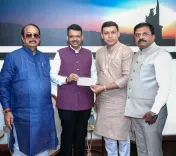
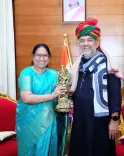
CM Himanta felicitates Lakhimpur's Dikpal Lahan for Assam Gaurav 2025

Synopsis
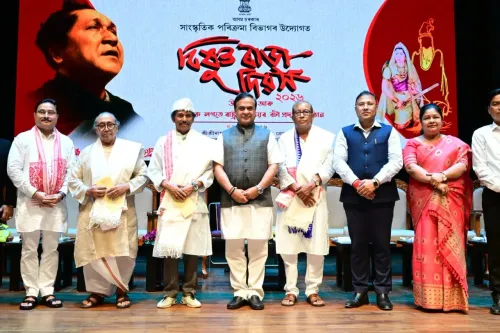
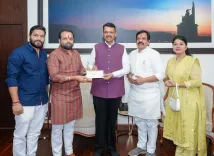
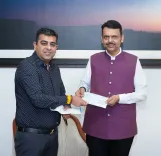
Chief Minister Himanta Biswa Sarma felicitated Dikpal Lahan of Lakhimpur on receiving the Assam Gaurav 2025 in Travel and Tourism. Lahan founded Gramyanubhuti, transforming Lahan Gaon into a globally recognised rural cultural destination and grassroots enterprise model.
Key Takeaways
Dikpal Lahan of Lakhimpur has been conferred the Assam Gaurav 2025 award in the Travel and Tourism sector.
Himanta Biswa Sarma personally felicitated Lahan at an official function on November 9, 2026 .
Lahan is the founder of 'Gramyanubhuti' , a rural tourism initiative centred on Lahan Gaon in Lakhimpur district.
The initiative has transformed Lahan Gaon into a community-based cultural destination attracting visitors beyond Assam.
The recognition reflects Assam's broader push to diversify tourism beyond its established circuits and spotlight grassroots enterprise.
A village in upper Assam just earned a spotlight on the national tourism map. Chief Minister Dr. Himanta Biswa Sarma on Monday, November 9, 2026 felicitated Shri Dikpal Lahan of Lakhimpur after he was conferred the prestigious Assam Gaurav 2025 award in the Travel and Tourism sector — recognition for turning a quiet rural settlement into a destination that draws visitors from well beyond Assam's borders.
From Lahan Gaon to global cultural destination
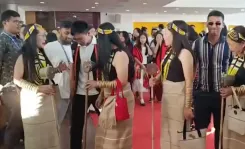
Dikpal Lahan is the founder of 'Gramyanubhuti' — a name that translates roughly to 'the rural experience' — a community-based tourism initiative rooted in Lahan Gaon, a village in Lakhimpur district in upper Assam. Where most tourism infrastructure gravitates toward the state's famed tea gardens, wildlife sanctuaries and river circuits, Lahan chose a different path: invite the world into everyday village life, preserve it, and let local communities profit from it. The initiative has since positioned Lahan Gaon as a cultural destination that resonates with travellers seeking authenticity over spectacle.
The Assam Gaurav is one of the state's highest civilian honours, awarded across sectors to individuals whose work has measurably shaped their field. Being recognised specifically in Travel and Tourism places Lahan's grassroots model on the same plane as the more established pillars of Assam's tourism economy.
Assam's bet on rural tourism as economic engine
Assam has been deliberately broadening its tourism identity beyond the iconic — Kaziranga, Majuli, the Brahmaputra riverfront — to bring lesser-known districts into the revenue conversation. Community-based models like Gramyanubhuti align directly with that strategy: they generate local employment, preserve ethnic cultural practices, and reduce the state's dependence on a narrow band of high-traffic sites. Public felicitations by the Chief Minister's Office amplify these grassroots stories, effectively signalling to other entrepreneurs that innovation at the village level is both noticed and rewarded.
Lakhimpur district, historically associated with tea cultivation and the Subansiri river basin, holds significant rural and ethnic cultural assets that remain underexplored on the mainstream tourism circuit. Lahan's work represents a template — one the state government appears keen to replicate across other districts.
For a founder who started by reimagining his own village, the Assam Gaurav is not just an individual honour. It is a signal that Assam's most compelling tourism stories may still be waiting to be discovered — one gaon at a time.
Point of View
Oil and wildlife. By elevating grassroots founders through high-visibility awards, the Chief Minister's Office creates aspirational signals for entrepreneurs in other underserved districts. The move also fits a pattern of using soft-power tools — honours, felicitations, social amplification — to accelerate community-led development without direct fiscal outlay. Watch whether Gramyanubhuti's template gets institutionally replicated or remains an isolated success story.
NationPress
9 Nov 2026
Frequently Asked Questions
Who is Dikpal Lahan and what is Gramyanubhuti?
Dikpal Lahan is a resident of Lakhimpur district in Assam and the founder of Gramyanubhuti, a rural tourism initiative that developed Lahan Gaon into a community-based cultural destination attracting visitors from across India and abroad.
What is the Assam Gaurav award?
The Assam Gaurav is a prestigious state-level civilian honour conferred by the Government of Assam to individuals who have made distinguished contributions across various sectors, including tourism, culture and enterprise.
Why did Dikpal Lahan receive the Assam Gaurav 2025?
He received the Assam Gaurav 2025 in the Travel and Tourism category for pioneering rural tourism through Gramyanubhuti, transforming Lahan Gaon into a globally recognised cultural destination and empowering local communities.
Where is Lahan Gaon located?
Lahan Gaon is a village in Lakhimpur district in upper Assam, which Dikpal Lahan developed into a community-based rural tourism site through his Gramyanubhuti initiative.
How does Assam's rural tourism model work?
Assam's community-based tourism model, as exemplified by Gramyanubhuti, invites visitors into village life to experience local culture, generates employment for rural residents, and helps preserve ethnic traditions — diversifying the state's tourism economy beyond its major wildlife and heritage circuits.