CM Himanta Unveils 5-Year Tourism Master Plan for Assam

Synopsis
Assam Chief Minister Himanta Biswa Sarma on 16 July 2026 unveiled a five-year Tourism Master Plan aimed at rural tourism, local livelihoods, and sustainable growth, anchored by a claim of 6 crore visitors to the state over the past decade.
Key Takeaways
CM Himanta Biswa Sarma announced a five-year Tourism Master Plan for Assam on 16 July 2026 .
The state government cited 6 crore visitors over the past decade as the baseline for future growth targets.
The plan focuses on three pillars: rural tourism , local livelihood generation , and sustainable growth .
The initiative aligns with the Union government's Swadesh Darshan scheme and the broader Act East Policy framework.
Key rollout milestones to watch include project sanctions , state budget allocations , and periodic visitor data releases.
Rural communities, homestay operators, and local tourism businesses are the plan's primary intended beneficiaries.
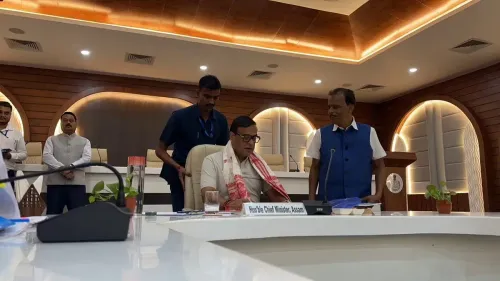
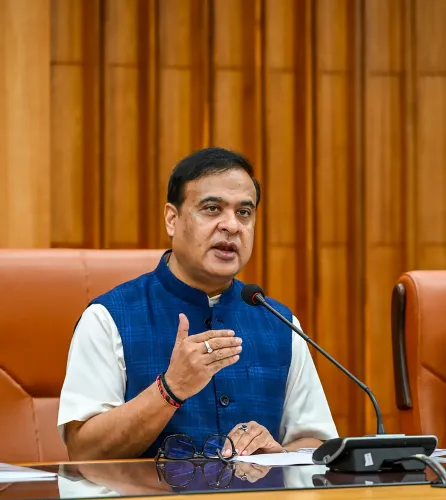
Assam Chief Minister Himanta Biswa Sarma on Thursday, 16 July 2026 announced a five-year Tourism Master Plan for the state, citing 6 crore visitors over the past decade as evidence of growing momentum and pledging to accelerate rural tourism, local livelihoods, and sustainable growth.
Context
Posting on X, CM Sarma declared, 'Awesome Assam is only getting bigger. 6 crore visitors in the last decade is just the beginning.' The statement positions the visitor milestone as a launchpad rather than a ceiling, framing the new master plan as the policy vehicle to sustain and deepen that trajectory. The post was accompanied by a video, underscoring the government's intent to promote the announcement widely.
Assam has long drawn visitors through its tea gardens, wildlife sanctuaries such as Kaziranga National Park, and rich cultural heritage rooted in Vaishnavite traditions and Bihu festivals. The state's geographic position as a gateway to the Northeast gives it strategic weight in regional tourism circuits.
Policy Backdrop
The five-year Tourism Master Plan is designed around three pillars: rural tourism expansion, employment generation for local communities, and environmentally sustainable growth. These objectives align closely with the Swadesh Darshan scheme, launched by the Union Ministry of Tourism in 2014-15, which targets theme-based and eco-tourism circuits with a rural emphasis.
More broadly, Assam and other Northeastern states have pursued tourism as a pillar of economic diversification under the Act East Policy framework, which seeks to deepen India's connectivity and trade ties with Southeast Asia by leveraging the region's geography and culture. State-level five-year roadmaps with measurable targets — footfall numbers, livelihood counts — have become a recurring feature of BJP-governed states seeking visible growth metrics in the tourism sector.
Stakeholders and Impact
The plan's most direct beneficiaries are rural communities across Assam — homestay operators, local guides, artisans, and small hospitality businesses that stand to gain from directed policy support and infrastructure investment. Sustainable tourism frameworks, when implemented effectively, can reduce the ecological pressure that mass tourism places on sensitive ecosystems such as the Brahmaputra floodplains and forest reserves.
Local tourism operators in towns like Jorhat, Tezpur, and Majuli — already nodes in existing circuits — are likely to be early focal points for plan implementation. The emphasis on rural tourism also signals an attempt to spread economic benefits beyond Guwahati and established wildlife corridors.
What's Next
Observers will watch for concrete rollout milestones: project sanctions under the master plan, dedicated budget allocations in forthcoming Assam state budgets, and periodic visitor data releases that will test the 6 crore baseline claim. The government's ability to translate the plan's three pillars into funded, time-bound projects will determine whether the ambition matches delivery.
If the master plan succeeds in linking rural employment to measurable footfall growth, Assam could emerge as a model for other Northeastern states seeking to balance economic development with ecological stewardship — a test case the region is watching closely.
Point of View
The '6 crore visitors' figure — to signal policy ambition and administrative momentum. By centering rural tourism and livelihoods, CM Sarma is simultaneously addressing two political priorities: economic inclusion in Assam's hinterland and alignment with national sustainable-tourism guidelines. The plan's credibility will hinge on budget follow-through and independent verification of visitor data, both of which remain to be seen. For the Northeast, where tourism is increasingly positioned as an alternative to extractive industries, Assam's execution will set a benchmark.
NationPress
14 Oct 2026
Frequently Asked Questions
What is Assam's 5-year Tourism Master Plan?
The Assam 5-year Tourism Master Plan is a state government policy framework announced by Chief Minister Himanta Biswa Sarma in July 2026, focused on accelerating rural tourism, generating local livelihoods, and driving sustainable economic growth across the state.
How many tourists visited Assam in the last decade?
Chief Minister Himanta Biswa Sarma cited 6 crore visitors to Assam over the past decade in his announcement of the Tourism Master Plan on 16 July 2026; this figure has not been independently verified.
What is the Swadesh Darshan scheme and how does it relate to Assam tourism?
Swadesh Darshan is a Union Ministry of Tourism scheme launched in 2014-15 to develop theme-based tourist circuits with a focus on rural and eco-tourism; Assam's new Tourism Master Plan aligns with its objectives by targeting rural communities and sustainable development.
How does Assam tourism connect to the Act East Policy?
The Act East Policy positions India's Northeastern states as gateways to Southeast Asia; Assam and its neighbours have used this framework to justify tourism investment as part of broader economic diversification and regional connectivity goals.
What are the main benefits of Assam's Tourism Master Plan for local communities?
The plan is designed to benefit rural communities directly — including homestay operators, local guides, artisans, and small hospitality businesses — by channelling tourism investment and infrastructure support to areas beyond the state's major urban centres.