Assam tourism master plan: 5-year roadmap after 6 crore visitors in a decade
Synopsis
Assam has clocked nearly six crore visitors over the past decade — and Chief Minister Himanta Biswa Sarma is now betting that a structured five-year Tourism Master Plan can convert that footfall into lasting rural livelihoods. The pivot toward village-level tourism and sustainable growth signals a shift from volume-chasing to economic depth.
Key Takeaways
Assam CM Himanta Biswa Sarma announced a five-year Tourism Master Plan on 16 July .
The state recorded nearly six crore visitors over the past decade.
The plan prioritises rural tourism , local livelihood generation and sustainable growth.
Lesser-known destinations, improved infrastructure and community participation are key focus areas.
The government aims to balance infrastructure expansion with environmental conservation and community welfare.
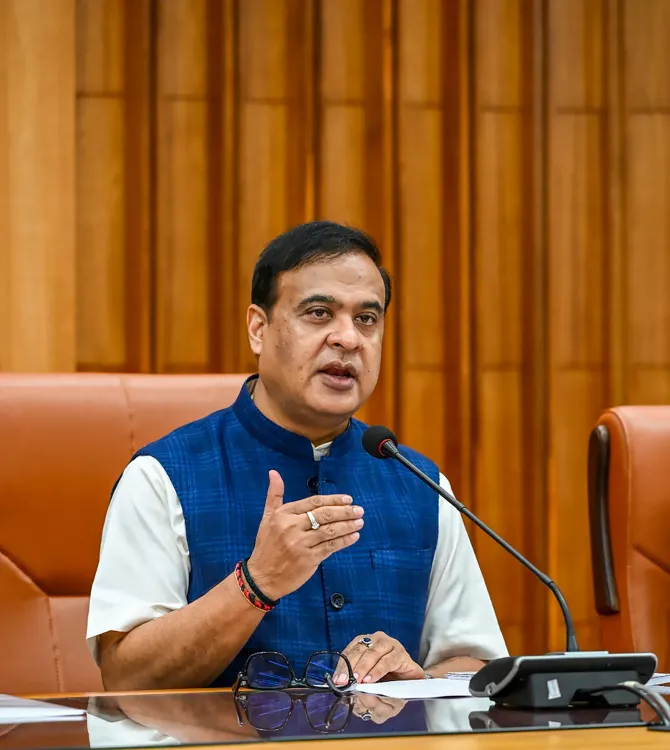
Assam Chief Minister Himanta Biswa Sarma on Thursday, 16 July announced that the state is rolling out a comprehensive five-year Tourism Master Plan, building on a milestone of nearly six crore visitors recorded over the past decade. The plan is designed to accelerate rural tourism, generate local livelihoods and ensure sustainable growth across one of India's most ecologically and culturally rich states.
What the Master Plan Targets
The five-year roadmap is expected to prioritise lesser-known destinations, strengthen tourism infrastructure and deepen community participation in tourism-linked economic activity. Officials indicate the plan will expand Assam's offerings beyond its established attractions — spanning wildlife, rivers and heritage — into village-level experiences that can spread economic benefits more equitably.
The government's emphasis on rural tourism reflects a deliberate strategy to diversify income streams for communities that have historically been on the margins of the state's growth story. Greater investment in this segment is also seen as a way to reduce over-dependence on a handful of marquee destinations.
What Chief Minister Sarma Said
Announcing the initiative in a post on social media platform X, Chief Minister Sarma said: 'Awesome Assam is only getting bigger. Six crore visitors in the last decade is just the beginning. Our five-year Tourism Master Plan will accelerate rural tourism, generate local livelihoods and power sustainable growth. The best is yet to come.'
Sarma has consistently positioned tourism as a pillar of Assam's economic diversification, highlighting its potential across eco-tourism, heritage tourism, river tourism and wildlife tourism as distinct growth verticals.
Assam's Tourism Trajectory
Over the past several years, the state government has invested in improving connectivity, upgrading visitor facilities and promoting festivals and cultural events to build Assam's profile as a leading destination in the Northeast. The region has historically been underpenetrated by domestic and international travellers relative to its natural and cultural assets.
Notably, this latest announcement is part of a broader pattern of policy attention on the Northeast, where tourism is increasingly viewed as a vehicle for both economic integration and soft-power projection. Assam, as the region's largest state, is positioned to anchor that push.
Sustainability and Community Focus
The government has underscored that infrastructure expansion under the new plan will be balanced against environmental conservation and community welfare — a signal that the master plan will incorporate sustainability benchmarks rather than pursue visitor volume alone.
Officials believe that linking tourism growth to local entrepreneurship and employment in villages will help ensure that the economic gains of the sector are distributed beyond urban centres like Guwahati.
What Comes Next
The detailed contours of the five-year plan, including sector-wise targets, investment projections and implementation timelines, are yet to be formally released. With the foundation of six crore visitors already in place, the government's next challenge is translating headline momentum into verifiable outcomes at the grassroots level.
Point of View
But the real question is where those visitors went and who benefited. Assam's tourism economy has historically concentrated around Kaziranga, Majuli and a handful of river circuits — leaving vast rural stretches economically untouched. A master plan that genuinely routes footfall and spending into villages would be structurally significant; one that merely repackages existing schemes under a new label would not. The government's framing around 'sustainable growth' and 'community welfare' is the right language — the test is whether the plan publishes measurable rural employment targets and independent tracking mechanisms when it is formally released.
NationPress
14 Oct 2026
Frequently Asked Questions
What is Assam's five-year Tourism Master Plan?
It is a comprehensive roadmap announced by Chief Minister Himanta Biswa Sarma on 16 July to scale up Assam's tourism sector over five years, focusing on rural tourism, local livelihood creation and sustainable growth. The plan aims to build on the state's record of nearly six crore visitors over the past decade.
How many tourists has Assam received in the last decade?
Assam recorded nearly six crore visitors over the last ten years, according to the state government. Chief Minister Sarma described this as 'just the beginning' ahead of the new master plan's rollout.
What does the Tourism Master Plan focus on?
The plan prioritises expanding rural tourism, promoting lesser-known destinations, improving tourism infrastructure and encouraging community participation in tourism-related activities. It also aims to balance infrastructure growth with environmental conservation.
Why is rural tourism a priority for Assam?
Officials believe rural tourism can diversify the state's offerings beyond established attractions, generate employment in villages and boost local entrepreneurship — spreading economic benefits more equitably across communities that have seen limited gains from tourism so far.
What types of tourism is Assam promoting?
Assam is promoting eco-tourism, heritage tourism, river tourism and wildlife tourism as distinct growth verticals, alongside cultural festivals and connectivity improvements to attract both domestic and international visitors.