CM Himanta Flags 11 Lakh Affected in Assam Floods
Synopsis
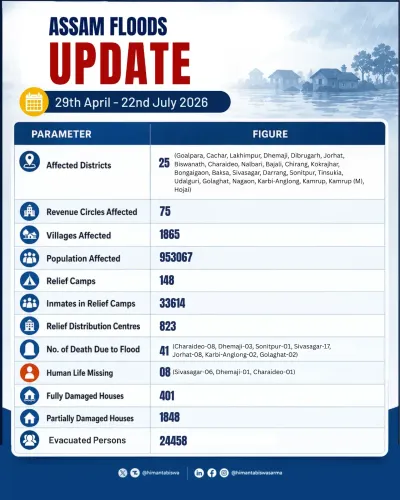
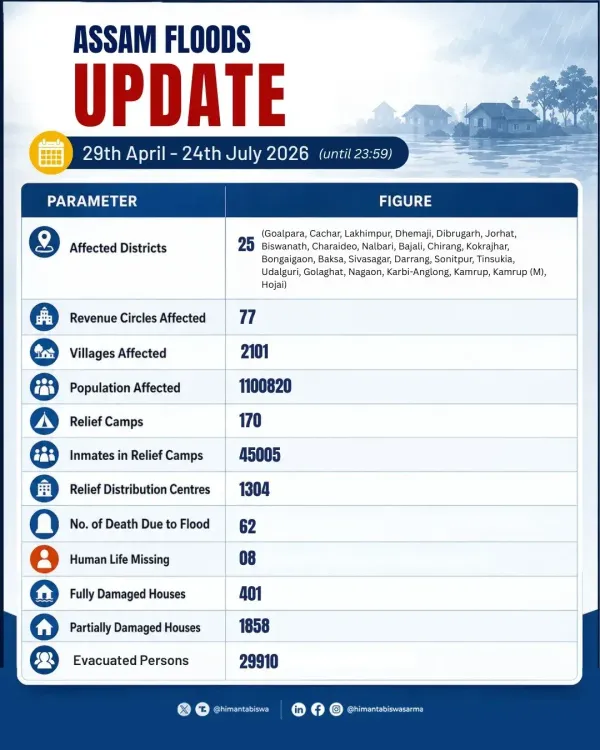
Assam Chief Minister Himanta Biswa Sarma confirmed on 25 July 2026 that over 11 lakh people have been affected by floods across the state. Relief, rescue, and rehabilitation teams are deployed across all affected districts, with the state's disaster management machinery in full operation.
Key Takeaways
Assam CM Himanta Biswa Sarma issued a flood update on 25 July 2026 .
Over 11 lakh people have been affected by floods across Assam's districts.
Relief, rescue, and rehabilitation operations are described as 'in full swing.' The Assam State Disaster Management Authority (ASDMA) is the nodal coordinating agency.
The response operates under the legal framework of the Disaster Management Act, 2005 .
Further central government assistance announcements are expected as damage assessments proceed.
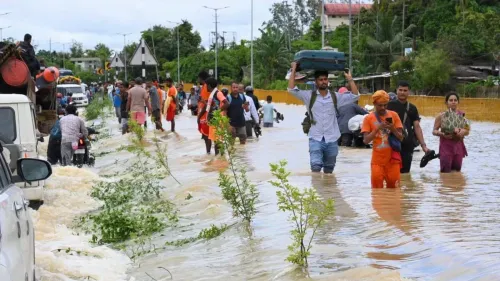
Assam Chief Minister Himanta Biswa Sarma on Saturday, 25 July 2026, issued a public update on the ongoing Assam floods, stating that over 11 lakh people have been affected and that relief, rescue, and rehabilitation efforts are actively under way across the state's flood-hit districts.
Context
Assam faces annual monsoon flooding driven by the Brahmaputra and Barak river systems, which routinely breach their banks between June and September, inundating farmland, roads, and settlements across multiple districts. The scale of displacement and damage varies each year, but the humanitarian footprint is consistently large, making real-time official communication a critical part of the state's disaster response.
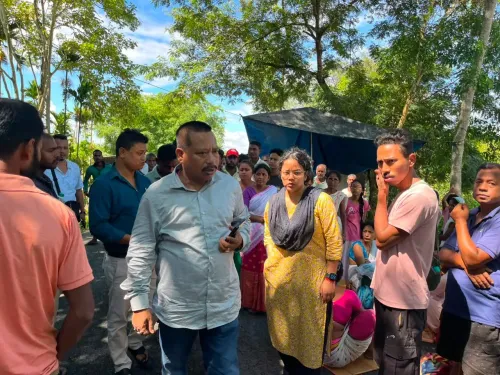
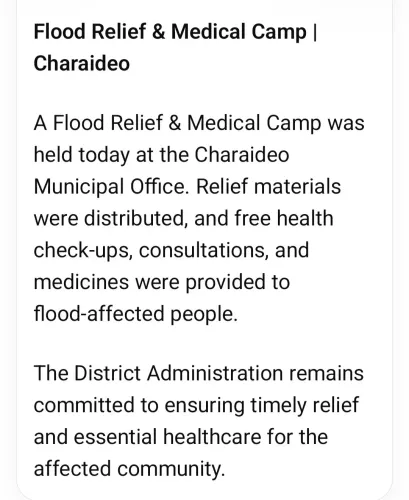
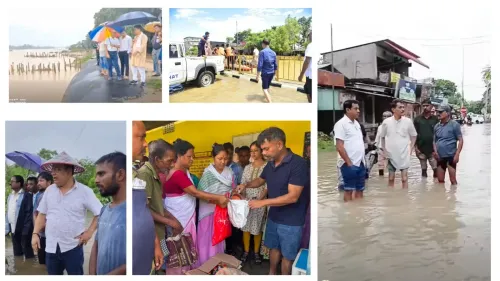
In his post, CM Sarma confirmed that state teams are deployed across affected districts, focusing on delivering relief supplies and conducting rescue operations. 'Our teams continue to respond across the affected districts, ensuring relief, rescue and essential supplies reach everyone affected,' he wrote, adding that 'relief, rescue and rehabilitation efforts are in full swing.'
Policy Backdrop
The legal architecture for this response is rooted in the Disaster Management Act, 2005, which established the framework for state disaster management authorities and mandated coordinated annual flood response protocols. The Assam State Disaster Management Authority (ASDMA) is the nodal agency responsible for planning and executing these operations on the ground.
CM Sarma, who assumed office in May 2021, has presided over the state's flood response machinery in each subsequent monsoon season. His administration has combined immediate rescue and supply distribution with longer-term infrastructure projects including embankment reinforcement and drainage improvement works. Public updates on social media platforms have become a standard mode of real-time accountability during active flood events under his tenure.
Stakeholders and Impact
The most immediate stakeholders are the over 11 lakh residents displaced or otherwise affected across the flood-hit districts. These populations depend on state relief camps, food distribution, drinking water supply, and medical assistance during the crisis period. Farmers, fisherfolk, and daily-wage workers in low-lying areas typically bear the heaviest economic losses.
State relief agencies, including district administrations and the ASDMA, are coordinating the on-ground response. Central government agencies and the National Disaster Response Force (NDRF) typically supplement state capacity during large-scale flood events, though no specific central deployment was mentioned in this update.
What's Next
The coming weeks will be critical for both the rescue phase and the transition to rehabilitation. Assessments of crop damage, infrastructure loss, and housing destruction will determine the scale of compensation packages to be announced. Observers will watch closely for any formal request from the state government to the Centre for additional financial assistance under the State Disaster Response Fund (SDRF) or the National Disaster Response Fund (NDRF).
With the monsoon season likely to continue through September, further flood waves remain a possibility, making sustained deployment of relief infrastructure essential. The state's ability to manage rehabilitation alongside an ongoing emergency will be a key test of its disaster governance capacity this season.
Point of View
The scale places this event firmly in the category of major humanitarian emergencies that test state capacity. The update's emphasis on 'relief, rescue and rehabilitation' in a single breath signals an intent to project comprehensive readiness, not just emergency triage. How quickly the state transitions from rescue to credible rehabilitation — including compensation disbursement — will determine the political and governance legacy of this flood season.
NationPress
25 Jul 2026
Frequently Asked Questions
How many people have been affected by Assam floods in 2026?
According to an update by Assam Chief Minister Himanta Biswa Sarma on 25 July 2026, over 11 lakh people have been affected by the ongoing floods across the state's districts.
What is the government doing about the Assam floods?
The Assam state government has deployed teams across all affected districts for relief, rescue, and rehabilitation. Essential supplies are being distributed and rescue operations are active, coordinated by the Assam State Disaster Management Authority.
Which rivers cause flooding in Assam every year?
The Brahmaputra and Barak rivers are the primary drivers of Assam's annual monsoon floods. Their basins regularly breach during the June-to-September monsoon season, inundating large parts of the state.
What is the Assam State Disaster Management Authority?
The Assam State Disaster Management Authority (ASDMA) is the state agency responsible for planning and coordinating disaster response, including flood relief, rescue, and rehabilitation operations under the Disaster Management Act, 2005.
Will the central government provide assistance for Assam floods?
While no specific central deployment was mentioned in CM Sarma's update, the central government typically provides assistance through the State Disaster Response Fund (SDRF) and National Disaster Response Fund (NDRF) for large-scale flood events. Formal requests and announcements are expected as damage assessments are completed.