CM Himanta Flags Key Job Sectors for Assam's Class 12 Passouts

Synopsis
Assam Chief Minister Himanta Biswa Sarma on 18 June 2026 addressed Class 12 board passouts, highlighting key sectors poised to drive the state's job market and urging students to prepare for emerging opportunities — consistent with his government's sustained push to diversify Assam's economy since 2021.
Key Takeaways
CM Himanta Biswa Sarma posted on 18 June 2026 , targeting Assam's Class 12 students whose board results had just been declared.
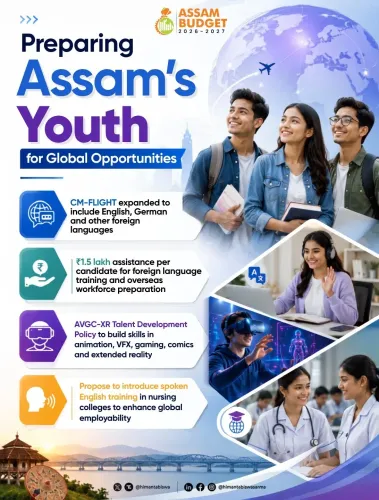
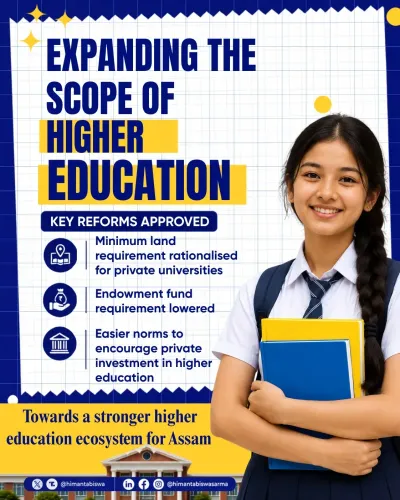
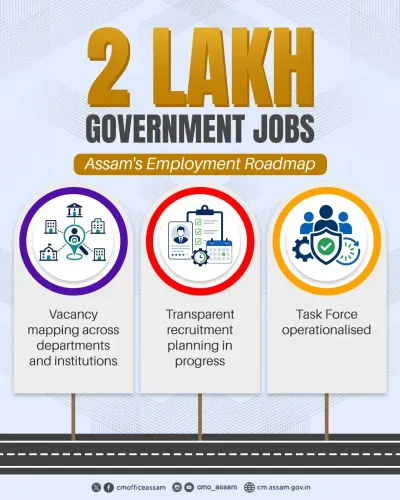
The Chief Minister highlighted specific sectors he identified as shaping the Assam job market in the near future.
The message urged students to proactively prepare: 'The opportunities will be limitless, make sure you are ready to grab it.' The post reflects the Sarma government's broader policy since 2021 to diversify Assam's economy beyond oil, tea, and agriculture.
CM Sarma , as convenor of NEDA , has been a key driver of employment-focused economic initiatives across the North-East.
Concrete follow-up — skill missions, job fairs, or budget allocations — is expected in the weeks following the results season.
Assam Chief Minister Himanta Biswa Sarma on Thursday, 18 June 2026, reached out directly to students whose Class 12 board results have been declared, outlining the sectors he believes will define Assam's job market in the near future and urging young people to position themselves accordingly.
Context
The post arrives at a pivotal moment for thousands of young Assamese students stepping out of school and weighing their next move — whether higher education, vocational training, or direct entry into the workforce. CM Sarma addressed them with a career-forward message: 'The opportunities will be limitless, make sure you are ready to grab it.'
The timing is deliberate. Board results in Assam typically trigger a surge in queries about college admissions, skill courses, and employment pathways. By speaking directly on social media, the Chief Minister is positioning the state government as a guide for the post-result transition.
Policy Backdrop
Since assuming office in May 2021, the Sarma government has consistently pushed to diversify Assam's economy beyond its traditional pillars of oil, tea, and agriculture. Successive policy interventions have targeted industrialisation, skill development, and private investment to expand modern employment options for the state's youth.
This approach aligns with the broader Act East Policy framework, under which North-Eastern states — several of them governed by NEDA-aligned parties — have pursued infrastructure upgrades and sector-specific investment summits. CM Sarma, as convenor of the North-East Democratic Alliance (NEDA), has been a central figure in coordinating this regional economic push.
Stakeholders and Impact
The primary audience is Assam's Class 12 graduating cohort of 2026 — students at the crossroads of choosing between higher education and skill-based careers. Career counsellors, college admission offices, and vocational training institutions are secondary stakeholders who stand to benefit from increased student awareness about emerging sectors.
Youth unemployment has been a persistent challenge in Assam and the wider North-East. State-level messaging from the Chief Minister that spotlights specific growth sectors can influence enrolment patterns in skill-development programmes and guide private training providers toward demand-aligned courses.
What's Next
Observers will watch for concrete follow-through: state budget allocations toward the highlighted sectors, new skill-mission roll-outs, or job-fair events timed to coincide with the post-result season. The Sarma government's track record suggests that social media signals from the Chief Minister are often precursors to formal policy announcements or investment-outreach events.
For Assam's Class 12 students, the immediate next step is to map personal strengths against the sectors the government has flagged as growth areas — and to explore the training pathways the state is expected to facilitate in the coming months.
Point of View
The Chief Minister reinforces his administration's narrative of proactive economic stewardship. The message also serves a policy signalling function: it primes students, parents, and training institutions to align with sectors the government intends to prioritise in upcoming budgets or investment drives. Within the NEDA framework, this kind of coordinated youth outreach is increasingly standard practice across BJP-aligned North-Eastern governments seeking to demonstrate developmental governance.
NationPress
19 Sept 2026
Frequently Asked Questions
What did Assam CM Himanta Biswa Sarma say about jobs for Class 12 students?
On 18 June 2026, CM Himanta Biswa Sarma posted on X urging Class 12 passouts to identify and prepare for key sectors he said would shape Assam's job market in the coming days, calling the upcoming opportunities 'limitless.'
Which sectors will drive jobs in Assam according to CM Himanta?
CM Sarma flagged specific growth sectors in his post, though the government is expected to elaborate through formal policy announcements, skill missions, or job-fair events in the weeks following the board results.
What is the Assam government doing for youth employment in 2026?
The Sarma government has since 2021 pursued industrialisation, skill development, and private investment to diversify Assam's economy beyond oil, tea, and agriculture, with social media outreach to students forming part of that broader strategy.
How does Himanta Biswa Sarma's NEDA role affect jobs in the North-East?
As convenor of the North-East Democratic Alliance (NEDA), CM Sarma coordinates economic and employment initiatives across BJP-aligned North-Eastern states, aligning them with the central government's Act East Policy and regional connectivity drives.
What should Assam Class 12 students do after their board results in 2026?
CM Sarma advised students to identify the key sectors the state government has highlighted and ensure they are prepared — through higher education or skill training — to seize the employment opportunities expected to emerge in those areas.