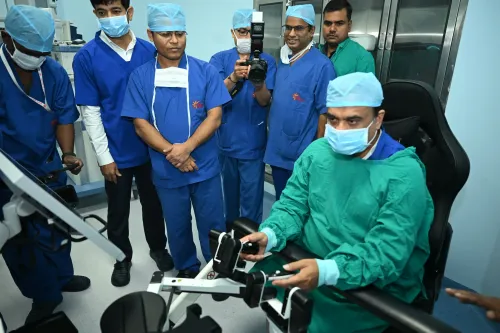
CM Himanta: GMCH Gauhati performs first robotic heart surgery in Northeast
Synopsis
Gauhati Medical College and Hospital has performed the Northeast's first robotic-assisted cardiac surgeries — CABG and Mitral Valve procedures — marking a major leap in public healthcare for the region, with Assam CM Himanta Biswa Sarma signalling a cardiac transplant programme as the next goal.
Key Takeaways
GMCH Gauhati performed the first-ever robotic-assisted cardiac surgeries in Assam and the Northeast , including Coronary Artery Bypass Grafting and Mitral Valve surgery.
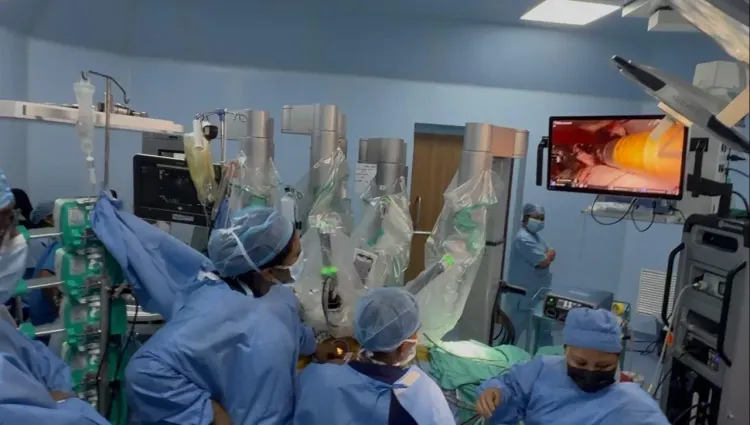
The procedures use 3D visualisation and robotic precision , enabling small-incision surgery with less pain and faster patient recovery.
CM Himanta Biswa Sarma announced the milestone on September 27, 2026 , framing it as part of a sustained drive to make GMCH a world-class facility.
Assam's healthcare strategy since 2021 has focused on upgrading existing institutions like GMCH rather than building new standalone facilities.
The next declared target is a comprehensive cardiac transplant programme at GMCH — a step that would require national regulatory and organ-network integration.
A successful transplant programme would give roughly 50 million people across the Northeast access to the full cardiac-care spectrum within the region for the first time.
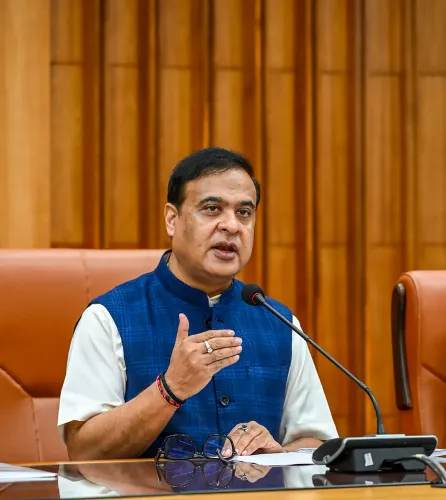
For decades, patients across Northeast India needing complex cardiac intervention had one well-worn option: pack a bag and travel thousands of kilometres to a hospital in Chennai, Mumbai, or Delhi. That calculus just shifted. Assam Chief Minister Himanta Biswa Sarma announced on Sunday, September 27, 2026, that Gauhati Medical College and Hospital (GMCH) has performed the region's first-ever robotic-assisted cardiac surgeries — including Coronary Artery Bypass Grafting (CABG) and Mitral Valve surgery — a landmark that rewrites what public healthcare in the Northeast can offer.
What happened inside GMCH's operating theatre
The procedures, performed using 3D visualisation and robotic precision, mark a generational leap for a government hospital that once struggled to retain specialists, let alone deploy surgical robotics. Robotic-assisted cardiac surgery allows surgeons to work through small incisions — reducing blood loss, post-operative pain, and recovery time compared with conventional open-heart techniques. Sarma noted the significance plainly: 'complex heart surgeries can now be done through small incisions, meaning less pain and faster recovery for patients.'
Both CABG — the rerouting of blood flow around blocked coronary arteries — and Mitral Valve surgery are high-acuity procedures that demand precision instrumentation and experienced teams. Their successful execution at a public facility in Guwahati signals that the infrastructure and the human capital are now in place, not just the ambition.
GMCH's decade-long climb toward tertiary cardiac care
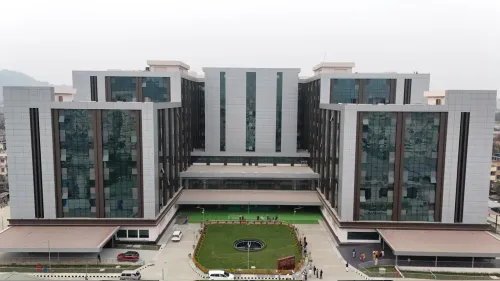
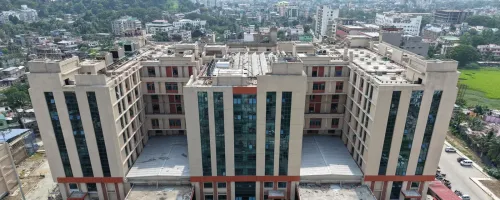
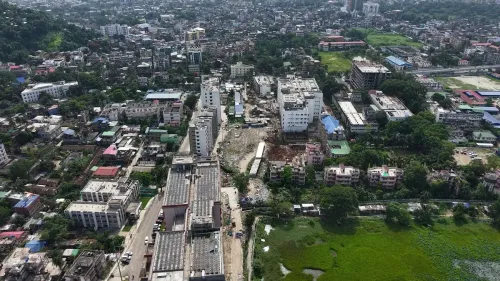
GMCH, Assam's premier government medical institution, has been at the centre of the state's post-2021 healthcare push under Sarma's administration. The strategy has been deliberate: modernise existing institutions rather than build greenfield ones, layer in super-specialty services, and cut the tide of out-of-state patient referrals that drain both public money and family savings across the eight-state Northeast. Cardiac care has been one of the sharpest pressure points — the region's geography makes emergency transfers to distant cities not just expensive but genuinely dangerous.
The broader pattern across eastern and northeastern states has been incremental adoption of robotic and minimally invasive technology at flagship public hospitals, creating regional centres of excellence anchored to medical colleges. Assam's move fits that arc — but being first in the Northeast gives GMCH a distinct pole position.
Cardiac transplants next: what Sarma has signalled
The Chief Minister did not frame Sunday's announcement as a finish line. He flagged the next milestone explicitly: a comprehensive cardiac transplant programme — an ambition that would require regulatory clearances, organ-sharing frameworks, dedicated transplant teams, and sustained state funding. Transplant programmes are categorically more complex than even robotic surgery; they demand round-the-clock infrastructure, immunology expertise, and coordination with national organ-sharing networks like NOTTO.
If realised, a functioning transplant programme at GMCH would make Guwahati one of the very few cities outside India's major metros capable of offering the full spectrum of cardiac intervention under one public-sector roof — a structural shift for a region of roughly 50 million people who currently have no such option within reach.
The robots are in the room. The question now is how fast the rest of the ecosystem — transplant approvals, trained perfusionists, organ logistics — can catch up with the ambition Sarma has now put on the record.
Point of View
Who has consistently linked healthcare upgrades to the Northeast's broader economic and demographic integration with mainland India, this reduces one of the starkest regional inequities: the forced migration of critically ill patients to distant metros. The pivot toward a transplant programme, however, will test the limits of state-level ambition — transplant ecosystems require national regulatory scaffolding, sustained funding, and interoperability with organ-sharing networks that no single state controls. How Assam navigates that next layer will determine whether GMCH becomes a genuine regional centre of excellence or a symbolically important but institutionally bounded outlier.
NationPress
27 Sept 2026
Frequently Asked Questions
What robotic heart surgeries were performed at GMCH Gauhati?
GMCH Gauhati performed robotic-assisted Coronary Artery Bypass Grafting (CABG) and Mitral Valve surgery — the first such procedures ever conducted in Assam and the broader Northeast region.
What is the benefit of robotic cardiac surgery over traditional open-heart surgery?
Robotic-assisted cardiac surgery uses small incisions guided by 3D visualisation and robotic precision, resulting in less blood loss, reduced post-operative pain, and significantly faster recovery compared with conventional open-chest procedures.
What is Assam CM Himanta Biswa Sarma's next healthcare goal for GMCH?
CM Sarma has announced plans to establish a comprehensive cardiac transplant programme at GMCH Gauhati, which would make it one of the very few public hospitals outside India's major metros offering the full spectrum of cardiac intervention.
Why is this cardiac surgery milestone significant for Northeast India?
Patients across the eight-state Northeast region have historically had to travel to distant cities like Chennai, Mumbai, or Delhi for advanced cardiac care. GMCH's new robotic capability means complex heart surgeries can now be accessed locally at a public hospital.
What is GMCH Gauhati and how has it been upgraded in recent years?
Gauhati Medical College and Hospital is Assam's premier government medical institution. Since 2021, the Assam government has prioritised phased modernisation of GMCH's infrastructure and the introduction of super-specialty tertiary cardiac services to reduce out-of-state patient referrals.