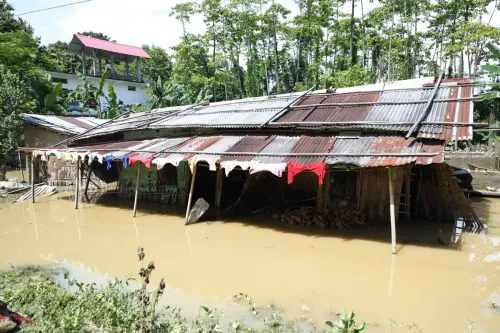
CM Himanta grants 6-month loan moratorium to Assam flood victims

Synopsis
Assam Chief Minister Himanta Biswa Sarma has announced a six-month loan repayment moratorium and extended tenure for flood-affected families in Jorhat, Sivasagar, Charaideo and Golaghat, offering financial breathing room as communities rebuild after monsoon inundation.
Key Takeaways
Assam CM Himanta Biswa Sarma announced the relief on 30 July 2026 .
A six-month moratorium on all loan instalment payments has been granted to flood-affected borrowers.
Repayment tenures will also be formally extended beyond original deadlines.
The relief applies to families in Jorhat, Sivasagar, Charaideo and Golaghat districts of upper Assam.
Multiple categories of loans — agricultural, housing and small business credit — are covered under the measure.
Bank-level implementation and rollout to eligible borrowers remains the key next step to watch.
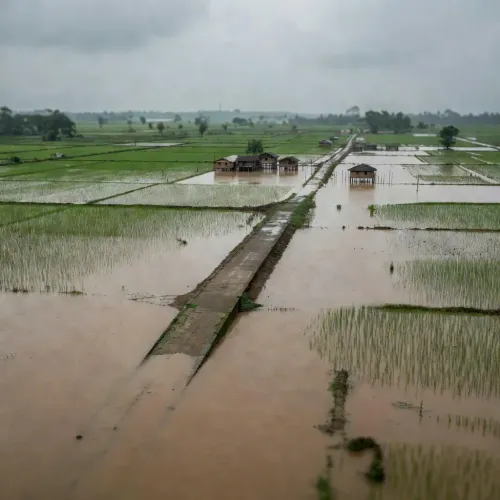
When floodwaters recede, the debt does not. Assam Chief Minister Himanta Biswa Sarma on 30 July 2026 announced a targeted financial lifeline for flood-hit families across four upper Assam districts — a six-month loan repayment moratorium paired with an extended repayment tenure, aimed at easing the economic wreckage left behind by the monsoon season.
Four districts, one relief order
The relief covers borrowers in Jorhat, Sivasagar, Charaideo and Golaghat — a stretch of upper Assam that faces annual inundation from the Brahmaputra and its tributaries. Sarma stated that affected families will receive a moratorium on all categories of loan instalments for six months, and that repayment deadlines will be formally extended beyond the original schedule.
Posting in Assamese, the Chief Minister framed the decision in plain terms: 'বানপীড়িত পৰিয়ালসমূহক আৰ্থিক বোজা লাঘৱ কৰি স্বাভাৱিক জীৱনলৈ ঘূৰি আহিবলৈ' — 'to reduce the financial burden on flood-affected families and help them return to normal life.' The government, he said, hopes this step will provide at least some measure of that relief.
Why upper Assam bears the brunt every year
The four districts sit in a corridor where the Brahmaputra fans out across its widest floodplain. Charaideo, the youngest of the four — carved out as a separate district only in 2015 — has already become a recurring name on flood-damage registers. Golaghat, bordering Nagaland, and the historically significant Sivasagar face similar seasonal cycles of inundation, crop loss and damaged infrastructure.
Assam governments across administrations have responded to these cycles with credit restructuring, interest subvention and ex-gratia payments. The moratorium model — pausing EMI obligations rather than waiving them — allows borrowers breathing room without placing the full write-off burden on lending institutions.
What the moratorium means in practice
A six-month pause on instalments means flood-affected families — whether they hold agricultural loans, small business credit or housing loans — will not face default notices or penal interest charges through the immediate post-flood recovery window. The simultaneous extension of overall repayment tenure ensures the paused instalments are redistributed across a longer period rather than piling up as a lump sum.
The bank-level rollout — how lenders notify borrowers, process the restructuring and handle accounts already in arrears — will determine how quickly relief reaches the ground. That implementation detail is now the critical watch point.
For families rebuilding homes and replanting fields, six months without a debt collector at the door is not a solution — but it is a start.
Point of View
A fiscally conservative approach that protects lenders while still offering borrowers tangible relief. Targeting four upper Assam districts rather than the entire state suggests a calibrated, damage-mapped response, which could set a template for future flood seasons. The announcement also carries political weight: upper Assam is a BJP stronghold, and visible welfare delivery in the immediate aftermath of a disaster reinforces the party's governance narrative in the region. The real test will be how swiftly banks operationalise the moratorium and whether the relief reaches marginal borrowers who often lack the documentation to trigger formal restructuring.
NationPress
31 Jul 2026
Frequently Asked Questions
What is the loan moratorium announced by Assam CM Himanta Biswa Sarma for flood victims?
Assam Chief Minister Himanta Biswa Sarma has announced a six-month pause on all loan instalment payments for flood-affected families in Jorhat, Sivasagar, Charaideo and Golaghat districts, along with a formal extension of overall repayment tenures.
Which districts in Assam are covered under the flood loan relief?
The relief covers borrowers in four upper Assam districts: Jorhat, Sivasagar, Charaideo and Golaghat — all regularly impacted by Brahmaputra valley flooding during the monsoon season.
What types of loans are included in the Assam flood moratorium?
The announcement covers various categories of loans, which would typically include agricultural loans, housing loans and small business credit held by flood-affected families in the specified districts.
Does the moratorium mean the loan is waived or cancelled?
No. A moratorium pauses instalment payments for six months without cancelling the debt. The repayment tenure is extended so the paused instalments are spread over a longer period rather than added as a lump sum.
When did Assam announce the flood relief loan moratorium?
Chief Minister Himanta Biswa Sarma announced the measure on 30 July 2026 via a post on X, stating that the government had decided to stand by flood-affected families and ease their financial burden.