CM Himanta Greets Seven States on Statehood Day

Synopsis
On 1 November 2026, Assam CM Himanta Biswa Sarma greeted the seven states — Andhra Pradesh, Chhattisgarh, Karnataka, Kerala, Madhya Pradesh, Punjab and Tamil Nadu — on their Statehood Day, invoking India's diversity as a source of national unity.
Key Takeaways
Seven states — Andhra Pradesh, Chhattisgarh, Karnataka, Keralam, Madhya Pradesh, Punjab and Tamil Nadu — mark their Statehood Day on 1 November .
The States Reorganisation Act of 1956 created five of the seven states on this date by redrawing India's map along linguistic lines.
Chhattisgarh is the youngest, carved from Madhya Pradesh on 1 November 2000 ; Punjab was reorganised on 1 November 1966 .
Assam CM Himanta Biswa Sarma framed the occasion around unity in diversity: 'diverse identities and shared aspirations bind us together as one nation.' As NEDA convenor , Sarma's cross-regional outreach extends his political engagement well beyond the Northeast.
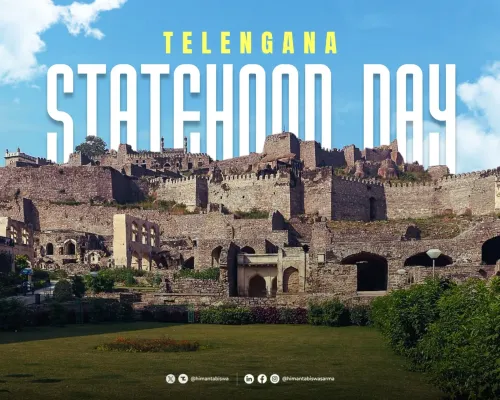
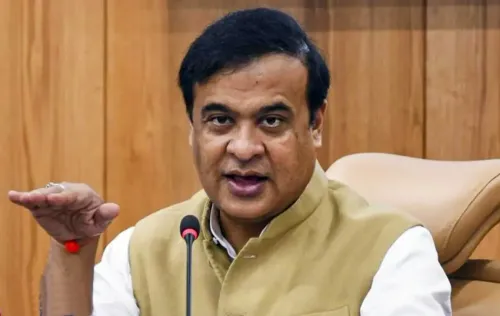
Every year on 1 November, seven Indian states mark the anniversaries of their formation — and this year, Assam Chief Minister Himanta Biswa Sarma opened the day with a message that framed their diversity not as difference, but as the very architecture of Indian unity.
In his post, Sarma extended 'warm greetings to the people of Andhra Pradesh, Chhattisgarh, Karnataka, Keralam, Madhya Pradesh, Punjab and Tamil Nadu' on their respective Statehood Days. 'India's strength lies in the beautiful diversity of its people, cultures and traditions,' he wrote. 'Our diverse identities and shared aspirations bind us together as one nation.'
One date, seven anniversaries — and a constitutional story
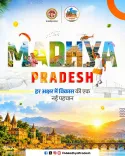
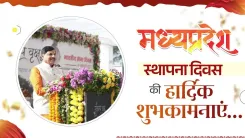
The cluster of celebrations on 1 November is no coincidence. The States Reorganisation Act of 1956 redrew India's internal map along linguistic lines, bringing Andhra Pradesh, Karnataka, Kerala, Madhya Pradesh and Tamil Nadu into their modern form on that single date. Punjab was reorganised on 1 November 1966, and Chhattisgarh — the youngest of the seven — was carved out of Madhya Pradesh on 1 November 2000. Seven states. Three different decades. One shared calendar date.
Together, these states account for a vast swathe of India's linguistic, cultural and geographic range — from the Punjabi plains in the north to the Tamil coastline in the south, from the central plateau of Madhya Pradesh to the forests of Chhattisgarh.
A northeastern voice reaching south and west
For a Chief Minister whose political domain is rooted in the Northeast — and who serves as convenor of the North-East Democratic Alliance (NEDA) — the gesture carries a quiet significance. Sarma's outreach to states as geographically and culturally distinct as Tamil Nadu and Punjab is consistent with a federal tradition of cross-regional solidarity that cuts across party lines. Indian chief ministers routinely mark one another's statehood anniversaries; what shifts with each message is the framing.
Sarma's framing on Sunday was explicitly integrationist: diversity as strength, not tension. In a political climate where centre-state relations and linguistic identity periodically surface as live fault lines, that word choice — 'our diverse identities and shared aspirations bind us together' — is deliberate and worth noting.
Statehood Day events, parades and cultural programmes are scheduled across the seven states on 1 November 2026, as residents mark the decades since their states took shape.
Point of View
But its framing rewards attention. By invoking 'diverse identities and shared aspirations' in a single breath, the Assam CM positions himself — and by extension the BJP's northeastern anchor — as a pan-India voice, not a regional one. For a party that has historically faced headwinds in southern states like Tamil Nadu and Karnataka, messaging that centres linguistic and cultural plurality over majoritarian consolidation is a calibrated posture. The gesture costs little politically but signals a federalist register that NEDA's cross-party, cross-region architecture is built to amplify.
NationPress
1 Nov 2026
Frequently Asked Questions
Which states celebrate Statehood Day on 1 November?
Seven states observe Statehood Day on 1 November: Andhra Pradesh, Chhattisgarh, Karnataka, Kerala, Madhya Pradesh, Punjab and Tamil Nadu.
Why do so many Indian states have their Statehood Day on 1 November?
The States Reorganisation Act of 1956 redrew India's internal boundaries along linguistic lines on 1 November of that year, creating Andhra Pradesh, Karnataka, Kerala, Madhya Pradesh and Tamil Nadu simultaneously. Punjab was reorganised on 1 November 1966, and Chhattisgarh was formed on 1 November 2000.
What did Himanta Biswa Sarma say on Statehood Day 2026?
Assam CM Himanta Biswa Sarma said 'India's strength lies in the beautiful diversity of its people, cultures and traditions' and that 'diverse identities and shared aspirations bind us together as one nation,' extending greetings to all seven states.
What is NEDA and what is Sarma's role in it?
NEDA — the North-East Democratic Alliance — is a coalition of political parties in India's Northeast that broadly aligns with the BJP. Himanta Biswa Sarma serves as its convenor, making him a key political bridge-builder across the region.
When was Chhattisgarh formed as a state?
Chhattisgarh was created on 1 November 2000 by bifurcation of Madhya Pradesh, making it the youngest of the seven states that celebrate Statehood Day on that date.