CM Himanta marks 12 years of India's assertive anti-terror policy
Synopsis
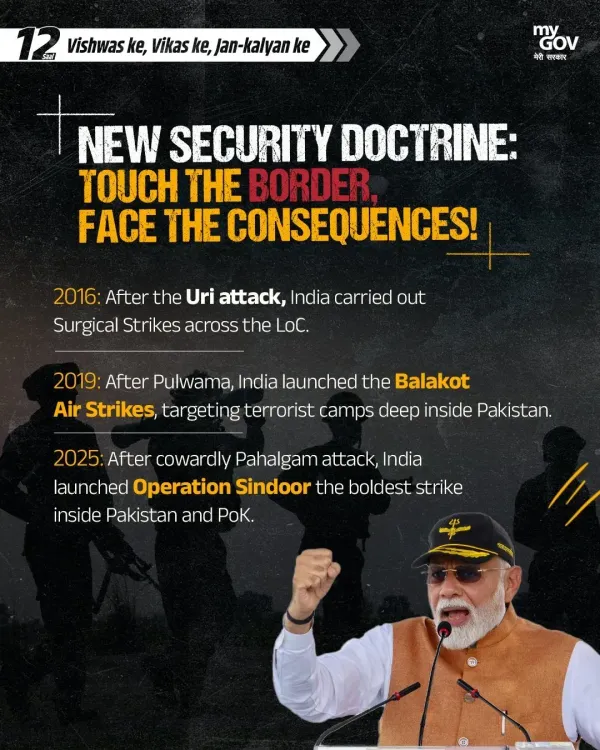
Assam CM Himanta Biswa Sarma marked the BJP's '12 Years of Surakshit Bharat' milestone by citing India's cross-border counter-terror operations — Uri, Balakot, Nur Khan, and Bahawalpur — as proof of a doctrine shift under PM Modi from strategic restraint to calibrated retaliation.
Key Takeaways
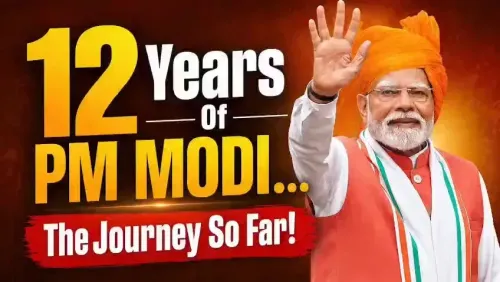
Assam CM Himanta Biswa Sarma posted on 17 June 2026 under #12YearsOfSurakshitBharat , marking a decade-plus of the Modi government .
The post declares that 'the India that absorbed terror attacks in silence is now history,' signalling a doctrine shift from strategic restraint to active retaliation.
Operations cited include the 2016 Uri surgical strikes , the 2019 Balakot airstrike , and references to Nur Khan and Bahawalpur in Pakistan .
The Balakot airstrike was the first overt use of Indian air power across the international border in response to terrorism in decades.
Bahawalpur is associated in Indian counter-terror discourse with the headquarters of Jaish-e-Mohammed in Pakistan's Punjab province .
The BJP campaign is expected to intensify across party-governed states as a key plank of the party's governance record.
Assam Chief Minister Himanta Biswa Sarma on Wednesday, 17 June 2026, invoked India's cross-border counter-terrorism operations — from the 2016 Uri surgical strikes to the 2019 Balakot airstrike and references to Nur Khan and Bahawalpur — to mark what the ruling BJP is framing as twelve years of a 'Surakshit Bharat' (Secure India) under Prime Minister Narendra Modi. The post, shared under the hashtag #12YearsOfSurakshitBharat, declared that 'the India that absorbed terror attacks in silence is now history.'
Context
Sarma's post is part of a coordinated BJP campaign marking 12 years of Narendra Modi's government, which came to power in May 2014. The hashtag #12YearsOfSurakshitBharat reflects the party's effort to consolidate its national-security narrative ahead of future electoral cycles. Sarma, who also serves as convenor of the North-East Democratic Alliance (NEDA), is among the most prominent regional voices amplifying the central government's defence record.
The post directly credits Modi's leadership for a fundamental shift in India's posture: from absorbing terrorist attacks without overt retaliation to publicly acknowledged, calibrated military responses across the border.
Policy Backdrop
The two operations cited by name represent landmark moments in India's counter-terrorism doctrine. In September 2016, following the Uri attack — a terrorist assault on an Indian Army base in Jammu and Kashmir that killed 19 soldiers — the Indian Army publicly confirmed surgical strikes across the Line of Control, breaking with a long-standing tradition of strategic ambiguity.
In February 2019, the Indian Air Force carried out the Balakot airstrike on a Jaish-e-Mohammed facility in Pakistan's Khyber Pakhtunkhwa province, following the Pulwama suicide bombing that killed 40 CRPF personnel. It was the first overt use of Indian air power across the international border in decades. Bahawalpur, referenced in the post, is widely associated in Indian counter-terror discourse with the headquarters of Jaish-e-Mohammed in Pakistan's Punjab province. The reference to Nur Khan in the post alludes to further operations whose details are still emerging in the public domain.
Stakeholders and Impact
For India's armed forces and security establishment, the shift in doctrine since 2016 has meant operating under rules of engagement that allow publicly acknowledged cross-border responses, a significant change from the pre-2014 era of strategic restraint. Civilians in Jammu and Kashmir, who bore the brunt of prolonged terror campaigns, are a key constituency in this narrative.
At the diplomatic level, India has simultaneously pursued the isolation of Pakistan on terrorism-related issues at multilateral forums such as the Financial Action Task Force (FATF) and the United Nations. The BJP's framing positions both the kinetic and diplomatic tracks as components of a single, coherent 'Surakshit Bharat' strategy.
What's Next
The #12YearsOfSurakshitBharat campaign is expected to intensify across BJP-governed states as the party builds its governance record ahead of future assembly and general elections. Official elaboration from the Ministry of Defence on specific operations referenced in the post — particularly regarding Nur Khan and Bahawalpur — will be closely watched by security analysts and opposition parties alike.
Parliamentary debates and potential defence budget allocations in upcoming sessions may further reflect the government's intent to institutionalise and expand counter-terrorism capabilities, cementing the doctrine shift as a long-term feature of Indian strategic policy.
Point of View
Balakot, Nur Khan, and Bahawalpur in a single sentence, the post constructs a continuum of resolve — implying that each operation was a logical escalation of the same doctrine rather than discrete crisis responses. The '12 Years of Surakshit Bharat' framing is significant: it attempts to lock in the security narrative at the twelve-year mark, before opposition parties can consolidate an alternative account of the same period. For a regional heavyweight like Sarma, amplifying this message also reinforces his standing as a trusted voice in the BJP's national-security coalition, which matters as much in North-East politics as in the Hindi heartland.
NationPress
24 Sept 2026
Frequently Asked Questions
What is the #12YearsOfSurakshitBharat hashtag about?
'#12YearsOfSurakshitBharat' is a BJP campaign hashtag marking 12 years of the Narendra Modi government, emphasising India's counter-terrorism record including the Uri surgical strikes and the Balakot airstrike as evidence of a more assertive national-security posture.
What were the Uri surgical strikes?
Following the September 2016 terrorist attack on an Indian Army base in Uri, Jammu and Kashmir, that killed 19 soldiers, the Indian Army carried out publicly acknowledged surgical strikes across the Line of Control — a significant departure from India's earlier policy of strategic restraint.
What was the Balakot airstrike?
In February 2019, the Indian Air Force struck a Jaish-e-Mohammed facility in Balakot, Pakistan's Khyber Pakhtunkhwa province, in retaliation for the Pulwama suicide bombing that killed 40 CRPF personnel. It was the first overt Indian air strike across the international border in decades.
Why did Himanta Biswa Sarma mention Nur Khan and Bahawalpur?
Sarma referenced Nur Khan and Bahawalpur to indicate further Indian counter-terror operations beyond the well-documented Uri and Balakot strikes. Bahawalpur is associated with Jaish-e-Mohammed's base in Pakistan's Punjab province; details of the Nur Khan reference are still emerging in the public domain.
What is Himanta Biswa Sarma's role in national BJP politics?
Beyond serving as Chief Minister of Assam, Himanta Biswa Sarma is the convenor of the North-East Democratic Alliance (NEDA), making him one of the BJP's most influential regional leaders and a key amplifier of the party's national messaging in the north-east.