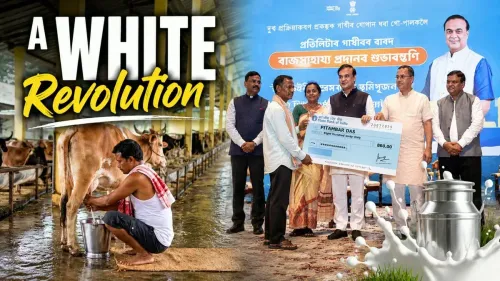
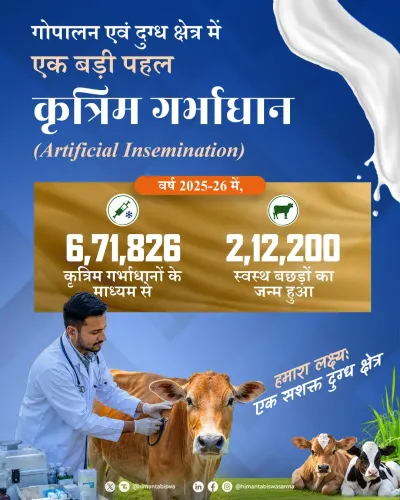
CM Himanta inaugurates 20,000-litre dairy plant in Sonitpur
Synopsis
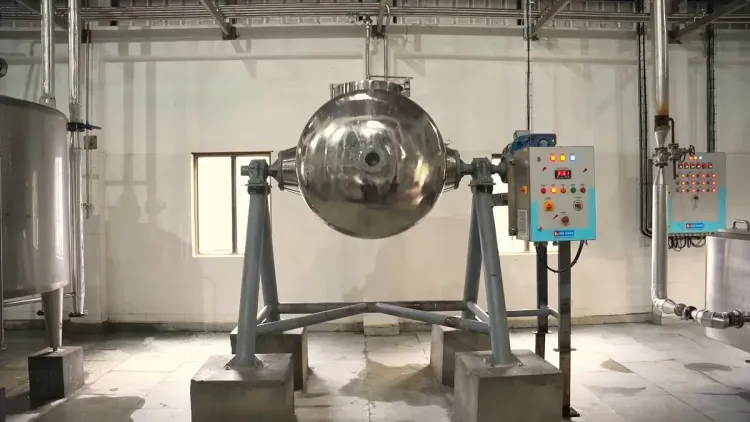
Assam Chief Minister Himanta Biswa Sarma inaugurated a 20,000-litre-per-day dairy processing facility in Sonitpur on October 8, 2026, aiming to give dairy farmers a formal market, expand consumer product availability, and boost the local economy.
Key Takeaways
Assam CM Himanta Biswa Sarma inaugurated a new dairy processing plant in Sonitpur on October 8, 2026 .
The facility has a daily processing capacity of 20,000 litres .
The plant is intended to provide dairy farmers a ready, formal market , reducing dependence on middlemen.
CM Sarma cited three goals: farmer market access, wider consumer product range, and local economic strengthening .
Sonitpur district , located along the Brahmaputra's north bank, has a mixed agrarian economy where dairy has historically been a supplementary income source.
The move aligns with a broader northeastern India push to retain dairy value-addition within the region.
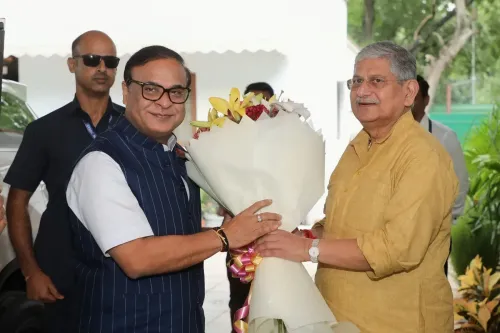
A new dairy processing facility in Sonitpur, Assam is about to go live — and Assam Chief Minister Himanta Biswa Sarma is putting it at the centre of the state's rural economic push. On Thursday, October 8, 2026, CM Sarma announced he would personally inaugurate the plant, which carries a daily processing capacity of 20,000 litres — a meaningful step for a sector that underpins livelihoods across the Brahmaputra valley.
What a 20,000-litre plant means for Sonitpur's farmers
The numbers are straightforward, and the logic behind them is even more so. Dairy farmers in Sonitpur and surrounding areas have long faced a classic smallholder trap: they can produce the milk, but without reliable procurement infrastructure, they are at the mercy of informal middlemen and volatile local pricing. A dedicated processing facility rated at 20,000 litres per day changes that equation by providing a guaranteed, formal off-take channel.
CM Sarma framed the facility around three linked outcomes: a ready market for dairy farmers, a wider range of dairy products for consumers, and a strengthening of the local economy in Sonitpur. Each pillar feeds the next — stable farm-gate prices encourage higher milk output, higher output supports product diversification, and diversified products generate downstream jobs in processing, packaging, and distribution.
Sonitpur's place in Assam's agrarian map
Sonitpur district — home to the town of Tezpur — sits in the foothills of the eastern Himalayas along the north bank of the Brahmaputra. It is one of Assam's larger agricultural districts, with a mixed economy of tea, paddy, and livestock farming. Dairy has historically been a supplementary income source for rural households here, rather than a primary commercial activity. Infrastructure of this scale has the potential to professionalise that relationship.
For a state government that has positioned agri-processing as a lever for rural income growth, the Sonitpur plant is a visible, tangible deliverable — the kind that connects policy announcements to outcomes farmers can actually sell into.
The broader dairy infrastructure bet
Assam is not alone in betting on dairy processing capacity as a rural multiplier. Across northeastern India, the gap between raw milk production and value-added processing has historically meant that economic surplus flowed out of the region to processors elsewhere. A locally anchored plant keeps that value — and those jobs — closer to the source.
Whether the 20,000-litre facility operates under a cooperative model, a government undertaking, or a private-public arrangement was not specified in CM Sarma's announcement. The operational model will matter enormously to how equitably the benefits reach the smallest producers.
Assam's dairy farmers now have a processing address. The test begins the moment the first tanker rolls in.
Point of View
Photograph-friendly, and directly traceable to farmgate incomes, the kind of delivery that matters most ahead of any electoral cycle. For CM Sarma, who has consistently projected Assam as a state that translates policy intent into physical assets, the inauguration adds another data point to that narrative. The critical unknown is the operational model: cooperative-led facilities have historically delivered more equitable returns to small producers than government-run or private-contracted alternatives. If the state wants the 20,000-litre capacity to translate into sustained income gains rather than a headline number, that governance detail will be decisive.
NationPress
8 Oct 2026
Frequently Asked Questions
Where is the new dairy processing plant inaugurated by CM Himanta Biswa Sarma located?
The new dairy processing facility is located in Sonitpur district in Assam, inaugurated by Chief Minister Himanta Biswa Sarma on October 8, 2026.
What is the capacity of the Sonitpur dairy plant?
The Sonitpur dairy processing facility has a capacity of 20,000 litres per day .
How will the Sonitpur dairy plant help Assam's farmers?
The plant provides dairy farmers in Sonitpur and surrounding areas with a ready, formal market for their milk, reducing reliance on informal middlemen and offering more stable farm-gate prices.
What did CM Himanta Biswa Sarma say about the dairy facility?
CM Sarma said the facility would 'give our dairy farmers a ready market, bring more dairy products to consumers and strengthen the local economy' in Sonitpur.
Why is dairy processing important for northeastern India?
Northeastern India has historically lacked sufficient local processing infrastructure, causing raw milk value-addition — and associated jobs — to flow to processors outside the region. Local plants help retain that economic surplus closer to the farmers who produce the milk.