CM Himanta to launch subsidised dal, sugar for 70 lakh NFSA holders in Assam
Synopsis
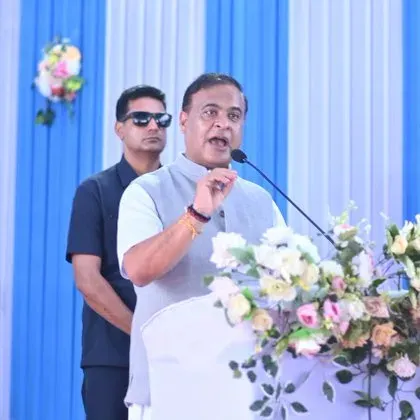
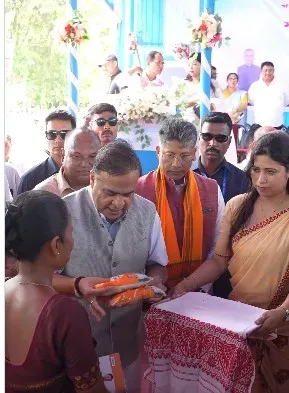
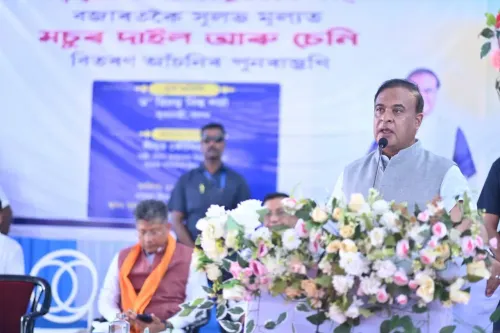
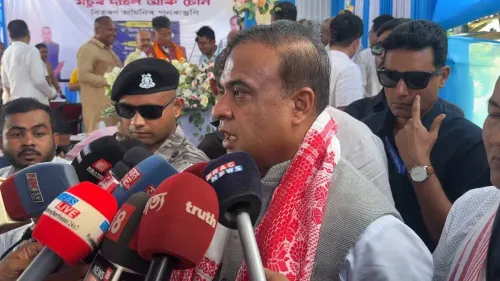
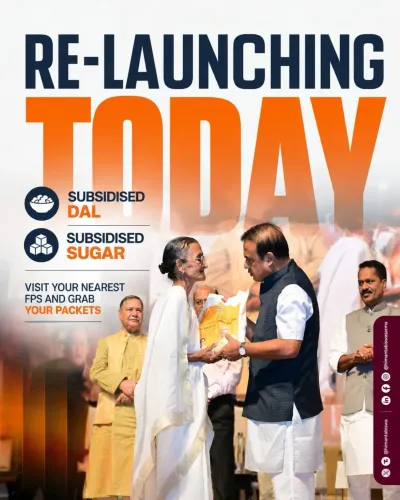
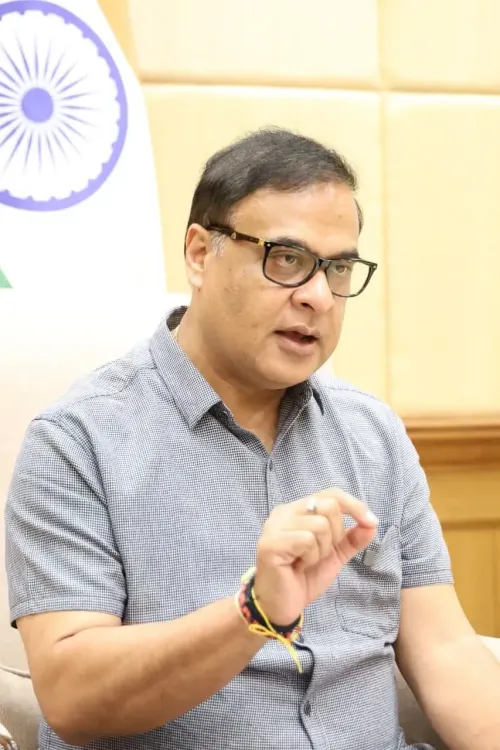
Assam Chief Minister Himanta Biswa Sarma announced the resumption of subsidised dal and sugar delivery to over 70 lakh NFSA cardholders from August 10, personally launching the statewide rollout at a Fair Price Shop in Raha, Nagaon district.
Key Takeaways
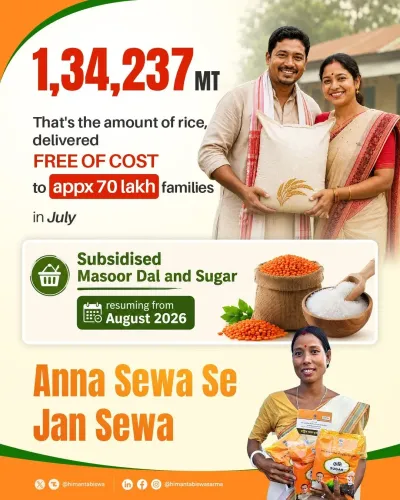
August 10 marks the resumption of subsidised dal and sugar delivery to 70-lakh-plus NFSA cardholders in Assam.
CM Himanta Biswa Sarma will personally inaugurate the rollout at Shri Suren Pator's FP Shop in Raha, Nagaon district .
Dal and sugar are state-funded additions to the central NFSA entitlement, paid from Assam's own budget.
India's National Food Security Act, 2013 covers up to 75% of the rural and 50% of the urban population through the Public Distribution System.
Sarma confirmed he reviewed distribution preparations with officials ahead of the launch.
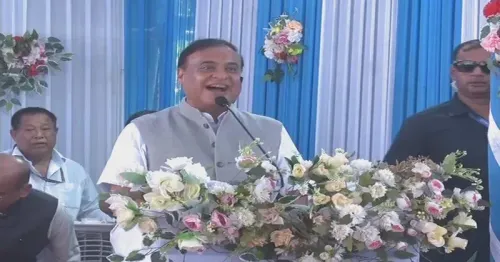
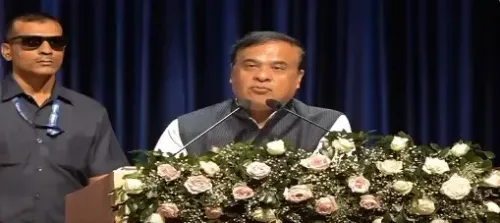
Millions of Assam families are about to see their ration cards deliver something extra. Assam Chief Minister Himanta Biswa Sarma announced on Sunday, August 9 that the state will resume delivery of subsidised dal and sugar to its 70-lakh-plus National Food Security Act (NFSA) cardholders starting August 10 — and he will personally flag off the statewide rollout from a Fair Price Shop in Raha, Nagaon district.
A Fair Price Shop in Raha, a statewide signal
The launch venue is deliberate in its symbolism. Shri Suren Pator's FP Shop in Raha — a town in Nagaon district — will be the starting point for a distribution chain that must reach over 70 lakh households across Assam. Sarma said he had already reviewed preparations with officials ahead of the rollout, signalling that the logistics groundwork is in place.
Fair Price Shops are the last-mile delivery points of India's Public Distribution System (PDS), the network through which subsidised commodities reach eligible families under the National Food Security Act, 2013. The NFSA legally entitles priority households to subsidised food grains, covering up to 75 percent of the rural population and 50 percent of the urban population nationally.
Dal and sugar: state-funded additions to a central entitlement
The NFSA's core central entitlement covers food grains — primarily rice and wheat. Dal (pulses) and sugar are additions that state governments fund from their own budgets, layering extra nutritional support onto the central scheme. Assam's decision to resume these commodities places it among states that use the PDS architecture to go beyond the federal floor for food security.
Assam's large rural beneficiary base has historically depended on the PDS network for monthly entitlements. Restoring subsidised pulses and sugar — both protein and caloric staples in the average household — carries direct nutritional consequence for families at the lower end of the income ladder.
What the rollout means for Assam's 70 lakh NFSA families
The scale is the story. Seventy lakh cardholders translates to millions of individual beneficiaries across a state whose PDS network spans urban centres, river-island communities, and remote hill areas. The logistical complexity of simultaneous statewide distribution — coordinating stock, transport, and shop-level readiness — is considerable, and Sarma's personal presence at the launch is a clear signal of political ownership over the rollout's success.
The chief minister's attendance at a single Fair Price Shop in a district town, rather than a ceremonial state-capital event, also frames this as a ground-level welfare delivery moment rather than a policy announcement from a podium.
Point of View
Ground-level political outreach ahead of any electoral cycle. Chief Minister Sarma's choice to launch the rollout in person at a district-level Fair Price Shop, rather than from Dispur, frames the Assam BJP's welfare pitch in direct, tangible terms for rural voters. With over 70 lakh NFSA households as the target, the programme's logistics and budget sustainability will be the real test of intent. How Assam finances this commitment in subsequent budget cycles will indicate whether this is a durable food-security expansion or a one-cycle intervention.
NationPress
24 Sept 2026
Frequently Asked Questions
What is the Assam government giving to NFSA cardholders from August 10?
The Assam government is resuming delivery of subsidised dal (pulses) and sugar to all 70-lakh-plus NFSA cardholders in the state starting August 10, 2026 .
Where will CM Himanta Biswa Sarma launch the NFSA distribution?
CM Himanta Biswa Sarma will launch the statewide distribution at Shri Suren Pator's Fair Price Shop in Raha , a town in Nagaon district, Assam.
What is the NFSA and who does it cover in Assam?
The National Food Security Act, 2013 legally entitles priority households to subsidised food commodities through India's Public Distribution System, covering up to 75% of the rural and 50% of the urban population. Assam has over 70 lakh registered NFSA cardholders.
Are dal and sugar part of the central government's NFSA entitlement?
No. The central NFSA primarily covers food grains like rice and wheat. Dal and sugar are additional commodities that state governments fund from their own budgets and add to the PDS basket for eligible households.
What is a Fair Price Shop in India?
A Fair Price Shop (FPS) is the last-mile retail outlet through which the Public Distribution System delivers subsidised commodities to NFSA-eligible families. There are thousands of such shops across Assam, operated by licensed dealers like Shri Suren Pator in Raha.