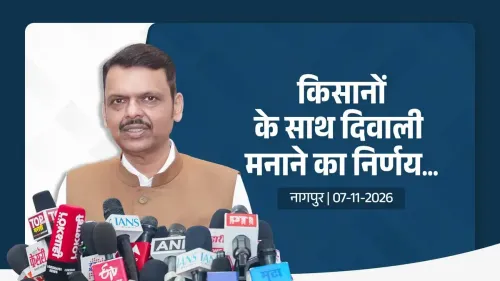
CM Fadnavis spends Diwali with drought-hit farmers in Nagpur village
Synopsis
Maharashtra CM Devendra Fadnavis spent Diwali at drought-affected farmer Rambhau Balpande's home in Lohara Savanga, Nagpur. He announced borewell permissions for rabi crop protection and a citrus processing facility at MIHAN to help orange growers facing export challenges.
Key Takeaways
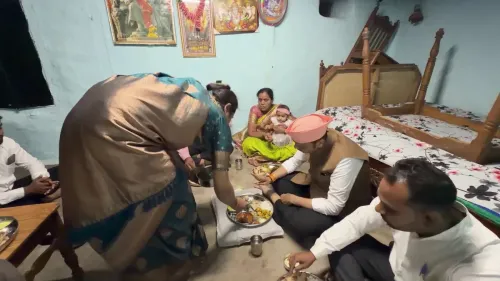
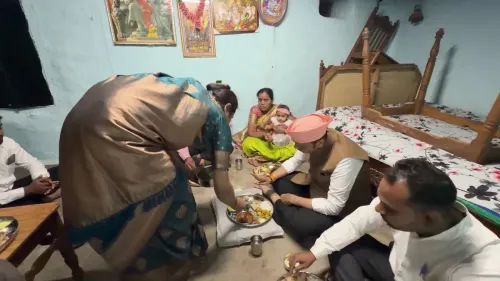
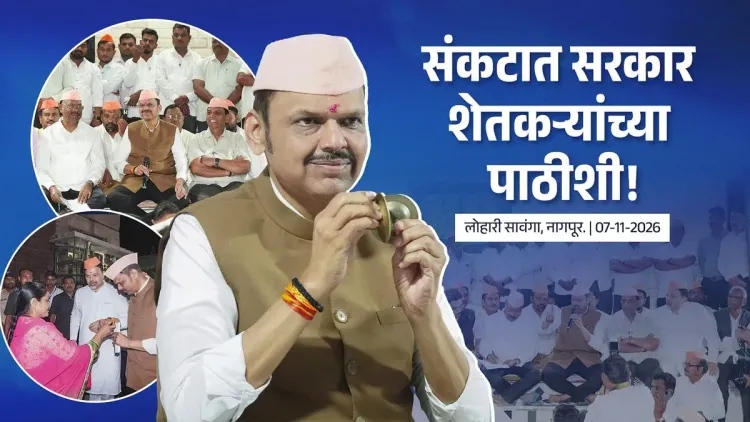
CM Devendra Fadnavis stayed overnight at the home of farmers Arunabai and Rambhau Balpande in Lohara Savanga village, Nagpur district , on Diwali 2026 .
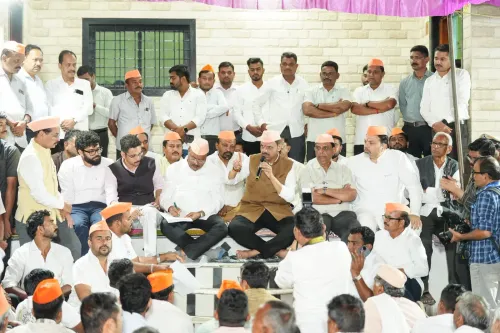
He heard farmers describe crop losses, financial distress, and children's education costs caused by drought conditions in the region.
Fadnavis announced that borewell permissions will be granted wherever feasible to protect rabi crops in drought-hit areas.
A large-scale orange and sweet lime processing facility is planned at the MIHAN project in Nagpur to reduce citrus growers' exposure to international export volatility.
The Katol and Narkhed belts of Nagpur are major citrus-producing zones now facing new international trade headwinds.
Minister Chandrashekhar Bawankule and MLA Dr.
Ashish Deshmukh were present during the village visit.
While the rest of the country lit diyas and burst crackers, Maharashtra Chief Minister Devendra Fadnavis chose to spend Diwali 2026 sitting on the floor of a farmer's home in Lohara Savanga village, Nagpur district — listening to stories of scorched crops, mounting debt, and children's school fees going unpaid. 'Wiping the tears from farmers' eyes — that is my real Diwali,' he wrote, in a post that cut through the festival noise with quiet force.
A night in Aruna Bai and Rambhau Balpande's home
Fadnavis stayed overnight at the residence of farmer couple Arunabai Balpande and Rambhau Balpande, a gesture that went well beyond a scheduled walkabout. The village, nestled in Nagpur district and distinguished by its historic Hemadpanthi Shiva temple and the scenic Kar river, received a sitting Chief Minister as a houseguest — an uncommon act in Indian political culture. 'Saheb, you came directly to our village, you shared our joys and sorrows — that alone has halved our grief,' a farmer told him, words Fadnavis quoted verbatim and described as deeply moving.
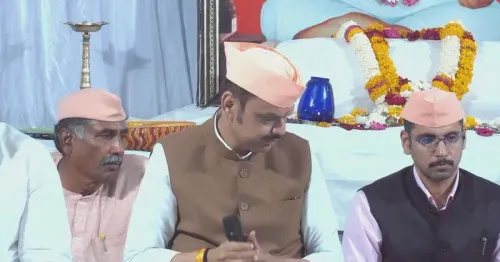
Present alongside the Chief Minister were Minister Chandrashekhar Bawankule and MLA Dr. Ashish Deshmukh, signalling that the visit carried administrative weight alongside its emotional register.
Drought, failed rabi crops, and the borewell lifeline
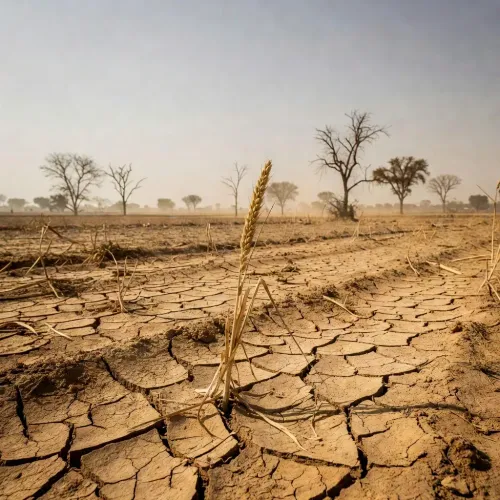
Nagpur district sits in Vidarbha, a region that has long borne the sharpest edge of Maharashtra's recurring agrarian crisis. Monsoon variability routinely devastates kharif harvests and threatens the rabi season that follows. Fadnavis heard farmers detail ruined crops, financial distress, and anxiety about their children's futures — and responded with a concrete administrative step: borewell permissions will be granted wherever feasible to protect rabi crops from drought conditions. Maharashtra governments have periodically authorised additional borewells in drought-declared talukas as emergency relief, and this announcement follows that established policy line.
Katol-Narkhed citrus belt and the MIHAN processing plan
The visit surfaced a structural problem beyond the immediate drought. The Katol and Narkhed belts of Nagpur district produce oranges and sweet limes at scale — the region's citrus is among the most recognised in India. But new international trade headwinds have eroded export realisations, leaving growers trapped between high production costs and falling prices. Fadnavis outlined a plan to address this at the root: a large-scale citrus processing facility at the MIHAN project in Nagpur. The Multi-modal International Hub and Airport at Nagpur (MIHAN) was developed precisely to anchor logistics and agro-processing in central India, making it a logical anchor for value-addition in the orange belt. The processing hub, if executed, would reduce farmers' dependence on raw export markets and create local employment — a shift from relief to resilience.
The specific timelines and current implementation status of both the borewell permissions and the MIHAN processing unit remain to be confirmed through official government orders.
Beyond the ministry, into the village
Fadnavis was explicit that the visit was a deliberate break from what he called 'meetings, decisions, schemes, and financial assistance confined to the secretariat.' His framing — that every crop represents a family's year of labour, sacrifice, and dreams — positioned the overnight stay as a governing philosophy, not just a festival photo opportunity. Maharashtra has seen successive administrations combine emotional outreach during festivals with longer-term infrastructure pushes in horticulture belts; this visit threads both needles at once.
For the farmers of Lohara Savanga, the Chief Minister's presence on Diwali night may be the most visible acknowledgement of their distress yet. Whether the borewell permissions flow quickly and the MIHAN orange-processing plant breaks ground will determine whether that acknowledgement becomes policy reality.
Point of View
But it is backed by two substantive policy signals — borewell relief and agro-processing infrastructure — that connect to Maharashtra's long-standing challenge of converting Vidarbha's agrarian distress into durable rural development. The MIHAN citrus processing announcement, if it advances, would mark a meaningful shift from the compensation-first model that has defined Maharashtra's drought response for decades. The visit also reinforces Fadnavis's positioning as a CM who governs from the ground up, a narrative that carries electoral weight in Vidarbha's farmer-dense constituencies. The real test, as always in Maharashtra's agrarian politics, is implementation speed.
NationPress
8 Nov 2026
Frequently Asked Questions
Why did CM Devendra Fadnavis spend Diwali in a Nagpur village?
Fadnavis chose to celebrate Diwali with drought-affected farmers in Lohara Savanga village, Nagpur district, staying overnight at the home of farmers Arunabai and Rambhau Balpande to understand their distress firsthand and announce relief measures.
What is the MIHAN citrus processing plant Fadnavis announced?
Fadnavis announced plans for a large-scale orange and sweet lime processing facility at the MIHAN (Multi-modal International Hub and Airport at Nagpur) project to help citrus farmers in the Katol-Narkhed belt deal with international export challenges.
What relief did Fadnavis announce for drought-hit farmers in Nagpur?
He announced that borewell permissions will be granted wherever feasible to protect rabi crops from drought conditions, following Maharashtra's established policy of authorising additional borewells in drought-declared areas.
Which areas of Nagpur produce oranges and sweet limes?
The Katol and Narkhed belts of Nagpur district are major citrus-producing zones, known for oranges and sweet limes, but farmers there are currently facing losses due to new international trade headwinds affecting exports.
Who accompanied CM Fadnavis during the Lohara Savanga village visit?
Maharashtra Minister Chandrashekhar Bawankule and MLA Dr. Ashish Deshmukh were present alongside CM Devendra Fadnavis during the Diwali visit to Lohara Savanga village in Nagpur district.