CM Himanta performs Bhumi Pujan for Palasbari Co-District Office
Synopsis
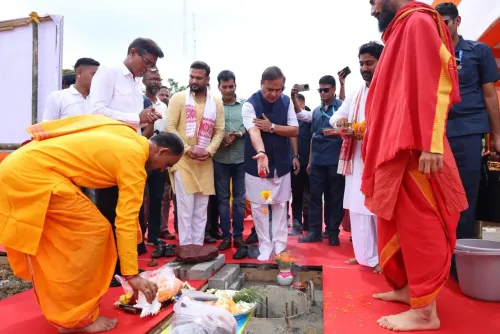
Chief Minister Himanta Biswa Sarma performed the Bhumi Pujan of the Co-District Commissioner's Office in Palasbari on 21 July 2026, marking a new phase in Assam's decentralisation drive to bring administration closer to citizens.
Key Takeaways
Himanta Biswa Sarma performed the Bhumi Pujan of the Co-District Commissioner's Office in Palasbari on 21 July 2026 .
The proposed office complex is designed to strengthen governance and enhance public service delivery in the Palasbari region.
Assam created seven new districts in 2016 and expanded the district count further between 2020 and 2023 , introducing the co-district concept.
The co-district tier acts as an additional layer of decentralised administration between sub-divisions and full district headquarters.
Completion timelines and staffing of the new complex are the key milestones to watch in the coming months.
Success at Palasbari could accelerate similar office investments across other co-districts in Assam .
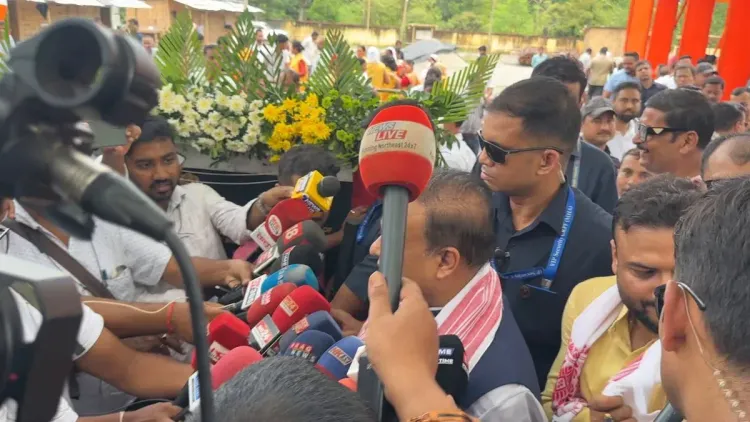
The Chief Minister's Office of Assam announced on Tuesday, 21 July 2026 that Chief Minister Dr. Himanta Biswa Sarma performed the Bhumi Pujan of the Co-District Commissioner's Office in Palasbari and subsequently addressed the media to outline how the proposed complex will strengthen governance and improve public service delivery in the region.
Context
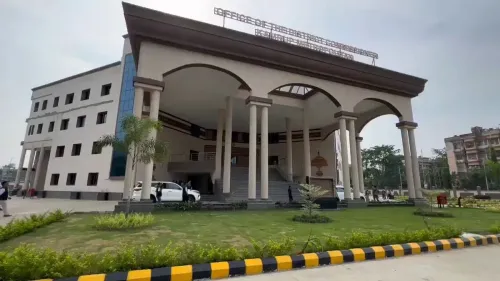
Speaking to reporters after the ground-breaking ceremony, Dr. Himanta Biswa Sarma shared details of the proposed office complex, describing it as a step toward bringing administration closer to citizens. The Bhumi Pujan — a customary consecration ritual marking the formal start of construction — signals that the project has moved from planning to execution. The Co-District Commissioner's Office will serve as the principal administrative node for Palasbari and its surrounding areas.
Policy Backdrop
The Palasbari project fits squarely within Assam's long-running programme of administrative decentralisation. As far back as 2016, the state created seven new districts with the explicit goal of reducing the distance citizens must travel to access revenue and development services. Between 2020 and 2023, the government went further, expanding the total number of districts and introducing the 'co-district' concept as an additional tier of localised governance.
Dr. Sarma, who has led the state since May 2021, has overseen multiple rounds of this reorganisation, treating the creation of smaller administrative units as a core reform tool. The co-district model is designed to ease the burden on full district headquarters while extending grievance-redressal and development functions to areas that were previously underserved.
Stakeholders and Impact
The most immediate beneficiaries are local residents of Palasbari and the surrounding belt, who will gain a dedicated administrative office without having to travel to a more distant district headquarters. For the district administration, the new complex is expected to reduce case backlogs and streamline revenue functions. Assam's broader experience with district bifurcation suggests that proximity of offices correlates with faster resolution of land records, certificates, and development scheme applications.
The move also carries symbolic weight: a permanent, purpose-built office complex signals institutional continuity for the co-district tier, which until now has often operated from temporary or shared premises in many parts of the state.
What's Next
Attention will now shift to the construction timeline and the staffing plan for the Palasbari complex. The state government is also expected to issue further notifications on the creation or operationalisation of additional co-districts across Assam, as the administrative reorganisation programme remains an active policy priority. If the Palasbari model delivers measurable improvements in service delivery, it is likely to accelerate similar investments in other newly carved co-districts, reinforcing decentralisation as a defining feature of governance in the Northeast.
Point of View
And a purpose-built office complex makes the co-district tier harder to roll back by future administrations. The move also pre-empts local criticism that co-districts exist only on paper by anchoring them in dedicated real estate. Watched alongside the state's broader district-creation history, Palasbari fits a Northeast-wide pattern where proximity of government offices is treated as a proxy for the quality of governance itself.
NationPress
20 Oct 2026
Frequently Asked Questions
What is a co-district in Assam?
A co-district in Assam is an additional administrative tier introduced between 2020 and 2023, sitting below a full district but above a sub-division, designed to bring revenue and development functions closer to citizens in areas that were too distant from existing district headquarters.
Where is Palasbari located?
Palasbari is a town in Assam , India, and is the site of the newly ground-broken Co-District Commissioner's Office inaugurated by Chief Minister Dr. Himanta Biswa Sarma on 21 July 2026 .
What is a Bhumi Pujan?
A Bhumi Pujan is a traditional Hindu ground-breaking or consecration ritual performed before the start of construction on a new building or infrastructure project, marking the formal beginning of the work.
How many districts does Assam have?
Assam expanded its number of districts significantly, creating seven new districts in 2016 and adding further units between 2020 and 2023 ; the co-district concept was introduced as an additional administrative layer during this period.
What will the Palasbari Co-District Commissioner's Office do?
The office will serve as the principal administrative node for Palasbari and surrounding areas, handling revenue functions, development scheme delivery, and grievance redressal, reducing the need for residents to travel to a more distant district headquarters.