CM Himanta Links Education to Peace and Development in Assam
Synopsis
Assam CM Dr Himanta Biswa Sarma has positioned education as the state's primary tool for sustaining peace and accelerating development, linking the strategy to the 2020 Bodo Peace Accord and the National Education Policy 2020.
Key Takeaways
Chief Minister Dr Himanta Biswa Sarma framed education as central to Assam's peace-and-development agenda in a statement shared by the CMO on October 23, 2026 .
The 2020 Bodo Peace Accord included formal provisions for expanded educational infrastructure in the Bodoland Territorial Region , one of Assam's former conflict zones.
Assam has aligned its education reform agenda with the National Education Policy 2020 , which emphasises access, mother-tongue learning, and vocational skills.
Dr Himanta Biswa Sarma has been Chief Minister since May 2021 , pairing governance reforms with human development initiatives in tribal and rural districts.
Assam's approach mirrors a broader Northeast India pattern of combining security measures with education and skill programmes to reduce economic marginalisation.
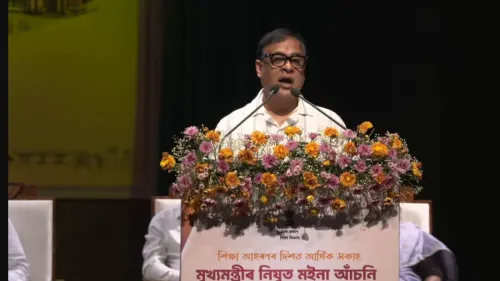
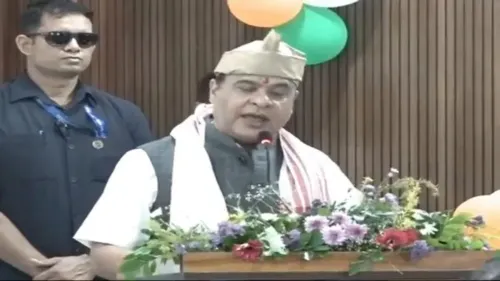
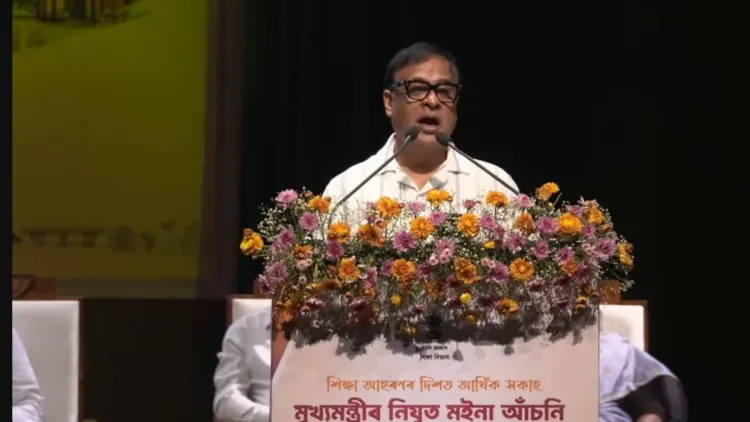
A state that spent decades battling insurgency is now betting on classrooms over conflict. The Chief Minister's Office of Assam shared a pointed statement on Friday, October 23, 2026, quoting Chief Minister Dr Himanta Biswa Sarma on education as the centrepiece of the state's dual mission — building peace while driving development.
The statement was direct: 'Through education, we are striving to create an environment in Assam where peace and development go hand in hand.' In a state where the memory of armed militancy and ethnic conflict runs deep, that framing is not rhetorical — it is a policy philosophy with a measurable track record.
From Peace Accords to Schoolrooms
Assam's turn toward education as a stabilising force gained a formal anchor with the 2020 Bodo Peace Accord, which explicitly included provisions for expanded educational infrastructure in the Bodoland Territorial Region — one of the state's most conflict-scarred zones. The logic was deliberate: give young people in former insurgency belts a stake in the future, and the pull of armed groups weakens. The accord was a landmark moment, ending one of the Northeast's longest-running insurgencies.
Dr Himanta Biswa Sarma, who has served as Chief Minister since May 2021, has consistently pushed that formula further, aligning Assam's approach with the National Education Policy 2020 — a central framework that restructures school and higher education with a focus on access, mother-tongue instruction in early years, and vocational skills for older students. For a state with large tribal, rural, and linguistically diverse populations, those provisions are particularly consequential.
The Broader Northeast Blueprint
Assam is not acting in isolation. Across the Northeast, state governments have paired security measures with human development initiatives — a pattern that has grown more pronounced as the central government has accelerated infrastructure spending in the region. Education and skill programmes have become the civilian complement to that push, targeting the same districts where economic marginalisation once fed recruitment into militant outfits.
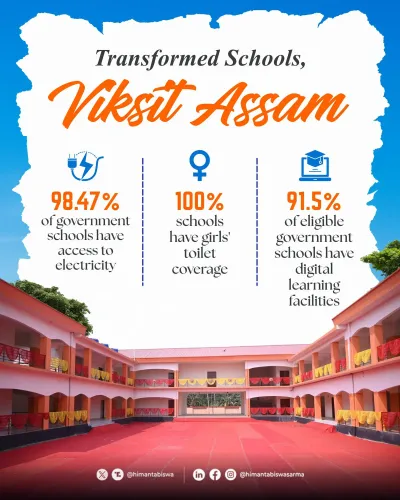
The stakes for students in former conflict areas are real. Access to quality schooling and vocational pathways can determine whether economic integration in tribal and rural districts takes hold — or whether a new generation cycles back into instability. State budget allocations for school infrastructure and upcoming skill schemes in Assam's districts will be the clearest signal of how seriously the government is following through on this pledge.
Point of View
The administration shifts the conversation from security spending to human investment, a move that resonates in districts with bitter memories of militancy. The alignment with NEP 2020 also locks Assam's state-level ambitions into the central government's flagship education architecture, strengthening the BJP's political continuity argument ahead of future electoral cycles. Whether the rhetoric translates into sustained budget commitments — especially in the most remote tribal districts — remains the real test.
NationPress
23 Oct 2026
Frequently Asked Questions
What did Assam CM Himanta Biswa Sarma say about education and peace?
CM Himanta Biswa Sarma stated that through education, Assam is working to create an environment where peace and development go hand in hand, as quoted by the Chief Minister's Office on October 23, 2026.
How does the Bodo Peace Accord connect to education in Assam?
The 2020 Bodo Peace Accord included explicit provisions for expanded educational infrastructure in the Bodoland Territorial Region, treating education access as a tool for lasting conflict resolution in former insurgency areas.
Has Assam adopted the National Education Policy 2020?
Yes, Assam has aligned its education reforms with the National Education Policy 2020, which focuses on improving access, early mother-tongue instruction, and vocational skill development.
Why is education considered a peace-building tool in Assam?
Assam experienced decades of militancy and ethnic conflict; state policy now channels investment into schools and skill programmes in tribal and rural districts to reduce economic marginalisation, which historically fed insurgent recruitment.
When did Himanta Biswa Sarma become Chief Minister of Assam?
Dr Himanta Biswa Sarma became Chief Minister of Assam in May 2021 after switching from Congress to the BJP, and has since focused on governance reform and human development initiatives.