CM Himanta Meets Koch Rajbongshi Student Delegation at Loksewa Bhawan
Synopsis
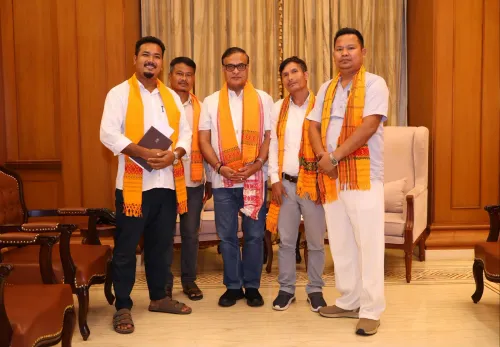
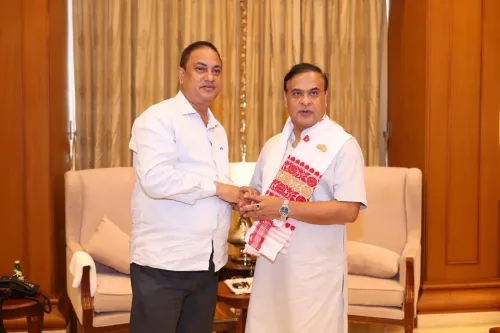
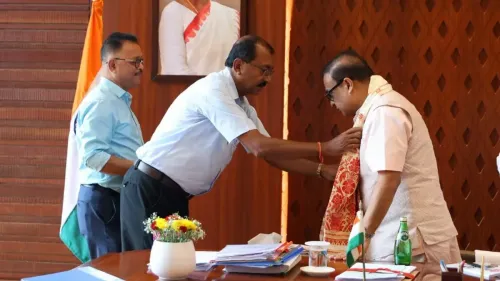
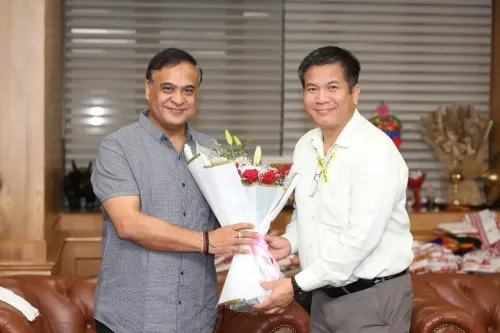
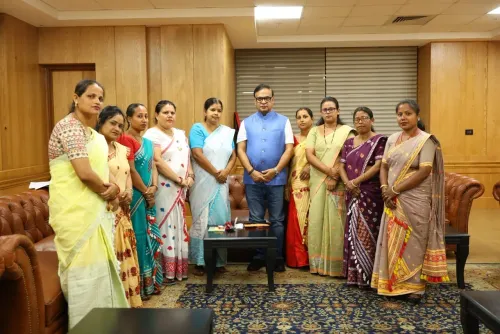
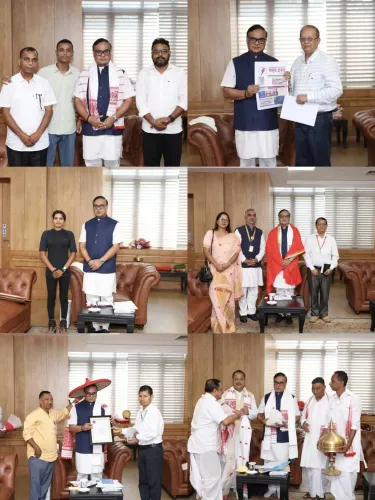
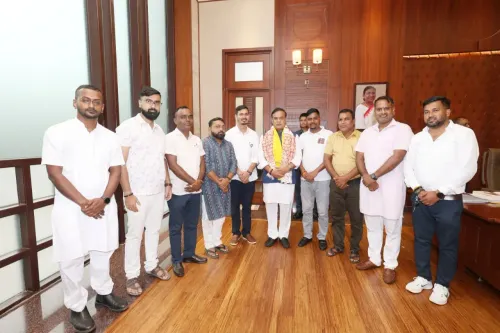
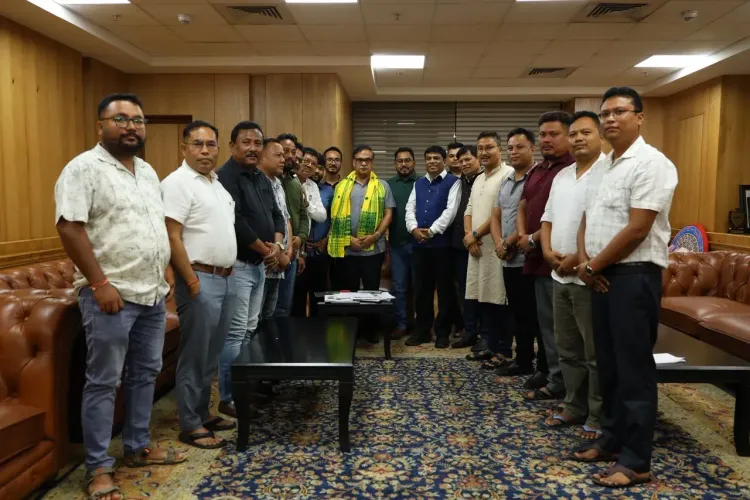
Chief Minister Himanta Biswa Sarma met a delegation of the All Koch Rajbongshi Students' Union at Loksewa Bhawan on 25 July 2026. The meeting, attended by MLAs, a BTC executive member and the Kamatpur Autonomous Council chairman, focused on the welfare, development and aspirations of the Koch Rajbongshi community in Assam.
Key Takeaways
A delegation of the All Koch Rajbongshi Students' Union met CM Himanta Biswa Sarma at Loksewa Bhawan on 25 July 2026 .
The meeting was attended by Minister Ashwini Ray Sarkar , MLAs Jibesh Ray, Dharmeswar Roy and Rupam Chandra Ray .
BTC Executive Member Karmeswar Ray and Kamatpur Autonomous Council Chairman Hiteswar Barman also participated.
Discussions centred on the welfare, development and aspirations of the Koch Rajbongshi community.
The Kamatpur Autonomous Council was established to address Koch Rajbongshi developmental and cultural aspirations under Assam's autonomous council framework.
No specific scheme announcements were confirmed; follow-up policy action may emerge in upcoming assembly sessions or budget exercises.
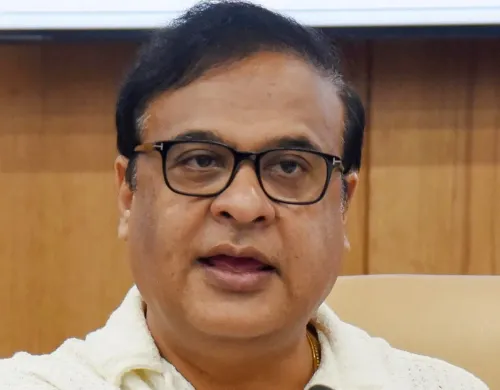
The Chief Minister's Office of Assam announced on Saturday, 25 July 2026 that a delegation of the All Koch Rajbongshi Students' Union (AKRSU) called on Chief Minister Dr. Himanta Biswa Sarma at Loksewa Bhawan in Guwahati, with discussions centred on the welfare, development and aspirations of the Koch Rajbongshi community.
Context
The meeting brought together a cross-section of elected representatives and community leaders. Attendees included Minister Ashwini Ray Sarkar, MLAs Jibesh Ray, Dharmeswar Roy and Rupam Chandra Ray, BTC Executive Member Karmeswar Ray, and Hiteswar Barman, Chairman of the Kamatpur Autonomous Council. The breadth of representation — spanning the legislature, the Bodoland Territorial Council and the Kamatpur Autonomous Council — signals the multi-tiered governance stakes involved in addressing Koch Rajbongshi concerns.
The AKRSU is the principal student body advocating for the educational and socio-economic rights of the Koch Rajbongshi people, one of the prominent indigenous communities of Assam and the broader North Bengal–Lower Assam belt. The union has historically engaged successive state governments on issues of land rights, cultural recognition and access to government schemes.
Policy Backdrop
Autonomous councils for ethnic communities in Assam trace their lineage to state policies that evolved from the 1990s Bodo accord framework onward. The Kamatpur Autonomous Council was established specifically to promote development and address the aspirations of the Koch Rajbongshi people, functioning as a sub-state body with defined legislative and executive powers over community affairs.
Under Chief Minister Dr. Himanta Biswa Sarma, who assumed office in 2021, the Assam government has pursued a strategy of direct engagement with ethnic student unions and community organisations, seeking to channel community demands into state development planning. This approach aims to pre-empt unrest while incorporating indigenous voices into mainstream policy exercises such as budget allocations and assembly legislation.
Stakeholders and Impact
The Koch Rajbongshi community is numerically significant across lower Assam and parts of neighbouring states, making their political and developmental concerns a recurring factor in Assam's electoral and governance calculus. Students and youth organisations like the AKRSU serve as important interlocutors, translating grassroots aspirations into formal policy demands.
The presence of BTC Executive Member Karmeswar Ray alongside state MLAs underscores that Koch Rajbongshi welfare is not confined to a single administrative tier. Issues of land rights, access to education, reservation benefits and cultural preservation often require coordinated action across state, autonomous council and territorial council levels.
What's Next
No specific policy announcements or scheme launches were confirmed from this meeting. Observers will watch for follow-up measures in upcoming Assam Legislative Assembly sessions or state budget exercises, where targeted welfare schemes or enhancements to the Kamatpur Autonomous Council's mandate could be tabled. The engagement sets the stage for the community's demands to be formally considered within the government's planning cycle.
With ethnic community consultations becoming a structural feature of the current administration's governance model, the AKRSU meeting may be a precursor to broader outreach across Assam's diverse indigenous groups ahead of future electoral cycles.
Point of View
Flanked by legislators from multiple tiers of Assam's governance architecture, reflects the Koch Rajbongshi community's growing political salience in lower Assam. CM Himanta Biswa Sarma has made structured outreach to ethnic student bodies a signature of his administration, using such consultations to manage community expectations and signal responsiveness ahead of electoral cycles. The inclusion of the Kamatpur Autonomous Council chairman alongside BTC representation suggests the government is treating Koch Rajbongshi aspirations as a multi-level governance challenge rather than a single-department issue. Whether this engagement translates into concrete policy deliverables — enhanced council powers, targeted welfare schemes, or legislative action — will be the real measure of its significance.
NationPress
25 Jul 2026
Frequently Asked Questions
Who is the All Koch Rajbongshi Students' Union?
The All Koch Rajbongshi Students' Union (AKRSU) is the principal student organisation advocating for the educational and socio-economic rights of the Koch Rajbongshi community in Assam and surrounding regions.
What is the Kamatpur Autonomous Council?
The Kamatpur Autonomous Council is a sub-state autonomous body established in Assam to promote development and address the cultural and developmental aspirations of the Koch Rajbongshi community.
Why did the Koch Rajbongshi students' union meet CM Himanta?
The delegation met Chief Minister Himanta Biswa Sarma at Loksewa Bhawan on 25 July 2026 to discuss issues concerning the Koch Rajbongshi community, including its welfare, development and aspirations.
Who attended the meeting with CM Himanta and the AKRSU?
The meeting was attended by Minister Ashwini Ray Sarkar, MLAs Jibesh Ray, Dharmeswar Roy and Rupam Chandra Ray, BTC Executive Member Karmeswar Ray, and Kamatpur Autonomous Council Chairman Hiteswar Barman.
What outcomes came from the AKRSU meeting with the Assam CM?
No specific policy announcements were confirmed from the meeting. Potential follow-up measures, such as welfare schemes or council enhancements, may be announced in upcoming Assam assembly sessions or budget exercises.