CM Himanta: Modi held firm on Russian oil despite US tariffs
Synopsis
Assam CM Himanta Biswa Sarma credits PM Modi's resolve for India maintaining Russian crude imports through punitive US tariffs in 2025-26, culminating in a full tariff waiver by President Trump on October 16, 2026, and challenges the Opposition to retract 'surrender' allegations.
Key Takeaways
The United States imposed an additional 25% punitive tariff on India in August 2025 over Russian crude purchases, pushing combined tariffs on several Indian exports to 50% .
The tariff was withdrawn by February 2026 ; fresh threats of up to 100% were raised in September–October 2026 but waived by President Trump on 16 October 2026 .
India imported an estimated 38 crore barrels of Russian crude between April and September 2026 , peaking at nearly 2.6 million barrels per day in June–July.
CM Himanta Biswa Sarma argues PM Modi prioritised India's energy security over American pressure, calling the outcome a 'diplomatic achievement'.
India has consistently balanced deepened US strategic ties (Quad, iCET) with continued Russia engagement on oil and defence since 2022.
Sarma publicly demands the Opposition 'apologise for spreading falsehoods' after their repeated claims that India would be forced to halt Russian oil imports.
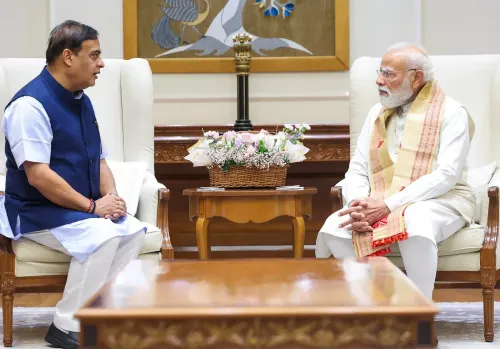
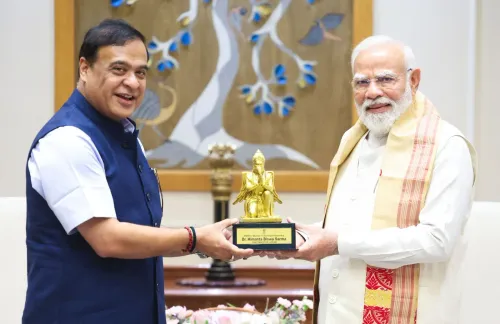
When the United States slapped an additional 25% punitive tariff on India in August 2025 — directly targeting New Delhi's purchases of Russian crude oil and pushing combined tariffs on many Indian exports to 50% — the pressure on India's government was immense. Assam Chief Minister Himanta Biswa Sarma argued on Monday that Prime Minister Narendra Modi did not flinch — and the trade and import data, he contends, proves it.
The tariff timeline: from 25% punch to full waiver
Sarma laid out a precise sequence of events in his post. In August 2025, Washington imposed the additional 25% punitive tariff. By February 2026, that tariff was withdrawn. Then, between September and October 2026, fresh punitive duties of up to 100% were threatened. On 16 October 2026 — just three days before Sarma's post — President Donald Trump waived those newly threatened tariffs entirely. Sarma's central argument: India never stopped buying Russian oil throughout this entire arc of escalation and de-escalation.
The numbers Sarma cites are striking. Between April and September 2026, India imported an estimated 38 crore barrels of Russian crude. Imports peaked at nearly 2.6 million barrels per day in June and July, and even in September, flows continued at around 1.74 million barrels per day. The message is unambiguous: India's refiners kept buying discounted Russian crude regardless of the diplomatic weather overhead.
India's strategic autonomy play — four years in the making
The broader policy context behind these numbers stretches back to 2022. When Russia invaded Ukraine, Western nations moved swiftly to sanction Moscow's energy exports. India took a different path. New Delhi sharply ramped up purchases of deeply discounted Russian crude, arguing that the energy security of 140 crore Indians and domestic inflation control were non-negotiable national interests. Indian refiners — many of them state-owned — became among the largest buyers of Russian seaborne crude globally.
This was never a quiet choice. It drew sustained criticism from Washington and European capitals. India answered by deepening engagement with the United States on other fronts — through the Quad security grouping and the iCET (Initiative on Critical and Emerging Technologies) framework — effectively compartmentalising the oil disagreement from the broader strategic relationship. That juggling act is precisely what Sarma is celebrating now.
Sarma turns the Opposition's 'surrender' charge back on them
The political edge in Sarma's post is sharp. He directly invokes Opposition parties who, at the height of the tariff pressure in 2025, repeatedly accused Modi of being about to capitulate to American demands — of being forced to abandon Russian oil. 'Those who repeatedly accused Prime Minister Shri Modi of surrendering owe the people of India an explanation,' Sarma wrote, calling on the Opposition to 'apologise for spreading falsehoods and acknowledge the diplomatic achievement' of the Prime Minister.
It is a combative framing, but the underlying diplomatic sequence Sarma describes — tariff imposed, tariff withdrawn, fresh threat raised, fresh threat waived — does represent a resolution, at least for now, in India's favour. Whether that outcome is best attributed to Modi's firmness, to economic interdependence, or to Washington's own strategic calculations is a question the post does not engage with — but one India's policy watchers certainly will.
India navigated one of its sharpest tests in recent trade diplomacy without altering its energy calculus. The next stress test will reveal whether that outcome was a template — or a one-time reprieve.
Point of View
And to publicise that confidence openly. The BJP's use of foreign-policy wins as electoral and rhetorical currency is a pattern that will only intensify ahead of any state or national cycle.
NationPress
19 Oct 2026
Frequently Asked Questions
Why did the US impose tariffs on India over Russian oil?
Washington imposed an additional 25% punitive tariff on India in August 2025 because India continued buying large volumes of Russian crude oil despite Western sanctions on Russia following the 2022 Ukraine invasion. The US sought to pressure India into reducing its dependence on Russian energy.
Did India stop buying Russian oil because of US tariffs?
No. According to CM Himanta Biswa Sarma's post, India continued importing Russian crude throughout the tariff pressure — reaching nearly 2.6 million barrels per day in June–July 2026 and around 1.74 million barrels per day even in September 2026.
When did the US waive the tariffs on India?
President Trump waived freshly threatened punitive tariffs of up to 100% on 16 October 2026 , according to Sarma's post. An earlier round of additional tariffs imposed in August 2025 had already been withdrawn by February 2026 .
What is Himanta Biswa Sarma's role in the BJP?
Himanta Biswa Sarma is the Chief Minister of Assam and a senior BJP leader. He also serves as the convenor of the North-East Democratic Alliance (NEDA) , making him one of the BJP's most prominent faces in northeast India.
Why is India's Russian oil purchase a big political issue?
India's decision to ramp up Russian crude imports after the 2022 Ukraine invasion put it at odds with Western allies and drew domestic criticism that PM Modi was either capitulating to or antagonising Washington . The resolution of the tariff dispute without India changing its oil policy has become a BJP talking point on strategic autonomy.