India-Australia uranium deal: Himanta Sarma credits Modi's leadership for historic shift
Synopsis
Assam CM Himanta Biswa Sarma used a side-by-side comparison of two news reports — Australia's 2010 uranium refusal and the 2025 export deal — to make a pointed political argument: that Modi's leadership has achieved what once seemed diplomatically impossible. It is a striking illustration of how far the India-Australia strategic relationship has travelled in 15 years.
Key Takeaways
Assam CM Himanta Biswa Sarma on 10 July praised PM Narendra Modi on X after India and Australia concluded a uranium export agreement.
Sarma contrasted Australia's 2010 refusal to sell uranium — citing India's non-NPT status — with the deal finalised during Modi's visit.
The agreement is a milestone in the India-Australia Comprehensive Strategic Partnership , covering critical minerals, clean energy, and defence.
Australian uranium is expected to strengthen India's civilian nuclear power programme and long-term energy security.
BJP leaders have projected the deal as proof of India's enhanced diplomatic credibility under the Modi government.
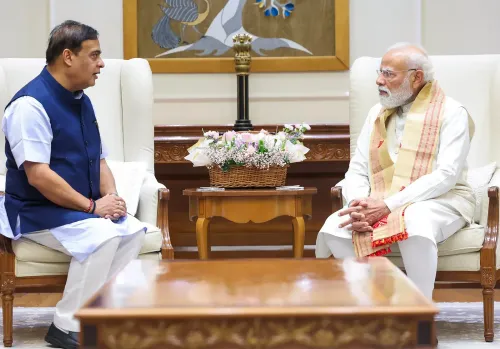
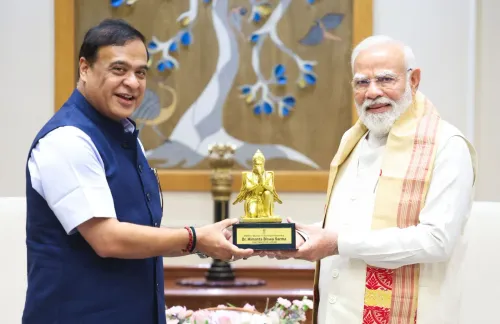
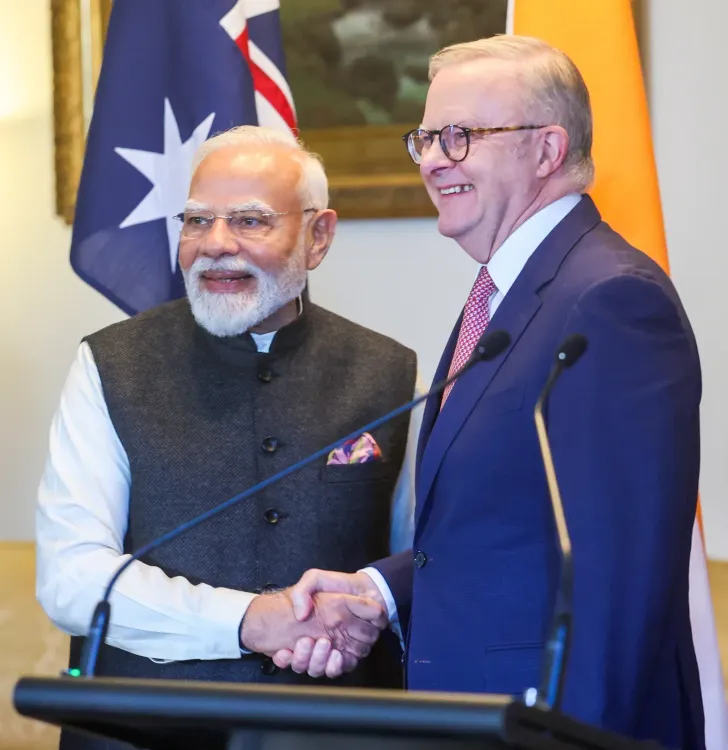
Assam Chief Minister Himanta Biswa Sarma on Friday, 10 July credited Prime Minister Narendra Modi's leadership for the landmark uranium export agreement concluded between India and Australia, calling it a defining example of how India's global standing has transformed over the past decade. Sarma made the remarks via a post on X, drawing a pointed contrast between Canberra's refusal to sell uranium to New Delhi in 2010 and the deal finalised during Modi's latest visit to Australia.
The 'Modi Difference' Argument
Sarma shared a graphic on X juxtaposing two news reports: one from April 2010, when Australia ruled out uranium sales to India citing New Delhi's status as a non-signatory to the Nuclear Non-Proliferation Treaty (NPT), and a second dated Thursday confirming the two countries had struck a uranium export deal during Modi's visit. 'It is all about the right leadership. Chose wisely,' Sarma wrote alongside the image.
The Chief Minister argued that the contrast illustrated how India's strategic partnerships and diplomatic credibility have deepened under the Bharatiya Janata Party (BJP) government at the Centre.
What the Uranium Agreement Means
The uranium export deal is being viewed as a significant milestone in the India-Australia Comprehensive Strategic Partnership. Both nations have been steadily expanding cooperation across critical minerals, clean energy, defence, trade, and Indo-Pacific security architecture.
India's access to Australian uranium is expected to bolster its long-term energy security by supplying fuel to the country's civilian nuclear power programme. Australia holds some of the world's largest uranium reserves, making it a strategically valuable supplier for India's growing energy needs.
BJP's Diplomatic Messaging
Sarma's post is part of a broader pattern: the Chief Minister has consistently used social media to amplify what he describes as the Modi government's achievements in foreign policy, infrastructure, and economic reform. His latest commentary arrives amid intensified political messaging by the BJP directed at the opposition.
Several BJP leaders have echoed Sarma's framing, projecting the uranium agreement as evidence of New Delhi's enhanced diplomatic leverage — the kind of strategic gain, they argue, that would have been considered out of reach in earlier administrations.
Context and Strategic Significance
India's civilian nuclear programme has long depended on securing reliable uranium supplies from partner nations. The 2008 India-US Civil Nuclear Agreement was a turning point that opened the door to such bilateral fuel arrangements, and the Australia deal represents a continuation of that trajectory.
Notably, this is not the first time the India-Australia nuclear relationship has been revisited — a framework agreement was signed in 2014 — but the latest export deal is being described as a concrete operational advance. With India targeting a significant expansion of nuclear power capacity in the coming decades, diversified uranium sourcing from a stable, democratic partner carries considerable strategic weight.
Point of View
But it compresses a complex diplomatic journey into a single leadership narrative. The 2010 refusal reflected Australia's domestic politics and global non-proliferation norms of that era; the path to today's deal was paved incrementally — through the 2008 US civil nuclear agreement, the 2014 India-Australia framework, and years of multilateral trust-building that predates any single government. Attributing the entire shift to one leader's charisma, while electorally potent, risks obscuring the institutional and geopolitical groundwork that made it possible. The more important question — whether India's nuclear capacity expansion will actually keep pace with its energy demand — remains unanswered by the deal alone.
NationPress
8 Oct 2026
Frequently Asked Questions
What is the India-Australia uranium export agreement?
It is a deal concluded during Prime Minister Narendra Modi's visit to Australia under which Australia will export uranium to India for use in its civilian nuclear power programme. The agreement is part of the broader India-Australia Comprehensive Strategic Partnership.
Why did Australia refuse to sell uranium to India in 2010?
In April 2010, Australia ruled out uranium sales to India because New Delhi was not a signatory to the Nuclear Non-Proliferation Treaty (NPT). That position has since evolved through successive bilateral engagements, including a framework agreement in 2014.
Why did Himanta Biswa Sarma post about the uranium deal?
Assam Chief Minister Himanta Biswa Sarma used a post on X to contrast Australia's 2010 refusal with the 2025 agreement, arguing it demonstrated the impact of PM Modi's leadership on India's global standing. He captioned the graphic: 'It is all about the right leadership. Chose wisely.'
How does the uranium deal affect India's energy security?
Access to Australian uranium — from one of the world's largest reserve holders — is expected to provide India with a reliable fuel source for its civilian nuclear power plants, supporting the country's long-term energy security as demand grows.
What is the India-Australia Comprehensive Strategic Partnership?
It is a bilateral framework under which India and Australia cooperate across critical minerals, clean energy, defence, trade, and Indo-Pacific security. The uranium export agreement is the latest milestone in this deepening partnership.