CM Himanta Addresses Media on Assam Flood Relief After Rath Yatra
Synopsis
Assam Chief Minister Himanta Biswa Sarma addressed the media on 24 July 2026 after participating in Rath Yatra at Garal Bhaktowari, outlining the state government's relief efforts for flood-affected people in Upper Assam and responding to media queries on the evolving flood situation.
Key Takeaways
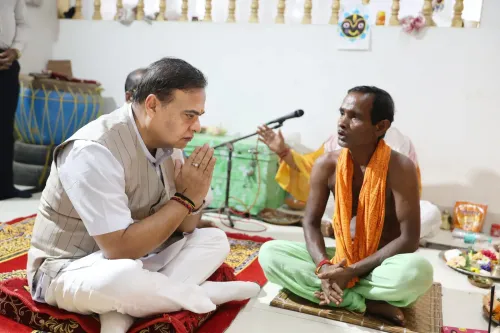
CM Himanta Biswa Sarma participated in Rath Yatra celebrations of Lord Jagannath at Garal Bhaktowari on 24 July 2026 .
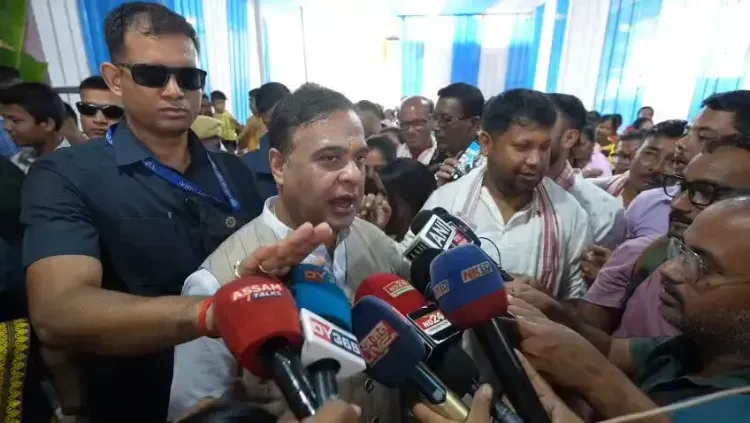
Following the religious event, the Chief Minister held a media address on the state's flood relief operations.
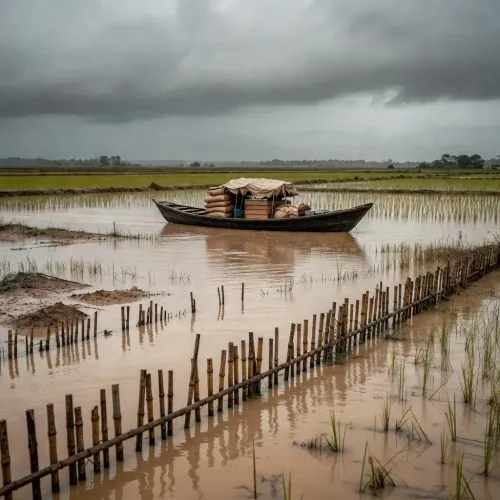
The address specifically covered the situation in Upper Assam , a region particularly vulnerable to monsoon flooding.
The government described 'ongoing efforts' in service of flood-affected people, indicating active relief operations.
Assam faces annual flooding from the Brahmaputra river and its tributaries, requiring large-scale state and central disaster response each monsoon season.
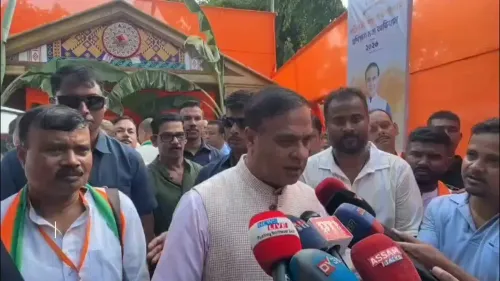
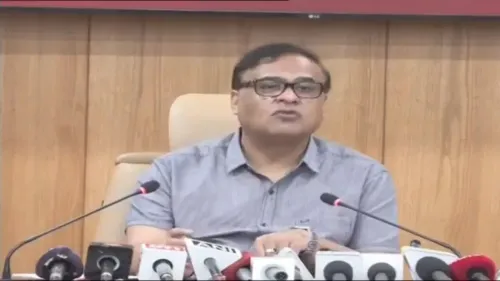
The Chief Minister's Office of Assam announced on Friday, 24 July 2026 that Chief Minister Dr. Himanta Biswa Sarma addressed the media following his participation in the sacred Rath Yatra celebrations of Lord Jagannath at Garal Bhaktowari, speaking at length about the state government's ongoing flood relief efforts and responding to queries on the situation in Upper Assam.
Context
CM Himanta Biswa Sarma participated in the annual Rath Yatra festivities at Garal Bhaktowari, a site in Assam that hosts these celebrations each year in honour of Lord Jagannath. Following the religious event, the Chief Minister held an impromptu media interaction, using the occasion to brief journalists on the administration's response to the monsoon flooding currently affecting parts of the state.
The address covered the 'ongoing efforts being undertaken in service of the flood-affected people of Assam,' as stated by the Chief Minister's Office, with a particular focus on Upper Assam — a region that includes districts such as Dibrugarh and Tinsukia and is among the most flood-prone areas in the state.
Policy Backdrop
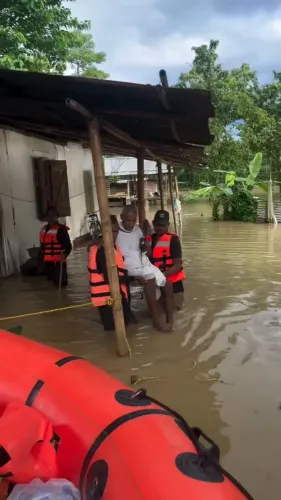
Assam experiences severe annual flooding driven by the Brahmaputra river and its tributaries during the monsoon season, a pattern that has compelled successive state governments to mount large-scale disaster response operations each year. Standard measures include the deployment of National Disaster Response Force (NDRF) teams, the establishment of relief camps, and the distribution of food and essential supplies to displaced residents.
Chief Ministers of Assam have historically combined participation in public cultural and religious events with direct media engagement during flood crises — a practice that serves both to demonstrate administrative presence on the ground and to reassure citizens that relief operations remain active. CM Sarma, who has held office since 2021, has maintained this approach across successive monsoon seasons.
Stakeholders and Impact
The primary stakeholders in the current situation are the flood-affected residents of Upper Assam, whose livelihoods, homes, and agricultural land face recurring damage during the monsoon period. Relief operations typically involve district administrations, state disaster management authorities, and central agencies working in coordination.
The Chief Minister's public media address after a widely observed religious event also signals to the broader population that governance continues uninterrupted alongside cultural life — an important message during prolonged disaster periods when public anxiety tends to be high.
What's Next
As the monsoon season progresses, further announcements from the Assam government are expected on relief distribution, embankment repair works, and potential requests for additional central assistance. The administration's response to queries on Upper Assam specifically suggests that the region remains a focal point for relief planning in the days ahead.
Observers will watch for specific allocations, camp numbers, and any escalation in the state's appeal to the National Disaster Management Authority (NDMA) or the Union government for emergency funds as flood conditions evolve.
Point of View
Possibly ahead of further relief announcements or central funding requests. This dual positioning — as a culturally engaged leader and a hands-on crisis manager — has become a defining feature of Sarma's governance communication style since 2021. The broader pattern points to how state governments in disaster-prone regions use every public platform to reinforce their relief narrative during monsoon months.
NationPress
22 Oct 2026
Frequently Asked Questions
What did Assam CM Himanta Biswa Sarma say about floods after Rath Yatra?
CM Himanta Biswa Sarma addressed the media on 24 July 2026 after attending Rath Yatra at Garal Bhaktowari, speaking about the state government's ongoing efforts to assist flood-affected people in Assam, with a specific focus on the situation in Upper Assam.
Which areas of Assam are affected by floods in 2026?
CM Sarma's media address specifically highlighted Upper Assam, a region that includes flood-prone districts and faces recurring damage from the Brahmaputra river and its tributaries during the monsoon season.
What is Rath Yatra and where was it held in Assam?
Rath Yatra is an annual Hindu festival celebrating Lord Jagannath. In Assam, CM Sarma participated in the 2026 celebrations at Garal Bhaktowari, a site that hosts the event each year.
What relief measures does the Assam government take during floods?
The Assam government typically deploys NDRF teams, sets up relief camps, and distributes food and essentials to flood-affected residents, coordinating with district administrations and central agencies during the annual monsoon flooding.
How often does Assam face flooding?
Assam experiences severe flooding every monsoon season, driven primarily by the Brahmaputra river and its tributaries, making it one of the most flood-affected states in India year after year.