CM Himanta Orders MoUs for Mineral Revenue Sharing with Assam Councils
Synopsis
CM Himanta Biswa Sarma has directed MoUs and an automated revenue-sharing system between the Assam government and the Karbi Anglong, Dima Hasao, and Bodoland Territorial councils, bringing constitutional resource-sharing obligations under a binding, tech-enforced framework.
Key Takeaways
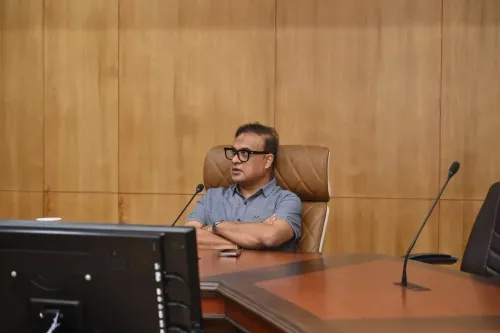
Himanta Biswa Sarma reviewed the mineral revenue-sharing mechanism with Assam's autonomous councils on 16 November 2026 .
He directed MoUs to be signed with the Karbi Anglong Autonomous Council , Dima Hasao Autonomous Council , and the Bodoland Territorial Council (BTC) .
An automated system for revenue sharing is to be introduced to ensure a streamlined and transparent process.
All three councils derive authority from the Sixth Schedule of the Indian Constitution (1950) , granting them powers over local resources.
The BTC was established under the 2003 Bodo Accord , which included provisions for resource management.
Formal MoU signings and rollout of the automated platform are the key next steps to watch.
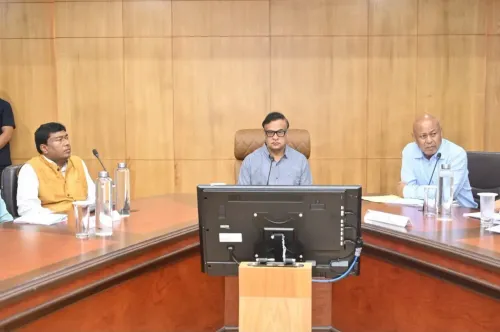
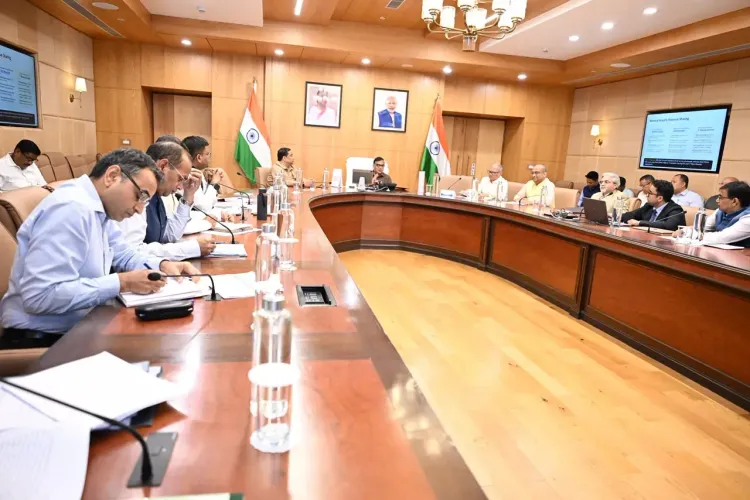
Mineral-rich districts in Assam's autonomous hill and plains regions are set for a governance overhaul — Chief Minister Dr. Himanta Biswa Sarma on Monday, 16 November 2026, reviewed and restructured the mechanism by which the state shares revenue from mineral resources with its three major autonomous councils, directing both formal agreements and a fully automated disbursement system to end years of ad-hoc arrangements.
Three Councils, One Directive
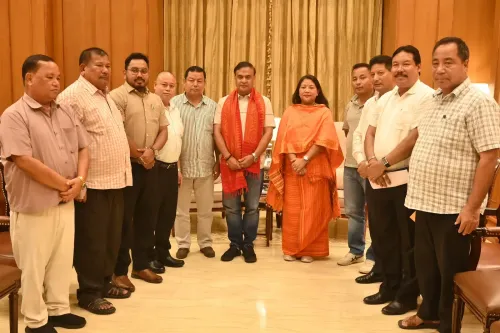
CM Himanta directed the signing of Memoranda of Understanding with the Karbi Anglong Autonomous Council, the Dima Hasao Autonomous Council, and the Bodoland Territorial Council (BTC) — the three bodies that together administer vast swathes of Assam's mineral-bearing hinterland. Each council will also be integrated into a proposed automated platform that tracks and routes revenue in real time, replacing the discretionary and often disputed processes that have governed such flows until now.
Why These Three Councils Hold the Key
All three bodies draw their authority from the Sixth Schedule of the Indian Constitution, enacted in 1950, which granted autonomous district councils in Assam powers over land, forests, and local resource management. Karbi Anglong and Dima Hasao — the latter formerly known as North Cachar Hills — sit atop significant coal and limestone deposits in Assam's hill districts. The BTC, created under the 2003 Bodo Accord, covers contiguous plains districts in western Assam with their own resource and fiscal stakes.
Successive state governments have periodically renegotiated mineral revenue formulas with these councils, but the absence of binding MoUs and automated accounting has repeatedly generated disputes over what each council is owed and when it arrives. A single platform enforcing the same rules across all three councils would, in principle, make those disputes structurally harder to sustain.
Automation as the Accountability Layer
The directive for an automated revenue-sharing system is the sharper of the two moves. MoUs set the terms; automation enforces them without requiring manual intervention at each stage — reducing the gap between what is promised and what is paid. For councils that have long argued their fiscal interests are subordinated to state-level priorities, a verifiable, real-time ledger changes the power dynamic in a concrete way.
The next milestones to watch: the formal MoU-signing ceremonies with each of the three councils, and the timeline for the automated platform's deployment across the revenue chain.
Point of View
Tech-audited contracts — reducing friction that has historically coloured state-council relations in Assam. By moving simultaneously on all three major councils, the government signals a systemic rather than piecemeal approach, which matters for councils that have long perceived revenue sharing as subject to state discretion. The automation layer is particularly significant: it shifts accountability from intent to process, making non-compliance visible in real time. Whether the councils receive the new framework as an improvement or as state encroachment on their fiscal autonomy will shape the political reception of the MoUs.
NationPress
16 Nov 2026
Frequently Asked Questions
What did CM Himanta Biswa Sarma direct regarding Assam's autonomous councils?
CM Himanta directed the signing of MoUs with the Karbi Anglong, Dima Hasao, and Bodoland Territorial councils to formalise mineral revenue sharing, and ordered the introduction of an automated system to streamline the disbursement process.
What is the Sixth Schedule and why does it matter for this decision?
The Sixth Schedule of the Indian Constitution (1950) grants autonomous district councils in Assam powers over land, forests, and local resources, making these councils key stakeholders in revenue from minerals extracted within their territories.
Which autonomous councils are covered by CM Himanta's mineral revenue directive?
The directive covers three councils: the Karbi Anglong Autonomous Council, the Dima Hasao Autonomous Council (formerly North Cachar Hills), and the Bodoland Territorial Council (BTC).
What is the Bodoland Territorial Council (BTC) and how was it formed?
The BTC is an autonomous council for areas in western Assam, established under the 2003 Bodo Accord, with provisions for resource management and fiscal arrangements with the state government.
What will the proposed automated revenue-sharing system do?
The system will automate the tracking and routing of mineral revenue from the state government to the autonomous councils, replacing manual and discretionary processes and ensuring councils receive their due share in a transparent, timely manner.