CM Himanta Orders Permanent Rehab for Chabua Erosion Families
Synopsis
Assam Chief Minister Himanta Biswa Sarma has ordered officials to identify families repeatedly displaced by Brahmaputra bank erosion and work toward their permanent rehabilitation, after meeting a Chabua family that rebuilt their home eight times only to lose it each time.
Key Takeaways
A family in Chabua, Dibrugarh district told CM Sarma they have rebuilt their home eight times , each time losing it to riverbank erosion.
CM Himanta Biswa Sarma has directed officials to identify all such vulnerable families across erosion-prone areas of Assam.
The directive focuses on permanent rehabilitation , not temporary relief — a shift from the short-term embankment-and-repair cycle.
The Brahmaputra Board , set up in 1980 , has long been mandated to address erosion in the valley, but displacement has continued across decades.
Rollout of family identification and any land allocation or rehabilitation packages is expected in the 2026-27 period, with possible central agency coordination for funding.
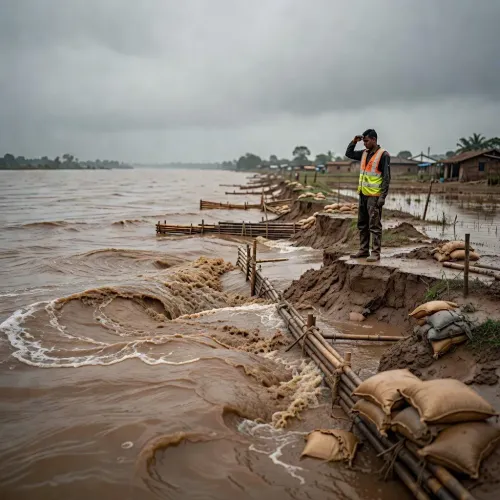
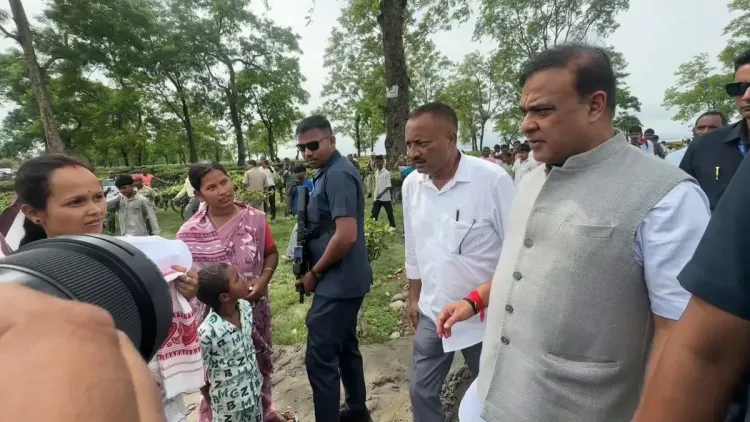
A family in Chabua, Dibrugarh district, has rebuilt their home eight times — and lost it eight times to the Brahmaputra's relentless bank erosion. That single story, shared with Assam Chief Minister Himanta Biswa Sarma during a ground visit, has now become a directive: find every family trapped in this cycle and move them somewhere permanent.
Eight homes, zero security — the Chabua family's story
The Chief Minister recounted the encounter on Sunday, 2 August 2026, posting that the family's ordeal 'cannot continue.' He has directed officials to identify similarly vulnerable households across erosion-prone stretches and begin work on 'safe and permanent rehabilitation.' The instruction is direct, the urgency unmistakable.
Chabua sits within the Brahmaputra river system's erosion corridor — a zone where the river does not merely flood but physically consumes land, year after year. For families on its banks, the monsoon is not a season; it is a recurring demolition order.
Assam's decades-long battle with Brahmaputra erosion
The broader pattern is well-established and grim. Assam has watched the Brahmaputra and its tributaries displace riverside communities for generations, with families in multiple districts rebuilding homes several times per decade. The Brahmaputra Board, constituted in 1980, was specifically tasked with flood and erosion control across the valley — yet embankment repairs and short-term relief have repeatedly given way to the same cycle of loss.
State administrations have oscillated between emergency response and longer-term relocation drives. Sarma's directive signals a renewed emphasis on the latter — targeting the most exposed households for identification first, with rehabilitation packages and possible land allocation to follow in the 2026-27 period. Central agency coordination for funding remains a likely next step, given the scale of the challenge.
What the directive means for flood-hit communities
The immediate task is identification — mapping families who have lost homes repeatedly to erosion, not just flooding. That distinction matters: flood victims can return; erosion victims often cannot, because the land itself is gone. Permanent rehabilitation means new land, new infrastructure, and a break from the cycle entirely.
The political weight of a Chief Minister personally surfacing a family's story and converting it into an official directive is significant. Whether the machinery of identification and relocation follows through at scale will be the real measure — and communities across Dibrugarh and neighbouring districts will be watching.
For the family in Chabua, the count stops at eight. The question now is how many others are still counting.
Point of View
Permanent resettlement for the most chronically exposed households. By anchoring the policy in a single family's eight-home ordeal, the Chief Minister frames a structural failure as a personal injustice, lending it political urgency. The move also implicitly acknowledges the limits of the Brahmaputra Board's decades-old mandate, which has not arrested erosion-driven displacement at scale. Whether the identification exercise translates into funded, time-bound rehabilitation or stalls in bureaucratic process will define whether this marks genuine policy inflection or another well-intentioned cycle.
NationPress
2 Aug 2026
Frequently Asked Questions
What did CM Himanta Biswa Sarma announce about Assam flood victims?
CM Sarma directed officials to identify families repeatedly displaced by Brahmaputra bank erosion and work toward their safe and permanent rehabilitation, after a Chabua family told him they had rebuilt their home eight times.
Where is Chabua and why is it flood-prone?
Chabua is a town in Dibrugarh district, Assam, situated along the Brahmaputra river system. The area is repeatedly affected by bank erosion, which physically consumes land and makes return impossible for displaced families.
What is the Brahmaputra Board and what does it do?
The Brahmaputra Board was constituted in 1980 to plan and implement flood and erosion control measures across the Brahmaputra valley in Assam and the broader northeast region.
How many times has the Chabua family rebuilt their home?
According to CM Sarma's post, the family in Chabua has rebuilt their home eight times, losing it to riverbank erosion each time.
What is the difference between flood displacement and erosion displacement in Assam?
Flood victims can often return once waters recede, but erosion victims cannot — the riverbank physically disappears, leaving no land to return to. Permanent rehabilitation is therefore essential for erosion-affected families.