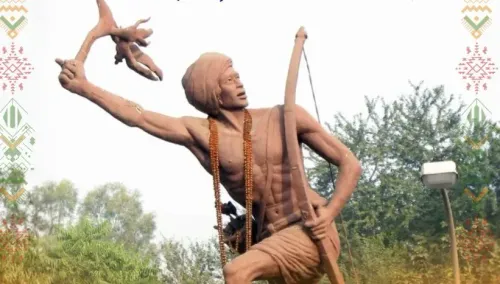
CM Himanta pays tribute to Phulaguri Dhewa martyrs

Synopsis
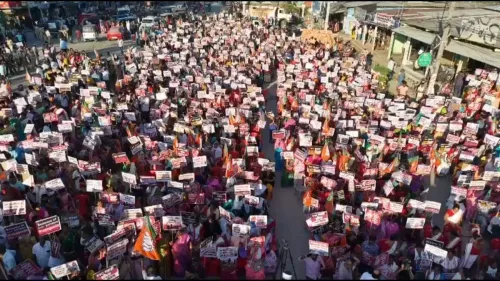
Assam Chief Minister Himanta Biswa Sarma on 18 October 2026 paid tribute to the martyrs of the Phulaguri Dhewa, the October 1861 peasant uprising against British taxation that historians regard as Assam's first organised act of anti-colonial resistance.
Key Takeaways
Assam CM Himanta Biswa Sarma commemorated the Phulaguri Dhewa on its anniversary, 18 October 2026 .
The Phulaguri Dhewa of October 1861 was a peasant uprising in Assam against British colonial taxation on areca nut and other produce.
It predates several better-known anti-colonial movements and is regarded as Assam's first organised peasant revolt.
Sarma described the uprising's participants as 'torchbearers' whose defiance is 'a symbol of this land's undying spirit of justice.' The tribute reflects a broader pattern of northeast Indian leaders foregrounding regional resistance within the national freedom-struggle narrative.
More than 160 years before a social-media post could carry their names to a national audience, the farmers of Phulaguri in Assam were already fighting an empire. Assam Chief Minister Himanta Biswa Sarma on Sunday, 18 October 2026, marked the anniversary of the Phulaguri Dhewa — the peasant uprising of October 1861 — calling it the torchbearer of Assam's first organised resistance against colonial rule, years ahead of movements the wider nation would come to know.
What happened at Phulaguri in 1861
The Phulaguri Dhewa was a rural revolt rooted in fury over oppressive British taxation on areca nut and other agricultural produce. Assamese farmers — pushed to the edge by the British Raj's revenue demands — rose together in October 1861, making Phulaguri a site of early, defiant mass action against colonial policy. The word dhewa itself evokes a gathering, a confrontation, a refusal to yield.
Historians place the Phulaguri uprising well before the better-documented peasant and tribal movements that would sweep other parts of the subcontinent later in the 19th century. For Assam, it stands as proof that the northeast's resistance to colonial extraction was neither late nor derivative — it was original, local, and fierce.
Sarma's tribute and what it signals
CM Sarma wrote: 'Long before Bharat won her freedom, the farmers of Phulaguri stood up against the might of the British Raj... Their defiance remains etched in our history as a symbol of this land's undying spirit of justice.' The tribute is not merely ceremonial. State leaders across northeastern India have increasingly foregrounded regional episodes of anti-colonial resistance, situating local uprisings within the larger arc of India's freedom struggle and reinforcing a distinct historical identity for Assam.
That framing matters. When a Chief Minister publicly marks an 1861 peasant revolt — rather than only the more familiar 1857 Sepoy Mutiny or later Gandhian campaigns — it signals a deliberate effort to expand the popular memory of who fought, and where, and why. Phulaguri's farmers belonged to that story from the very beginning.
Why Phulaguri deserves a wider audience
Anti-colonial uprisings in Assam and the northeast have often remained regional footnotes in mainstream national histories. Commemorations like today's push against that erasure. Whether they translate into updated school curricula, protected heritage sites, or formalised annual observances remains to be seen — but the act of naming the martyrs publicly, year after year, is itself a form of keeping the record straight.
The farmers of Phulaguri did not wait for a national movement to tell them they were oppressed. They already knew. And 165 years on, their defiance still carries a charge.
Point of View
CM Sarma plugs a lesser-known chapter of Assamese resistance into the national conversation about India's colonial past — a move that serves both historical justice and political identity-building in the northeast. The gesture fits a wider pattern of BJP-aligned state leaders reclaiming regional pre-independence histories to deepen local roots while aligning with the broader 'Amrit Kaal' cultural narrative. Whether commemoration translates into policy — curriculum reform, heritage protection, formal state observances — will be the real test of intent. For now, it keeps the memory of Phulaguri's farmers alive in the public record, and that alone has value.
NationPress
18 Oct 2026
Frequently Asked Questions
What was the Phulaguri Dhewa?
The Phulaguri Dhewa was a peasant uprising in Phulaguri, Assam, in October 1861. Farmers revolted against oppressive British colonial taxation on areca nut and other agricultural produce, making it one of the earliest recorded acts of anti-colonial mass resistance in Assam.
Why is the Phulaguri Dhewa historically significant?
It is considered Assam's first organised peasant uprising against British rule, predating many other well-known anti-colonial movements in India. It demonstrates that resistance to colonial exploitation in the northeast began decades before the mainstream national freedom struggle.
What did CM Himanta Biswa Sarma say about Phulaguri Dhewa?
CM Sarma called the Phulaguri farmers 'torchbearers' of Assam's first peasant uprising and said their defiance is 'a symbol of this land's undying spirit of justice,' paying tribute to every martyr of the 1861 revolt.
When is Phulaguri Dhewa commemorated?
The Phulaguri Dhewa is commemorated in October, marking the month in 1861 when the Assamese farmers rose against British taxation. CM Sarma's tribute was posted on 18 October 2026.
Where is Phulaguri located?
Phulaguri is a locality in Assam, northeastern India, and the site of the 1861 peasant uprising against British colonial revenue policies.