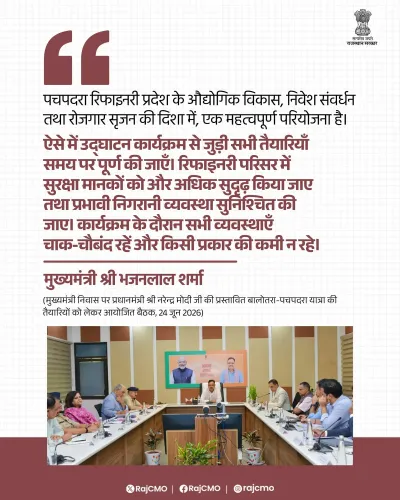
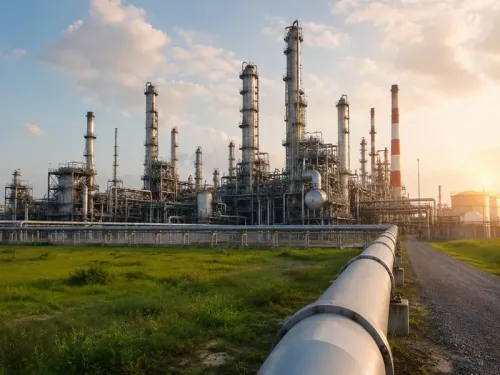
Rajasthan's Rs 80,000 Cr Greenfield Refinery to Reshape State Economy
Synopsis
The Chief Minister's Office of Rajasthan has spotlighted the Rs 80,000 crore Greenfield Refinery and Petrochemical Project in Barmer as a generational economic pivot — an integrated complex rooted in a 2013 HPCL joint venture that promises to shift the state from agriculture-led to manufacturing-led growth.
Key Takeaways
The Rajasthan CMO on 18 October 2026 announced the Greenfield Refinery and Petrochemical Project will give the state economy a 'new dimension.' The project is valued at Rs 80,000 crore , making it one of the largest single investment commitments in Rajasthan's history.
HPCL Rajasthan Refinery Ltd was incorporated in 2013 as a joint venture between HPCL and the Rajasthan government, with the refinery sited in Barmer district .
The integrated complex combines a greenfield refinery with downstream petrochemical production, targeting domestic supply chains in plastics, synthetics, and fertiliser feedstock.
Key milestones ahead include environmental clearances, equity partnership finalisation, and phased construction timelines.
Chief Minister Bhajanlal Sharma of the BJP has been tagged in the communication, signalling the project as a flagship of his government's industrial agenda.
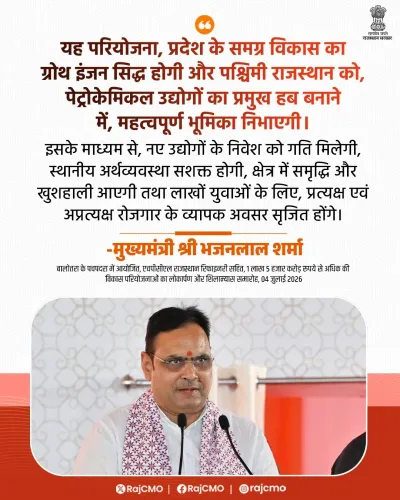
A single infrastructure bet worth Rs 80,000 crore is quietly being positioned as the most consequential industrial pivot in Rajasthan's modern economic history. On Sunday, 18 October 2026, the Chief Minister's Office of Rajasthan declared that the state's ambitious Greenfield Refinery and Petrochemical Project will give the state economy an entirely new dimension — words that carry real weight when measured against the scale of investment involved.
The post, shared with Chief Minister Bhajanlal Sharma's handle tagged, reads: 'प्रदेश में 80 हजार करोड़ रुपये की लागत से विकसित हो रही, ग्रीनफील्ड रिफाइनरी एवं पेट्रोकैमिकल परियोजना से राजस्थान की अर्थव्यवस्था को नया आयाम मिलेगा।' — 'The Greenfield Refinery and Petrochemical Project being developed at a cost of Rs 80,000 crore in the state will give a new dimension to Rajasthan's economy.'
The Project's Roots: Barmer, HPCL, and a Decade-Long Wait
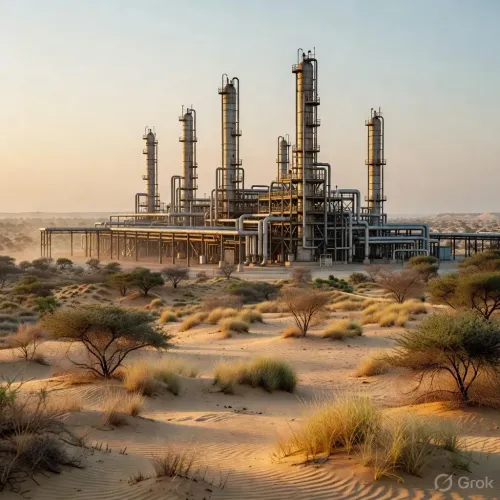
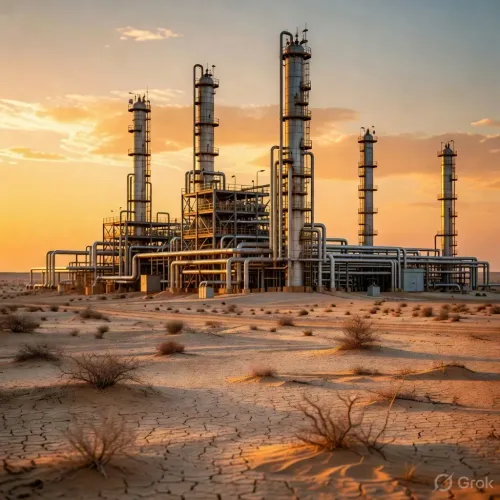
The story of this refinery stretches back to 2013, when HPCL Rajasthan Refinery Ltd (HRRL) was incorporated as a joint venture between Hindustan Petroleum Corporation Ltd (HPCL) and the Government of Rajasthan. The site: Barmer district, in the heart of western Rajasthan's oil-bearing terrain. The vision was an integrated complex — a greenfield refinery paired with a downstream petrochemical hub — that would do far more than process crude. It would anchor an entirely new manufacturing ecosystem in a region historically defined by agriculture, livestock, and desert tourism.
The project has tracked through multiple state governments and repeated rounds of equity and clearance discussions, a reminder that mega-infrastructure in India rarely moves in a straight line. But the ambition has remained constant: build domestic refining capacity, reduce import dependence on petrochemicals, and seed an industrial corridor in western Rajasthan where land is available and proximity to crude sources is a strategic asset.
What Rs 80,000 Crore Actually Means for Rajasthan
To put the number in context: Rs 80,000 crore is among the largest single investment commitments ever announced for Rajasthan. For a state whose economy has long leaned on agriculture and tourism — sectors vulnerable to monsoon volatility and seasonal cycles — an integrated refinery-petrochemical complex represents a structural shift, not just a line item in an industrial policy document.
The expected multiplier effects are real. Refineries of this scale generate direct employment in construction and operations, but more critically they catalyse downstream industries — plastics, synthetic fibres, fertiliser feedstock, packaging materials — that cluster around petrochemical output. Western Rajasthan districts, which have seen repeated capital-intensive investment proposals, stand to benefit most directly if construction milestones are met.
What Comes Next: Clearances, Equity, and the Build
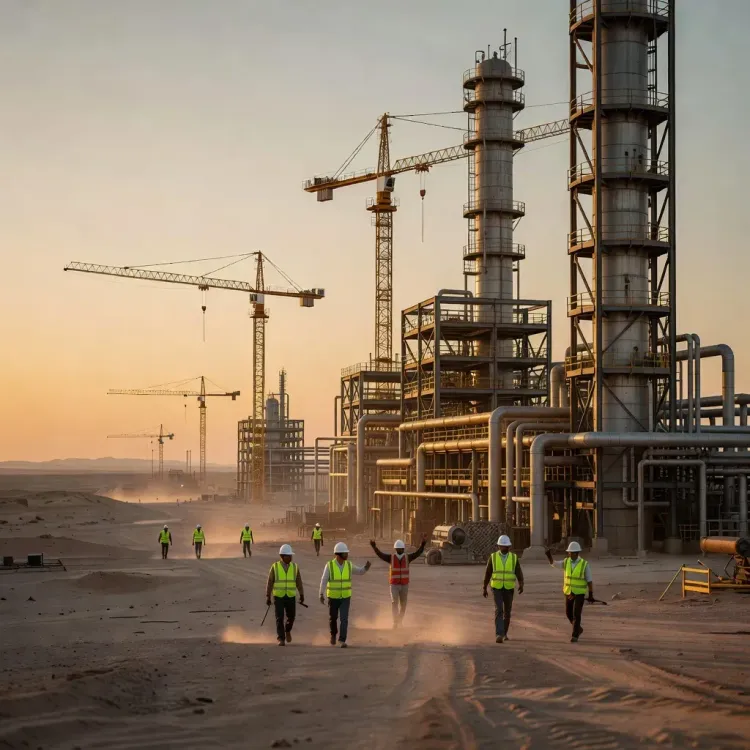
The critical path ahead runs through environmental clearances, the finalisation of equity partnership structures between HPCL and the state government, and a phased construction timeline that will determine when the complex actually begins producing. These milestones — not announcements — are the true scoreboard for a project of this complexity. The Bhajanlal Sharma government's decision to amplify the project's profile publicly signals that it intends to keep investor and public attention trained on delivery.
India's broader push for petrochemical self-reliance gives this project a tailwind it did not always have. National policy has consistently favoured expanding domestic refining capacity, and a project of this scale in Barmer fits squarely into that framework — making central support a structural probability rather than a political favour.
The desert in western Rajasthan has held oil beneath it for decades. The question now is whether the infrastructure above it can finally match that potential.
Point of View
Amplifying the Barmer refinery project serves a dual purpose: it reinforces the BJP government's industrial-growth narrative ahead of any accountability cycle, and it stakes a claim on western Rajasthan's long-delayed economic transformation. The project's joint-venture lineage with HPCL — a central PSU — also embeds the state's ambitions within the national energy-security framework, making it harder for any future government to quietly shelve. That said, the gap between a Rs 80,000 crore declaration and ground-level construction progress remains the real test; Rajasthan has seen large energy project announcements lose momentum before. The political value of the announcement is clear; the economic value depends entirely on execution.
NationPress
18 Oct 2026
Frequently Asked Questions
What is the Rajasthan Greenfield Refinery and Petrochemical Project?
It is an integrated refinery and downstream petrochemical complex planned in Barmer district, Rajasthan, valued at Rs 80,000 crore. It is being developed as a joint venture between HPCL and the Rajasthan government through HPCL Rajasthan Refinery Ltd, incorporated in 2013.
Where will the Rajasthan greenfield refinery be located?
The refinery is planned for Barmer district in western Rajasthan, chosen for its proximity to crude oil sources and availability of land.
What is the cost of the Rajasthan refinery project?
The project is estimated to cost Rs 80,000 crore, as stated by the Chief Minister's Office of Rajasthan on 18 October 2026.
Who is overseeing the Rajasthan refinery project in 2026?
Chief Minister Bhajanlal Sharma of the BJP, who has been in office since December 2023, is the political face of the project. The joint venture partner at the central level is HPCL.
What economic impact will the Rajasthan petrochemical project have?
The project is expected to create direct employment in construction and operations while seeding downstream industries such as plastics, synthetic fibres, and fertiliser feedstock — diversifying Rajasthan's economy away from agriculture and tourism toward manufacturing.