HPCL Rajasthan Refinery diesel production to start in June 2025
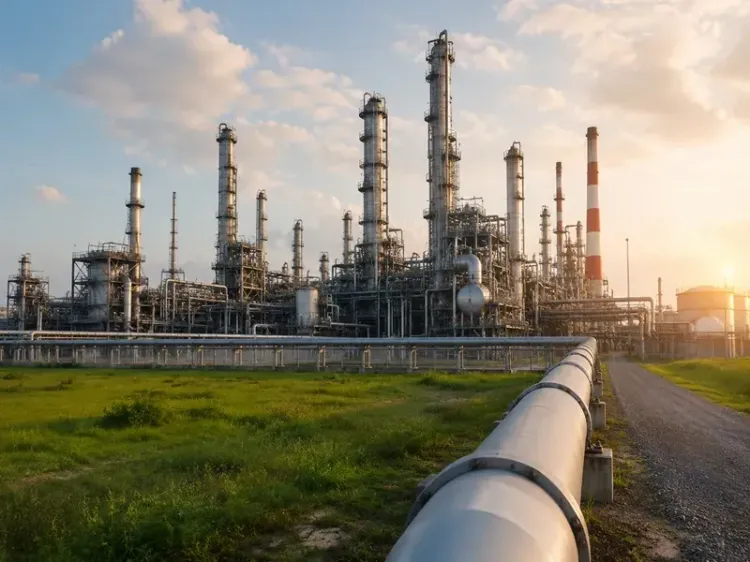
Synopsis
After years as a flagship promise, the HPCL Rajasthan Refinery is finally turning diesel — and the state government is moving fast to capture the economic upside. With 4 million tonnes of annual diesel capacity, a 300-outlet retail rollout, and a high-level coordination committee already constituted, Rajasthan is betting that in-state consumption can turn refinery output into jobs, revenue, and industrial momentum.
Key Takeaways
HPCL Rajasthan Refinery will begin diesel production in June 2025 , confirmed by Chief Secretary V.
Srinivas on 10 June .
Once fully operational, the refinery will produce approximately 4 million metric tonnes of diesel , 1 million tonnes of petrol , and 1 million tonnes of polypropylene annually.
The Rajasthan government holds a 26% stake in the refinery project.
HPCL plans to establish around 300 POL retail outlets across Rajasthan; land to be allotted at DLC rates .
A high-level coordination committee under Additional Chief Secretary Aparna Arora has been constituted to manage in-state product marketing.
A solar power plant is being set up at the refinery to support its energy requirements.
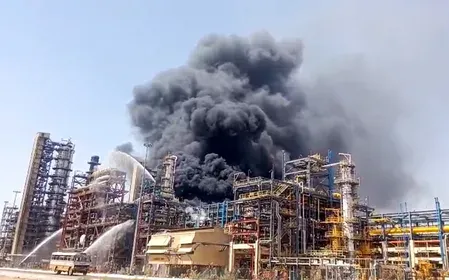
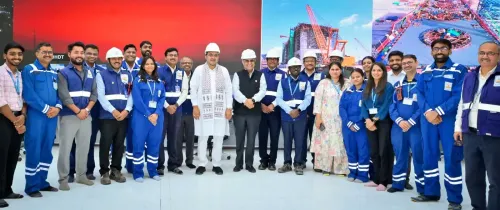
HPCL Rajasthan Refinery is set to begin diesel production this month, Chief Secretary V. Srinivas confirmed on Wednesday, 10 June, marking a landmark moment for Rajasthan's most ambitious energy infrastructure project. Srinivas, chairing a virtual review meeting from New Delhi, directed that maximum utilisation of refinery products be ensured within the state to bolster its industrial ecosystem and generate investment, employment, and revenue.
Key Developments
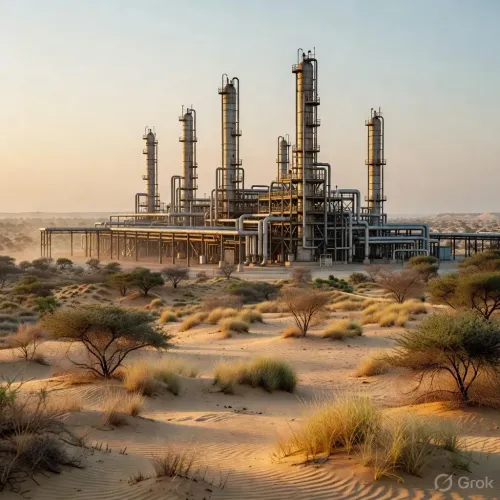
Diesel and LPG will be the first products to roll out from the refinery. Once fully operational, the facility is projected to produce approximately 4 million metric tonnes of diesel annually, along with around 1 million tonnes each of petrol and polypropylene. The refinery will also yield a range of petrochemical products, including LLDPE, HDPE, butadiene, benzene, toluene and sulphur.
Government's In-State Marketing Push
To channel refinery output within Rajasthan, Srinivas directed the formation of a high-level coordination committee under Additional Chief Secretary (Mines and Petroleum) Aparna Arora. The panel will include HPCL Director (Marketing) Amit Garg and representatives from relevant state departments.
Srinivas also called for exploring fuel outlet establishment through state institutions — including the State Motor Garage, Rajasthan State Road Transport Corporation (RSRTC), Police Department, Prisons Department, Rajasthan Tourism Department, and district-level establishments. The feasibility of setting up POL (Petroleum, Oil and Lubricants) outlets at district vehicle pools is also being assessed.
HPCL's 300-Outlet Expansion Plan
Hindustan Petroleum Corporation Limited (HPCL) has proposed establishing approximately 300 POL retail outlets across Rajasthan. The company has been asked to identify suitable locations and submit a proposal so that land can be allotted at District Level Committee (DLC) rates wherever feasible. Garg confirmed that HPCL has already prepared an action plan and is keen to partner with state government departments to meet their fuel requirements.
Additionally, a solar power plant is being set up at the refinery site to support its energy needs, signalling an intent to reduce the facility's own carbon footprint even as it scales fossil-fuel output.
Political and Economic Significance
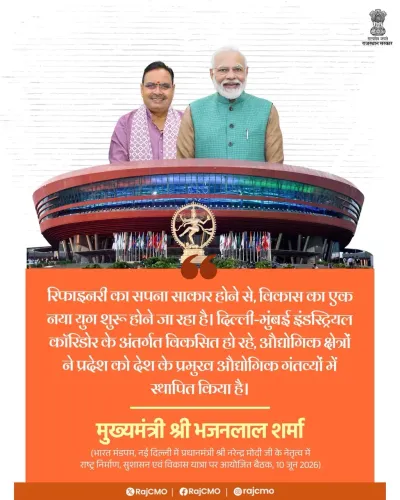
Srinivas credited Chief Minister and Mines Minister Bhajan Lal Sharma's continuous monitoring for enabling the refinery to reach production readiness. The Rajasthan government holds a 26 per cent stake in the project, making it a direct financial stakeholder in its commercial success.
Arora noted that coordinated efforts across multiple departments are under way to build a robust in-state market for refinery products, with the project expected to deliver large-scale employment and strengthen Rajasthan's economic growth trajectory.
With diesel production imminent and a structured distribution framework taking shape, the HPCL Rajasthan Refinery appears poised to move from a long-gestating infrastructure promise to an operational economic asset — the next test will be execution speed on the retail network rollout.
Point of View
But the more telling move is the state's aggressive push to capture consumption within Rajasthan — a sign that the government wants economic returns, not just ribbon-cutting credit. Constituting a coordination committee and directing every state department from police to tourism to assess fuel outlets suggests a top-down market-creation strategy that is unusual in its breadth. The real variable is whether HPCL's 300-outlet rollout can be executed at pace, or whether land allocation bottlenecks — a chronic issue in Rajasthan's infrastructure projects — slow the distribution play just as production ramps up.
NationPress
16 Sept 2026
Frequently Asked Questions
When will HPCL Rajasthan Refinery start diesel production?
Diesel production at the HPCL Rajasthan Refinery is set to begin in June 2025, as confirmed by Chief Secretary V. Srinivas on 10 June. Diesel and LPG will be the first products to roll out from the facility.
How much diesel will the HPCL Rajasthan Refinery produce annually?
Once fully operational, the refinery is projected to produce approximately 4 million metric tonnes of diesel annually. It will also produce around 1 million tonnes each of petrol and polypropylene, along with petrochemicals including LLDPE, HDPE, butadiene, benzene, toluene and sulphur.
What is the Rajasthan government's stake in the HPCL refinery?
The Rajasthan government holds a 26 per cent stake in the HPCL Rajasthan Refinery, making it a direct financial stakeholder in the project's commercial success.
What is HPCL's retail outlet plan for Rajasthan?
HPCL has proposed establishing around 300 POL (Petroleum, Oil and Lubricants) retail outlets across Rajasthan. The company has been asked to identify suitable locations and submit a proposal so that land can be allotted at District Level Committee rates wherever feasible.
Who is overseeing the in-state marketing of refinery products?
A high-level coordination committee has been constituted under Additional Chief Secretary (Mines and Petroleum) Aparna Arora to manage marketing and utilisation of refinery products within Rajasthan. The committee includes HPCL Director (Marketing) Amit Garg and representatives from relevant state departments.