CM Himanta Pays Tribute to APJ Abdul Kalam on Punyatithi
Synopsis
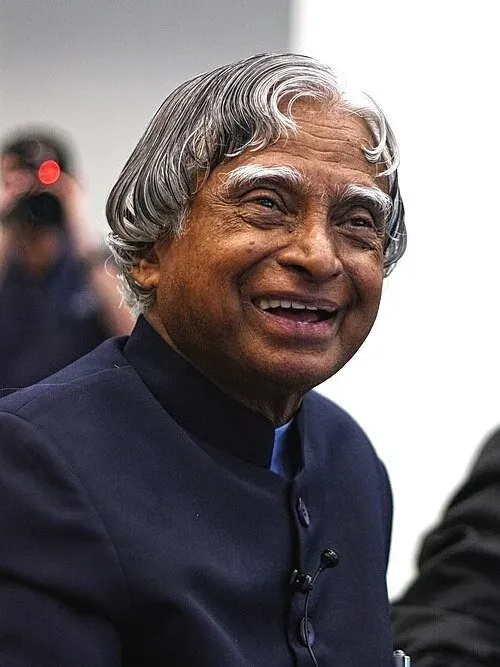
Assam Chief Minister Himanta Biswa Sarma paid tribute to Dr. A.P.J. Abdul Kalam on his Punyatithi on 27 July, calling him the 'People's President' and crediting him with transforming India's scientific aspirations into national achievements. Kalam served as India's 11th President and led the landmark Integrated Guided Missile Development Programme.
Key Takeaways
CM Himanta Biswa Sarma posted a tribute to Dr.
Abdul Kalam on his Punyatithi, 27 July .
Kalam served as India's 11th President from 2002 to 2007 and is remembered as the 'People's President.' Kalam led the Integrated Guided Missile Development Programme (IGMDP) , producing the Agni and Prithvi missile systems.
CM Sarma credited Kalam with transforming 'India's scientific aspirations into national achievements' and inspiring generations.
Annual tributes to Kalam by political leaders connect his legacy of scientific self-reliance to India's contemporary development goals.
Kalam's emphasis on science education continues to influence national policy discussions, particularly around youth and innovation.
Assam Chief Minister Himanta Biswa Sarma on Monday, 27 July, paid tribute to former President Dr. A.P.J. Abdul Kalam on his death anniversary, widely observed as Punyatithi, honouring the scientist-statesman's enduring legacy in shaping India's scientific and strategic ambitions.
Context
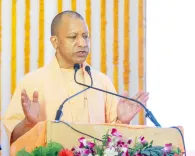
In his post, CM Sarma described Dr. Kalam as the 'People's President' and credited him with transforming 'India's scientific aspirations into national achievements,' adding that he 'inspired generations to dream beyond boundaries.' The Chief Minister expressed hope that Kalam's vision would 'continue to inspire every citizen in building the Bharat he envisioned.'
Dr. Kalam passed away on 27 July 2015 while delivering a lecture at the Indian Institute of Management, Shillong. His death anniversary is observed annually across India, with tributes from political leaders, scientists, and students alike.
Policy Backdrop
Dr. A.P.J. Abdul Kalam served as India's 11th President from 2002 to 2007. Before his presidency, he was a central figure at the Defence Research and Development Organisation (DRDO), where he led the Integrated Guided Missile Development Programme (IGMDP) from the early 1980s onward. The programme produced indigenous missile systems including Agni and Prithvi, which became cornerstones of India's strategic deterrence.
Kalam's scientific career also intersected with India's space programme, earning him the informal title 'Missile Man of India.' His later years were devoted to education advocacy, particularly championing science and technology as tools of national self-reliance — themes that continue to resonate in current policy discourse around innovation and youth development.
Stakeholders and Impact
Annual commemorations of Dr. Kalam's Punyatithi draw participation from a wide cross-section of Indian society — students, the scientific community, defence establishments, and political parties across the spectrum. His image as a non-partisan, deeply patriotic figure makes tributes to him a point of broad consensus in public life.
For BJP leaders and state chief ministers, invoking Kalam's legacy also serves to connect contemporary national goals — particularly in defence indigenisation and science education — to a lineage of achievement stretching back through the 1990s missile tests and the 1998 nuclear milestones. CM Sarma, as convenor of the North-East Democratic Alliance (NEDA), addressing this tribute from Assam underscores the reach of such commemorations beyond the Hindi heartland.
What's Next
Kalam's emphasis on scientific education and youth aspiration remains a touchstone for state-level science outreach initiatives across India. Observers will watch whether the coming academic year sees policy updates or programme launches — particularly under the National Education Policy framework — that explicitly reference his philosophy of innovation-driven nation-building.
As India continues to expand its space, defence, and semiconductor ambitions, the annual invocation of Dr. Kalam's legacy by leaders across the political spectrum signals an enduring consensus that scientific self-reliance remains central to the country's development identity.
Point of View
Reinforcing a narrative of continuity between India's missile-era achievements and its present-day ambitions. For a leader like Sarma, who governs a border state with significant strategic significance, invoking Kalam also carries a regional resonance — connecting the North-East to a pan-Indian story of scientific pride. The consistency of this messaging across political platforms suggests Kalam's legacy has been institutionalised as a shared national reference point rather than a partisan symbol.
NationPress
26 Oct 2026
Frequently Asked Questions
When is APJ Abdul Kalam's death anniversary?
Dr. A.P.J. Abdul Kalam passed away on 27 July 2015 at the Indian Institute of Management, Shillong , and his death anniversary is observed annually on that date as his Punyatithi .
Why is APJ Abdul Kalam called the People's President?
Dr. Kalam earned the title 'People's President' for his accessibility, humility, and deep connect with ordinary citizens, especially students and youth, during and after his presidency from 2002 to 2007 .
What was APJ Abdul Kalam's role in India's missile programme?
Dr. Kalam headed the Integrated Guided Missile Development Programme (IGMDP) at the DRDO from the early 1980s, leading the development of indigenous missiles including Agni and Prithvi , which earned him the title 'Missile Man of India.'
What did Himanta Biswa Sarma say about APJ Abdul Kalam?
Assam CM Himanta Biswa Sarma called Dr. Kalam the 'People's President' and said he transformed 'India's scientific aspirations into national achievements,' inspiring generations to dream beyond boundaries.
Who is Himanta Biswa Sarma?
Himanta Biswa Sarma is the Chief Minister of Assam and a senior BJP leader who also serves as the convenor of the North-East Democratic Alliance (NEDA) .