CM Himanta Pays Tribute to Dr. Kalam on Birth Anniversary
Synopsis
Assam CM Himanta Biswa Sarma marks Dr. APJ Abdul Kalam's birth anniversary with a tribute honouring the scientist-president's journey from Rameswaram to Rashtrapati Bhavan, his missile and nuclear legacy, and his inspirational visits to Assam's student community.
Key Takeaways
Assam Chief Minister Himanta Biswa Sarma posted a tribute to Dr.
APJ Abdul Kalam on October 15, 2026 , his birth anniversary.
Kalam served as India's 11th President from 2002 to 2007 and was born in Rameswaram, Tamil Nadu, in 1931 .
He led the development of the Agni and Prithvi missiles and contributed to the Pokhran-II nuclear tests as Chief Scientific Adviser.
CM Sarma specifically highlighted Kalam's visits to Assam as 'always enriching,' with special mention of their impact on the student community .
The tribute frames Kalam's legacy through twin themes of scientific breakthroughs and nationalism , reflecting a broader BJP narrative of self-reliance.
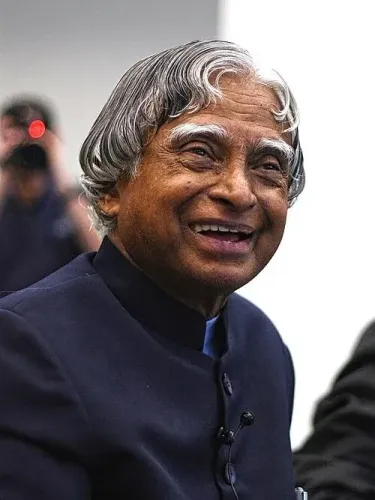
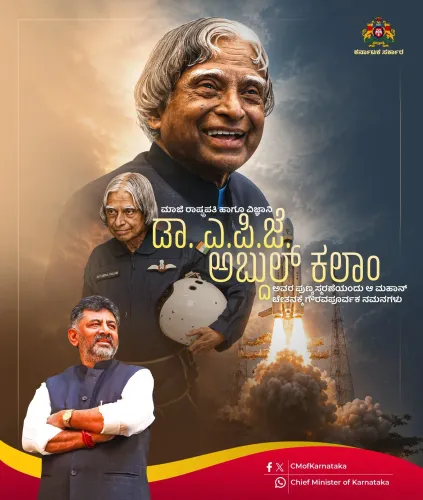
From the fishing lanes of Rameswaram to the ceremonial halls of Rashtrapati Bhavan, few lives in independent India have traced so complete an arc — and on October 15, 2026, Assam Chief Minister Himanta Biswa Sarma paused to honour the man who walked it. In a heartfelt post on X marking Dr. APJ Abdul Kalam's birth anniversary, the Chief Minister recalled the scientist-statesman's enduring imprint on the nation and on Assam's student community in particular.
A Journey from Rameswaram to the Presidency
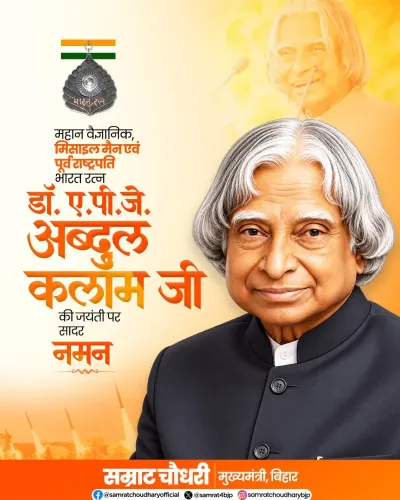
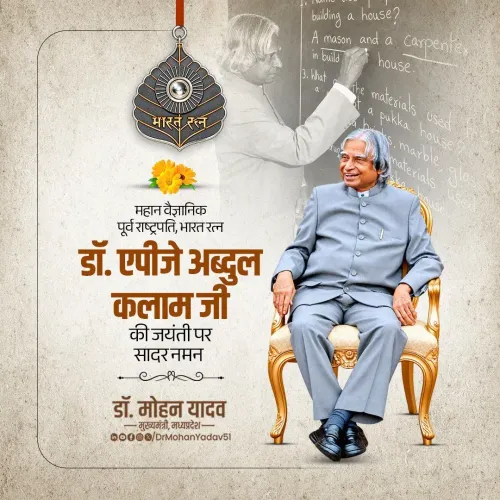
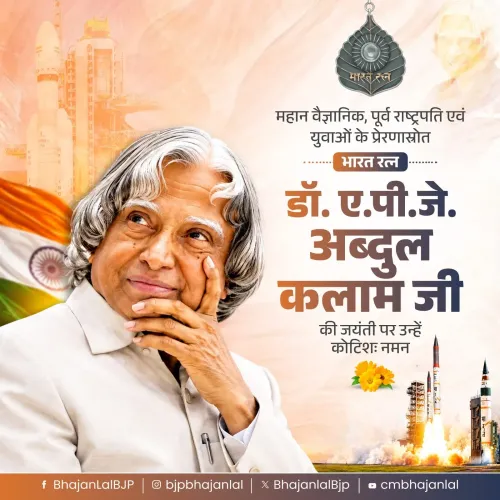
Born in 1931 in the small temple town of Rameswaram, Tamil Nadu, Dr. Avul Pakir Jainulabdeen Abdul Kalam rose through sheer intellectual hunger to become India's 11th President (2002–2007). Along the way he served as Chief Scientific Adviser to the Prime Minister between 1992 and 1999, shepherding the development of the Agni and Prithvi missile series and contributing to the Pokhran-II nuclear tests — the twin pillars that redrew India's strategic posture. CM Sarma's tribute underlines precisely this dimension: 'He ensured that the future of India will always be protected through his scientific breakthroughs and no adversary will ever be able to harm our motherland.'
Kalam's Assam Connection and the Student Legacy
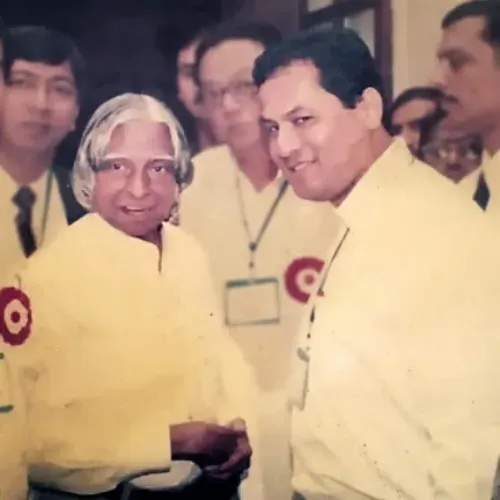
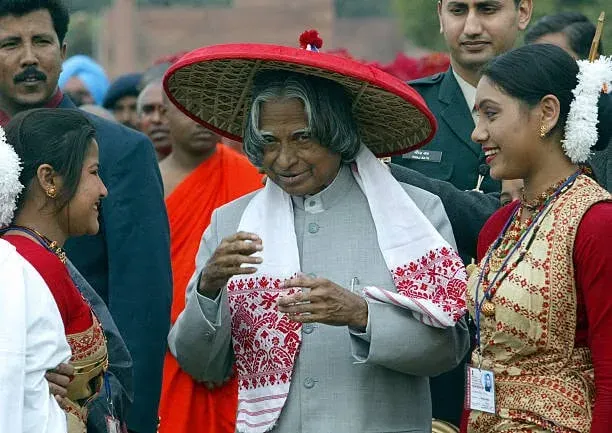
The Chief Minister gave special weight to Kalam's visits to Assam, describing them as 'always enriching for all, especially our student community.' For a state that has made youth education and STEM engagement a policy priority, the memory of Kalam's presence carries more than ceremonial significance — it anchors an aspiration. Sarma's message — 'placing knowledge and nationalism over everything else' — reflects the template Kalam himself modelled: that science and patriotism are not competing callings but the same call, heard twice.
October 15 and the Annual Reckoning with Kalam's Ideals
October 15 is observed nationally as Dr. Kalam's birth anniversary, drawing tributes from political leaders across parties and ideological lines — a rare unanimity in Indian public life. For BJP state leaders in particular, Kalam's legacy offers a natural bridge between themes of scientific self-reliance and nationalist pride. Sarma's post fits that pattern while adding a regional texture: the specific nod to Assam's students signals that the tribute is less about the calendar and more about a living instructional model the state is consciously passing forward.
A boy from a modest island town who armed a nation and then chose to spend his presidency talking to schoolchildren — that story, CM Sarma suggests, is the one a rising generation most needs to carry.
Point of View
Sarma positions the state government as custodian of an enduring national ideal. The unanimous cross-party reverence Kalam commands makes him a uniquely safe vehicle for messages about nationalism and scientific ambition.
NationPress
15 Oct 2026
Frequently Asked Questions
Why is October 15 significant for Dr. APJ Abdul Kalam?
October 15 is Dr. APJ Abdul Kalam's birth anniversary. He was born on October 15, 1931 , in Rameswaram, Tamil Nadu , and the date is observed nationally to honour his contributions to science, defence, and public service.
What were Dr. APJ Abdul Kalam's key contributions to India?
Dr. Kalam led the development of India's Agni and Prithvi ballistic missiles and played a central role in the Pokhran-II nuclear tests . He served as Chief Scientific Adviser to the Prime Minister (1992–1999) and as India's 11th President (2002–2007) .
What did Assam CM Himanta Biswa Sarma say about Dr. Kalam?
CM Sarma praised Kalam for 'placing knowledge and nationalism over everything else' and noted that his scientific breakthroughs ensured no adversary could harm India. He also highlighted Kalam's visits to Assam as especially enriching for the state's student community.
What is Dr. Kalam's connection to Assam?
CM Himanta Biswa Sarma noted that Dr. Kalam visited Assam on several occasions, describing those visits as 'always enriching for all, especially our student community.' The specific details of those visits are part of the local legacy Sarma's tribute invokes.
Where was Dr. APJ Abdul Kalam born?
Dr. APJ Abdul Kalam was born in Rameswaram , a small island town in Tamil Nadu , in 1931 . He went on to become one of India's most celebrated scientists and the country's 11th President .