Sonowal Remembers Kalam on Death Anniversary
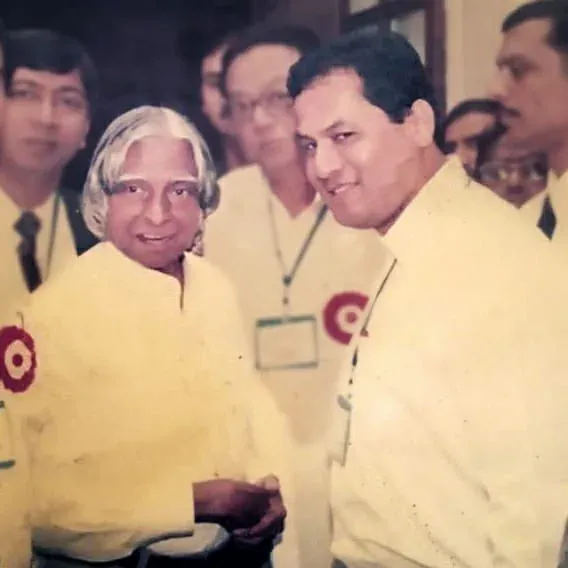
Synopsis
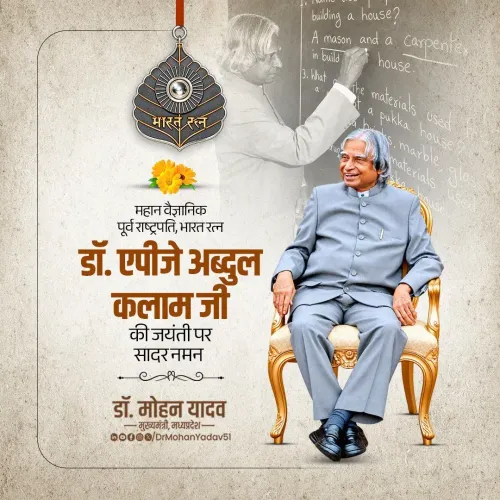
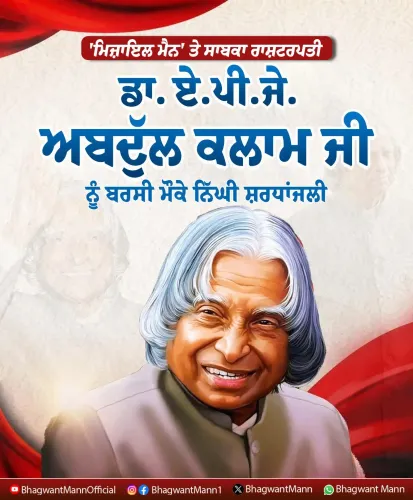
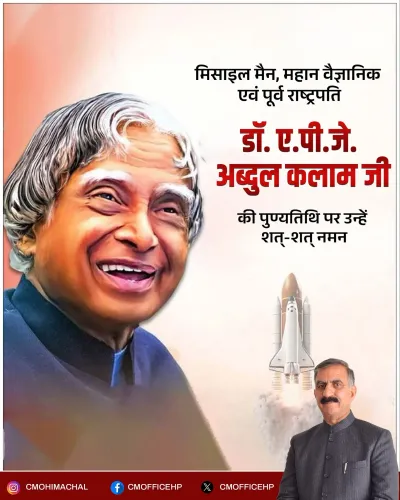
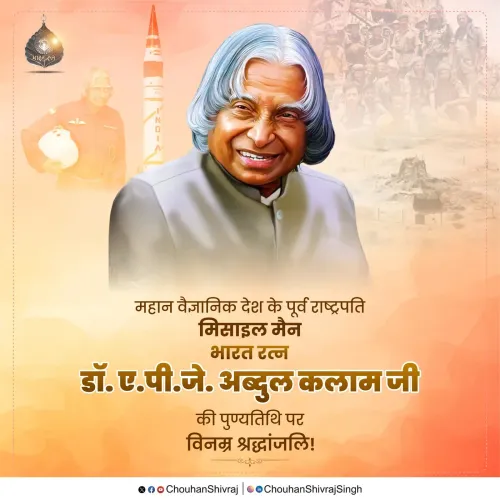
Union Minister Sarbananda Sonowal paid tribute to former President Dr APJ Abdul Kalam on his death anniversary on 27 July 2026, honouring him as the Missile Man of India whose vision and ideas continue to inspire the nation's youth.
Key Takeaways
Union Minister Sarbananda Sonowal posted a tribute to Dr APJ Abdul Kalam on 27 July 2026 , the anniversary of Kalam's death.
Dr Kalam served as India's 11th President (2002–2007) and received the Bharat Ratna in 1997 .
Known as the 'Missile Man of India' , Kalam led ballistic missile and launch vehicle programmes at DRDO and ISRO .
Sonowal described Kalam as a 'visionary statesman and brilliant scientist' whose ideas 'ignite the young minds of the nation.' Annual tributes from BJP leaders on 27 July are part of a broader pattern linking Kalam's legacy to India's indigenous R&D and STEM priorities.
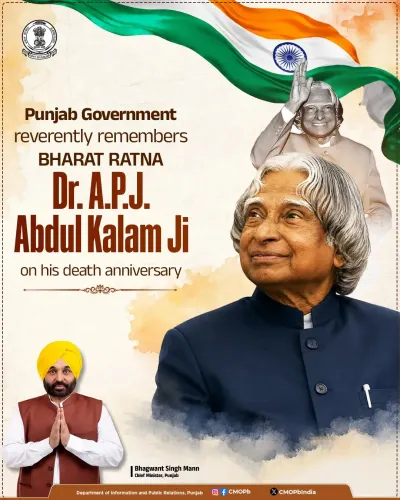
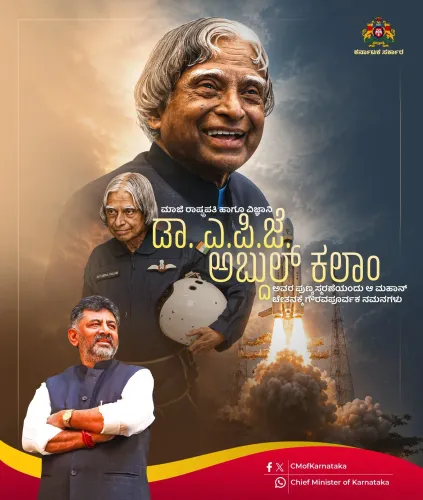
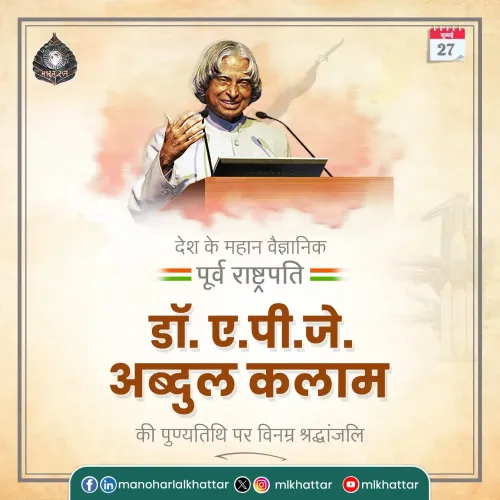
Union Minister of Ports, Shipping and Waterways Sarbananda Sonowal paid tribute to former President and Bharat Ratna Dr APJ Abdul Kalam on his death anniversary, Monday, 27 July 2026, calling him a 'visionary statesman and brilliant scientist' whose ideas continue to inspire the youth of India.
Context
Dr Kalam passed away on 27 July 2015 while delivering a lecture at IIM Shillong, and the date has since been observed nationally as a day of remembrance. Sonowal's post on X described Kalam's 'extraordinary life and ideas' as a continuing force that 'ignite the young minds of the nation.'
Kalam served as India's 11th President from 2002 to 2007 and was awarded the Bharat Ratna in 1997, India's highest civilian honour, in recognition of his scientific and public service contributions.
Policy Backdrop
Before his presidency, Dr Kalam was the architect of India's ballistic missile development programme at DRDO and made pivotal contributions to launch vehicle technology at ISRO, earning him the enduring title 'Missile Man of India.' His 1998 'India 2020' vision document laid out a roadmap for technological self-reliance and economic development that influenced subsequent national policy frameworks.
Tributes from Union ministers on 27 July have become a consistent feature of India's political calendar, often used to reaffirm the government's commitment to indigenous research and development, defence technology, and STEM education. The invocation of Kalam's legacy aligns with the broader push under successive administrations to expand India's space and missile programmes.
Stakeholders and Impact
Kalam's primary constituency in public memory is Indian youth, whom he addressed prolifically through books, lectures, and institutional visits throughout his life. His message of scientific aspiration and national service continues to be referenced in school curricula, government youth programmes, and innovation-linked policy discourse.
Annual commemorations at institutions such as DRDO laboratories and engineering colleges across India typically include lectures, essay competitions, and youth outreach events connecting his legacy to ongoing technology missions.
What's Next
As India advances its ambitions in space exploration, defence manufacturing, and deep-tech innovation, the annual remembrance of Dr Kalam is likely to remain a touchstone for policymakers seeking to connect present-day programmes with his vision of a self-reliant, technology-driven India. Institutions bearing his name — including the APJ Abdul Kalam Technical University in Uttar Pradesh and the Dr APJ Abdul Kalam Island missile testing range off Odisha — stand as lasting markers of that legacy.
Point of View
Missile, and deep-tech programmes — makes the Kalam reference particularly pointed. It is a soft but deliberate signal that the current government sees itself as the inheritor and executor of his 'India 2020' vision.
NationPress
26 Oct 2026
Frequently Asked Questions
When did APJ Abdul Kalam die?
Dr APJ Abdul Kalam passed away on 27 July 2015 while delivering a lecture at IIM Shillong , Meghalaya. He was 83 years old.
Why is APJ Abdul Kalam called the Missile Man of India?
Dr Kalam earned the title 'Missile Man of India' for his central role in developing India's ballistic missile programme at DRDO and his contributions to launch vehicle technology at ISRO , most notably the Agni and Prithvi missile series.
What award did APJ Abdul Kalam receive?
Dr APJ Abdul Kalam was awarded the Bharat Ratna , India's highest civilian honour, in 1997 , in recognition of his contributions to science and national service.
Who is Sarbananda Sonowal?
Sarbananda Sonowal is the Union Minister of Ports, Shipping and Waterways, a senior BJP leader, and former Chief Minister of Assam from 2016 to 2021.
What was APJ Abdul Kalam's vision for India?
In 1998 , Dr Kalam presented his 'India 2020' vision document, which outlined goals for technological self-reliance, economic development, and making India a developed nation by the year 2020.