CM Himanta Reviews Chanaka Land Reclamation From Brahmaputra
Synopsis
Chief Minister Himanta Biswa Sarma reviewed land reclamation projects at Chanaka, Morigaon on 10 November 2026. Three projects aim to reclaim 4,000–5,000 bighas lost to Brahmaputra erosion, with a 1,000-bigha project set to begin soon and a 1,500-bigha project proposed.
Key Takeaways
Himanta Biswa Sarma reviewed ongoing and proposed land reclamation projects at Chanaka, Morigaon on 10 November 2026 .
A 1,000-bigha reclamation project at Chanaka is set to begin work soon.
A 1,500-bigha project has been proposed as an additional reclamation effort in the same area.
Three projects in total are planned to reclaim between 4,000 and 5,000 bighas from the Brahmaputra in the Morigaon region.
Morigaon district is among Assam's most erosion-affected zones, with farming communities and displaced residents as the primary beneficiaries.
Funding sources, environmental clearances, and integration with central flood schemes remain key variables to watch.
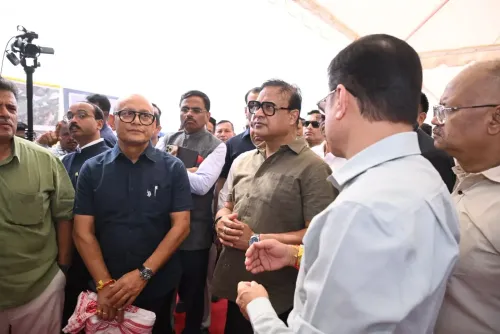
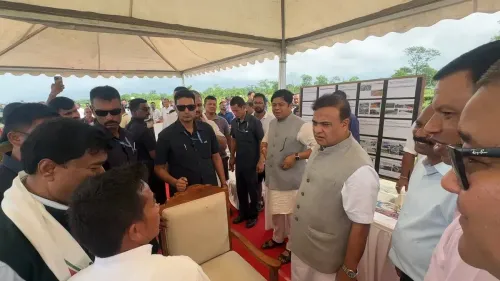
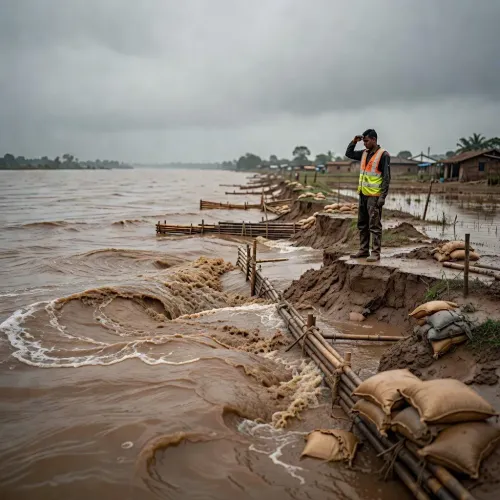
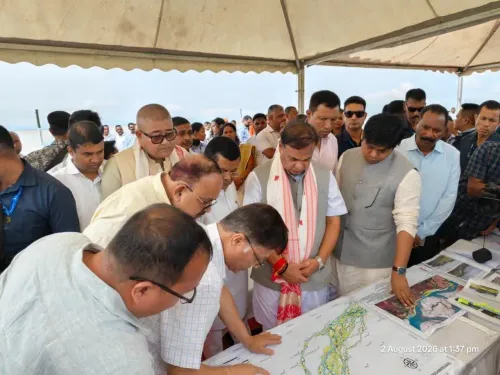
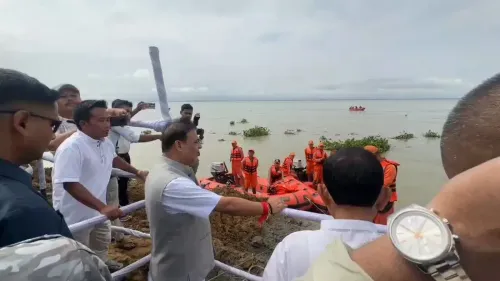
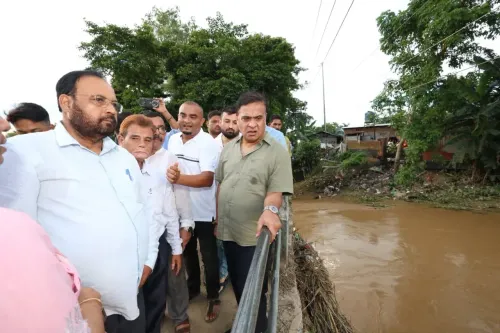
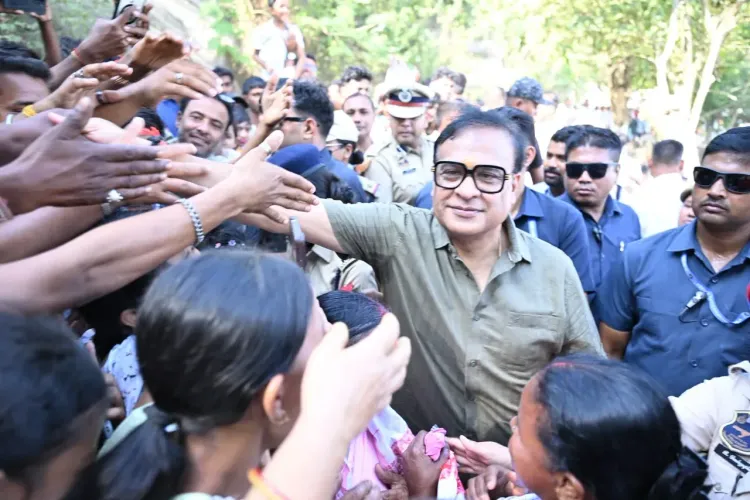
The Brahmaputra has been taking Assam's land for decades — and Morigaon has paid dearly. Now, Chief Minister Dr. Himanta Biswa Sarma is pushing back, reviewing a clutch of reclamation projects at Chanaka, Morigaon on Tuesday, 10 November 2026, aimed at clawing back thousands of bighas swallowed by the river.
Three Projects, 4,000–5,000 Bighas on the Table
The Chief Minister's Office confirmed that CM Sarma reviewed both ongoing and proposed land reclamation initiatives at Chanaka. A 1,000-bigha project is set to break ground soon, a 1,500-bigha project has been proposed, and together with existing work, three projects are being planned to collectively reclaim between 4,000 and 5,000 bighas in the region.
The scale is significant for a district that has watched fertile agricultural land — and in some cases entire homesteads — disappear into the Brahmaputra year after year. The office described the effort as 'opening up new possibilities for productive use of land.'
Why Morigaon, Why Now
Morigaon district, sitting in central Assam, is among the state's most erosion-vulnerable zones. The Brahmaputra — one of the world's largest rivers by discharge — shifts its channel constantly, particularly during monsoon flooding, claiming riverbank land that farmers and communities depend on. Assam loses thousands of bighas to erosion annually, a slow-motion crisis that displaces families and shrinks the cultivable land base.
The Brahmaputra Board, established in 1980 under central mandate, was created precisely to coordinate flood control and erosion management across the valley. Decades on, the gap between the board's mandate and the scale of erosion on the ground has kept reclamation projects firmly in demand across successive state governments.
From Review to Rollout — What Comes Next
CM Sarma, who has made infrastructure and disaster resilience a signature pitch since taking office in May 2021, has used high-visibility reviews like Tuesday's to signal political priority and accelerate bureaucratic timelines. The key variables still to be resolved: funding sources, environmental clearances, and whether these projects will be integrated with centrally-sponsored flood management schemes.
For the farming communities of Morigaon, the arithmetic is straightforward — every bigha reclaimed is a bigha that can grow crops, support a household, and reduce the pressure of displacement. Whether the announced scale translates to ground-level delivery will be the real measure of this initiative.
Assam's fight with its own river is as old as the state itself. These three projects won't end it — but if they deliver, they will mark the most ambitious reclamation push Chanaka has seen in a generation.
Point of View
000–5,000 bigha target, if achieved, would represent one of the larger discrete reclamation outcomes in Assam's post-independence history, lending weight to the state's argument that erosion can be reversed, not merely managed. The unresolved question of central funding integration is critical: without it, state budgets alone will struggle to sustain projects of this scale across multiple erosion-hit districts. Watch whether these Morigaon projects become a template replicated along other vulnerable Brahmaputra stretches, or remain an isolated flagship.
NationPress
10 Nov 2026
Frequently Asked Questions
What is the land reclamation project at Chanaka, Morigaon?
The Chanaka reclamation initiative involves three projects aimed at recovering between 4,000 and 5,000 bighas of land lost to Brahmaputra riverbank erosion in Morigaon district, Assam. A 1,000-bigha project is set to begin soon, with a 1,500-bigha project also proposed.
Why is Morigaon affected by Brahmaputra erosion?
Morigaon is a central Assam district situated along the Brahmaputra, one of the world's largest rivers. Its shifting channels and annual monsoon flooding cause persistent riverbank erosion, destroying agricultural land and displacing communities each year.
How many bighas will be reclaimed in Chanaka?
The combined target for the three planned projects at Chanaka, Morigaon is between 4,000 and 5,000 bighas of land to be reclaimed from the Brahmaputra.
What is the Brahmaputra Board and what does it do?
The Brahmaputra Board was established in 1980 by the central government to coordinate flood control and erosion management across the Brahmaputra valley in northeast India.
What has CM Himanta Biswa Sarma done about Brahmaputra flooding?
Since taking office in May 2021, CM Himanta Biswa Sarma has made infrastructure and disaster resilience key priorities. The 10 November 2026 review of Chanaka reclamation projects is part of that broader focus on recovering land lost to the Brahmaputra.