CM Himanta Reviews RFCTLARR Act Amendment Proposals

Synopsis
Chief Minister Himanta Biswa Sarma chaired a review meeting at Lok Sewa Bhawan on 10 July 2026 to examine proposed amendments to the RFCTLARR Act, 2013, with the stated goal of making land acquisition faster, more transparent, and citizen-centric while protecting affected people's interests.
Key Takeaways
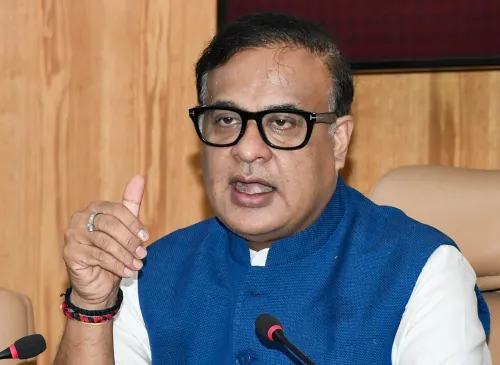
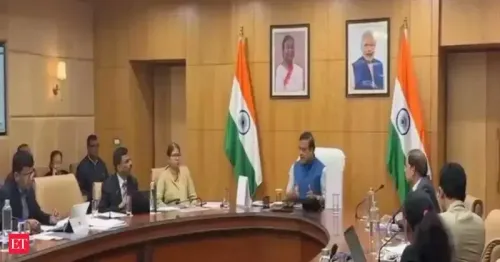
CM Himanta Biswa Sarma chaired a meeting at Lok Sewa Bhawan, Guwahati on 10 July 2026 to review proposed changes to the RFCTLARR Act .
The reforms aim to make land acquisition 'faster, transparent and citizen-centric' for infrastructure and public welfare projects.
The RFCTLARR Act, 2013 is a central law that replaced the Land Acquisition Act of 1894 , mandating fair compensation and rehabilitation.
Any state-level amendment to the central Act requires a specific constitutional process and may need central government concurrence.
Key stakeholders include landowners, affected communities, and project developers across sectors such as roads, power, and urban development.
The outcome could set a precedent for land acquisition reform in other northeastern states .
The Chief Minister's Office of Assam announced on Friday, 10 July 2026 that Chief Minister Dr. Himanta Biswa Sarma chaired a high-level meeting at Lok Sewa Bhawan, Guwahati to review proposed amendments to the Right to Fair Compensation and Transparency in Land Acquisition, Rehabilitation and Resettlement (RFCTLARR) Act, the central legislation governing land acquisition across India.
Context
The official post from the Chief Minister's Office stated that the proposed reforms aim to ensure 'faster, transparent and citizen-centric land acquisition for infrastructure and public welfare projects while safeguarding people's interests.' The meeting at Lok Sewa Bhawan — the state secretariat complex that serves as the nerve centre of Assam's administrative machinery — signals that the state government is actively pursuing legislative or procedural changes to the existing framework.
The RFCTLARR Act, 2013 replaced the colonial-era Land Acquisition Act of 1894 and introduced mandatory provisions for social impact assessments, consent from affected families, and structured rehabilitation and resettlement packages. While widely regarded as a landmark reform, its implementation has frequently been cited by state governments and project developers as a source of delays in infrastructure execution.
Policy Backdrop
The 2013 Act is a central law, meaning any state-level amendment requires careful legal calibration and, in many cases, presidential assent or central concurrence. Several Indian states have over the years explored modifications to speed up land acquisition for roads, power projects, and urban development, while attempting to retain the Act's core protections for landowners.
Assam, with its ambitious infrastructure pipeline spanning highways, industrial corridors, and flood-mitigation works, has particular stakes in streamlining the acquisition process. The state has been one of the more active reformers in the northeast, and this review fits into a broader pattern of administrative modernisation under Chief Minister Sarma, who has been in office since May 2021.
The dual mandate articulated by the Chief Minister's Office — accelerating project delivery while protecting citizens' interests — reflects the central tension that has defined debates around land law reform across India for over a decade.
Stakeholders and Impact
The two primary stakeholder groups are landowners and affected communities on one side, and project developers and government agencies on the other. For landowners, the critical question will be whether any amendments preserve or dilute the compensation, consent, and rehabilitation provisions that the 2013 Act enshrined.
For infrastructure developers — both public and private — faster acquisition timelines translate directly into reduced project costs and earlier completion. Sectors such as roads, power transmission, and urban housing stand to benefit most if procedural bottlenecks are addressed without compromising legal safeguards.
Civil society groups and farmer organisations in Assam have historically been sensitive to land-related legislation, particularly given the state's complex demographic and agrarian landscape. The framing of the reform as 'citizen-centric' and protective of 'people's interests' suggests the government is conscious of this political dimension.
What's Next
The immediate next step to watch is whether the state government tables a draft amendment bill in the Assam Legislative Assembly. Any modification to a central Act by a state legislature must follow a specific constitutional process, and the nature of the proposed changes will determine the extent of central government involvement required.
Stakeholder consultations with landowner groups, legal experts, and project authorities are likely to precede any formal legislative move. The outcome of this review could set a precedent for other northeastern states grappling with similar infrastructure-versus-land-rights challenges, and may draw attention from central ministries overseeing highways and power infrastructure.
Point of View
The administration is attempting to pre-empt the political backlash that has derailed similar reform attempts in other states. The move fits a wider federal pattern where state governments seek operational flexibility within a central legal framework that many project authorities regard as procedurally cumbersome. The real test will come when draft amendment language is made public, revealing how the state balances compensation adequacy and consent requirements against faster project timelines.
NationPress
11 Jul 2026
Frequently Asked Questions
What is the RFCTLARR Act and why is Assam reviewing it?
The RFCTLARR Act, 2013 is a central law governing land acquisition in India, replacing the 1894 colonial Act with provisions for fair compensation, consent, and rehabilitation. Assam is reviewing proposed amendments to make the process faster and more efficient for infrastructure projects while protecting landowners' interests.
What did CM Himanta Biswa Sarma's meeting on 10 July 2026 decide?
The exact decisions from the meeting have not been made public. The Chief Minister's Office stated that the review aimed at reforms for faster, transparent, and citizen-centric land acquisition, but specific amendment details were not disclosed.
Can Assam amend a central law like the RFCTLARR Act on its own?
States can pass amendments to central laws on subjects in the Concurrent List, but such amendments typically require presidential assent or central government concurrence before taking effect. The constitutional process will apply to any changes Assam proposes to the RFCTLARR Act.
Who are the key stakeholders affected by land acquisition law changes in Assam?
The primary stakeholders are landowners and communities whose land is acquired, project developers and government agencies executing infrastructure works, and civil society groups monitoring compensation and rehabilitation outcomes.
What infrastructure sectors would benefit from faster land acquisition in Assam?
Sectors including roads and highways, power transmission, flood-mitigation works, and urban development stand to benefit most from streamlined land acquisition processes in Assam.