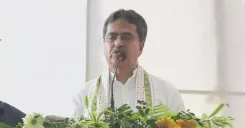
CM Himanta Takes a Cricket Swipe at Congress

Synopsis
Assam Chief Minister Himanta Biswa Sarma took a pointed swipe at Congress on X, using a cricket analogy to portray the opposition as prone to blame-shifting and conspiracy claims rather than accepting outcomes on merit.
Key Takeaways
Assam Chief Minister Himanta Biswa Sarma posted a cricket-themed jibe at Indian National Congress on October 14, 2026 .
The post mocked Congress as a party that would allege ball-tampering, a fixed pitch, and demand the umpire's resignation rather than accept a fair result.
No specific cricket match or event was named; the analogy was purely political satire.
Sarma is a senior BJP leader, NEDA convenor, and one of the party's most active social media voices.
The post fits a broader pattern of BJP leaders using everyday metaphors to portray Congress as chronically litigious about outcomes.
No response from Congress or policy follow-up is expected.
A cricket analogy. A political punchline. Assam Chief Minister Himanta Biswa Sarma deployed both on Wednesday, October 14, when he posted a sharp one-liner on X that used the sport to mock the Indian National Congress — suggesting the opposition would have blamed tampering, a fixed pitch, and a compromised umpire rather than accept an honest dismissal.
The post read: 'Good thing the bowler wasn't from Congress. He'd have walked off claiming the ball was tampered with, the pitch was fixed and demanded the umpire's resignation!' No cricketing event was named; the analogy stood entirely on its own as political satire.
BJP's favourite playbook: cricket as political metaphor
BJP leaders have long reached for cricket's vocabulary when they want to land a point quickly and memorably. The sport's language — pitches, umpires, tampering — carries instant resonance across India's political spectrum, making it a reliable vehicle for partisan commentary that travels well on social media.
Sarma, who has served as Assam Chief Minister since 2021 and is the convenor of the North-East Democratic Alliance (NEDA), is among the party's more prolific digital voices. His posts regularly blend regional politics with national narratives, and this one fits a well-worn pattern: a crisp metaphor, no policy substance, maximum rhetorical impact targeted squarely at Congress.
What the jab is really saying
The underlying charge is familiar — that Congress reflexively questions the legitimacy of outcomes rather than accepting defeat on merit. Whether it is elections, institutions, or, now, cricket, the caricature Sarma is drawing is of a party that cries foul first and asks questions later.
Congress has not responded to the post. No immediate policy or electoral follow-up is expected from either side — this is social media sparring, not a formal political escalation.
In Indian politics, the scoreboard on this kind of exchange is decided not by rebuttal but by reach — and Sarma's following ensures the one-liner has already cleared the boundary.
Point of View
And Sarma — as NEDA convenor — amplifies it with a North-East regional reach that goes beyond Assam alone. The post signals no new policy direction but keeps the party's rhetorical temperature high ahead of whatever electoral cycle is next on the calendar. In the attention economy of Indian politics, a well-timed one-liner can do as much work as a press conference.
NationPress
14 Oct 2026
Frequently Asked Questions
What did Himanta Biswa Sarma post about Congress on October 14 2026?
Sarma posted a cricket analogy on X suggesting that if the bowler had been from Congress, the party would have claimed the ball was tampered with, the pitch was fixed, and demanded the umpire's resignation — a satirical dig at the opposition's tendency to dispute outcomes.
Why does BJP use cricket metaphors against Congress?
Cricket carries universal resonance in India, making it an effective vehicle for political satire that travels quickly on social media. BJP leaders frequently use sporting analogies to portray Congress as unwilling to accept fair results.
Is Himanta Biswa Sarma a BJP leader?
Yes. Himanta Biswa Sarma is a senior BJP leader who has served as Chief Minister of Assam since 2021 and is the convenor of the North-East Democratic Alliance (NEDA).
Did Congress respond to Himanta Biswa Sarma's cricket post?
As of the post date, Congress had not publicly responded to the remark. No formal political escalation or policy follow-up was indicated.
What is NEDA and what is Himanta's role in it?
The North-East Democratic Alliance (NEDA) is a BJP-led coalition of political parties in India's north-eastern states. Himanta Biswa Sarma serves as its convenor, giving him a broader regional political role beyond Assam.