CM Himanta Reaffirms Dibrugarh Second Capital Push
Synopsis
Chief Minister Himanta Biswa Sarma addressed media in Dibrugarh on October 14, 2026, on the second day of his visit, reaffirming Assam's commitment to developing the upper Assam city as the state's second capital — a policy first announced in 2022 to decentralise governance away from Guwahati.
Key Takeaways
CM Himanta Biswa Sarma spent a second consecutive day in Dibrugarh on October 14, 2026 , addressing the media on the city's development.
Sarma reaffirmed the government's commitment to Dibrugarh 's 'overall development and progress' as Assam's second capital.
The second-capital designation was first announced in 2022 as part of a decentralisation push to reduce Guwahati's administrative dominance.
Dibrugarh is historically significant for tea and petroleum industries and is the largest city in upper Assam.
The policy aims to bring governance closer to communities in upper Assam, near the Arunachal Pradesh and Nagaland border regions.
Specific new administrative or infrastructure commitments from the October 2026 visit are yet to be formally detailed.
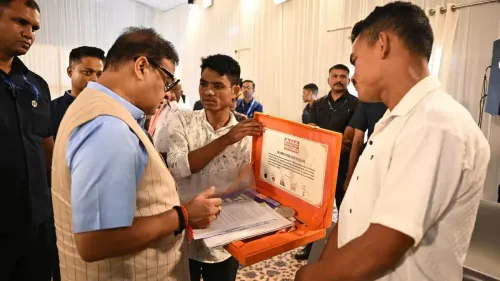
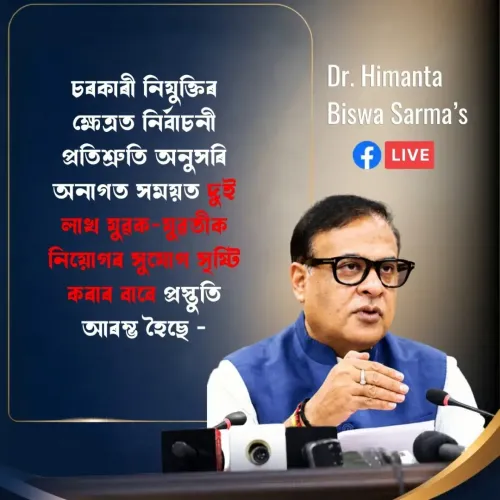
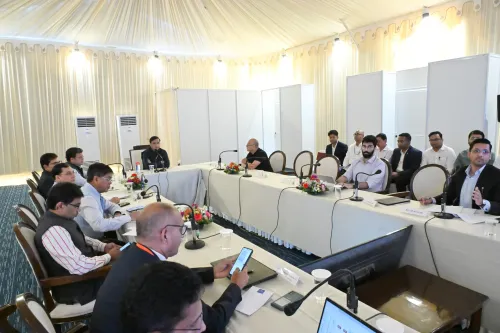
Upper Assam's most consequential city got a direct message from its highest office on Wednesday, October 14, 2026: Dibrugarh's rise as Assam's second capital is not a promise in cold storage. On the second day of his visit to the city, Chief Minister Dr Himanta Biswa Sarma addressed the media, reaffirming his government's commitment to the 'overall development and progress' of Assam's second capital.
Why Dibrugarh, and Why Now
Dibrugarh is no ordinary district headquarters. Anchored by its legacy in tea and petroleum — two industries that have bankrolled Assam's economy for over a century — the city sits at the heart of upper Assam, a region that has long felt the gravitational pull of Guwahati draining administrative attention southwestward. The Sarma government's decision, announced in 2022, to designate Dibrugarh as the state's second capital was a direct policy response to that imbalance.
The logic is straightforward: concentrating governance in a single city, however well-connected, creates blind spots. Spreading administrative presence into upper Assam compresses the distance — literal and bureaucratic — between government and citizen in a region that spans some of India's most strategically sensitive terrain near the Arunachal Pradesh and Nagaland borders.
Sarma's Two-Day Dibrugarh Signal
A sitting Chief Minister spending two consecutive days in a city outside the state capital is itself a political and administrative statement. Dr Himanta Biswa Sarma has consistently used on-ground visits to anchor policy announcements and signal bureaucratic priority-setting. A media address on day two — rather than a quick in-and-out — suggests the visit carried substantive administrative weight, even as specific new commitments from this particular trip remain to be formally detailed.
The broader pattern is deliberate: sustained visibility in Dibrugarh builds the institutional muscle memory that a second capital requires — regular ministerial presence, active media engagement, and an administration that treats the city as a co-headquarters, not a showpiece.
The Decentralisation Bet and What Comes Next
Assam's second-capital project is part of a wider Northeast India trend of governments pushing administrative infrastructure beyond primate cities. For Dibrugarh, the real test lies ahead: will the rhetorical commitment translate into legislative steps, dedicated secretariat functions, or capital-budget allocations that shift real decision-making weight eastward? The answers — infrastructure announcements, investment pipelines, or formal administrative orders — are what Dibrugarh's residents and policymakers will be watching for next.
For now, the Chief Minister's presence and his on-the-record reaffirmation keep the clock ticking on a promise that upper Assam has been holding for four years.
Point of View
However, will depend on whether concrete legislative or budgetary steps follow the optics, since upper Assam electorates have grown adept at distinguishing visits from outcomes. Sustained follow-through on Dibrugarh could become a template for equitable regional development across other multi-city states.
NationPress
14 Oct 2026
Frequently Asked Questions
Why is Dibrugarh being developed as Assam's second capital?
Dibrugarh is being developed as Assam's second capital to promote balanced regional growth and reduce the administrative concentration in Guwahati. The policy, announced in 2022, aims to bring governance closer to upper Assam's population and strategic border regions.
When did Assam announce Dibrugarh as the second capital?
The Assam government under Chief Minister Himanta Biswa Sarma announced plans to develop Dibrugarh as the state's second capital in 2022.
What did CM Himanta Biswa Sarma say in Dibrugarh on October 14, 2026?
CM Himanta Biswa Sarma addressed the media in Dibrugarh on October 14, 2026, reaffirming the government's commitment to the overall development and progress of the city as Assam's second capital.
What is Dibrugarh known for?
Dibrugarh is a major city in upper Assam, historically significant for its tea and petroleum industries. It is the largest city in upper Assam and serves as a key commercial and administrative hub for the region.
What are the next steps for Dibrugarh's second-capital development?
Key steps to watch include formal administrative orders, dedicated secretariat functions, capital-budget allocations for infrastructure, and investment project announcements that give Dibrugarh's second-capital status operational reality beyond political commitment.