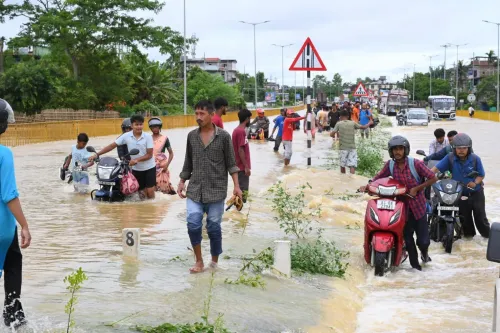
CM Himanta taps PM Surya Ghar subsidy to aid Assam flood victims
Synopsis
Assam CM Himanta Biswa Sarma has activated the state subsidy component of the PM Surya Ghar Muft Bijli Yojana as direct cash relief for flood-affected residents, expanding the state's multi-scheme disaster response during the 2026 monsoon floods.
Key Takeaways
CM Himanta Biswa Sarma announced a 'multi-faceted approach' to deliver cash directly to Assam flood victims.
The state subsidy under the PM Surya Ghar Muft Bijli Yojana — a rooftop solar scheme — has been released as a flood relief instrument.
The PM Surya Ghar Muft Bijli Yojana was originally announced in the 2024-25 Union Budget to promote rooftop solar adoption, not disaster relief.
Assam has a pattern of channelling central scheme subsidies as direct support during annual Brahmaputra valley monsoon floods.
The exact quantum, beneficiary list, and disbursal timeline for this release have not been officially detailed.
When floodwaters swallow homes and livelihoods, the fastest relief is often cash — and Assam Chief Minister Himanta Biswa Sarma is now pulling every lever available to put money directly into the hands of flood-hit families, including an unexpected one: the state subsidy component of the PM Surya Ghar Muft Bijli Yojana.
A solar scheme repurposed for a monsoon crisis
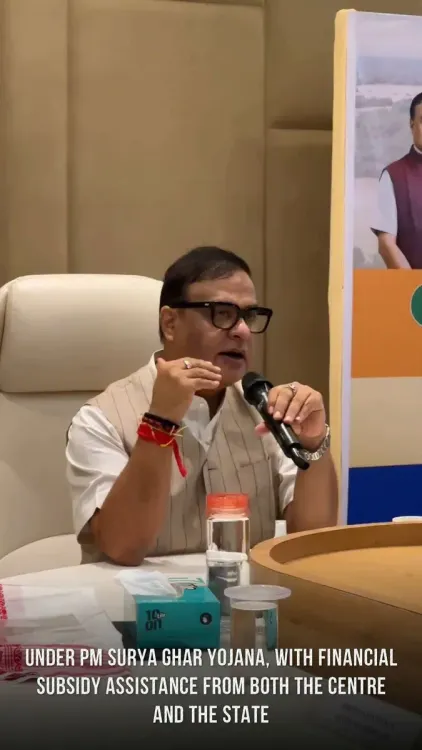
The PM Surya Ghar Muft Bijli Yojana was designed to expand rooftop solar adoption across India, announced in the 2024-25 Union Budget. Its primary purpose was energy — not disaster relief. But CM Sarma has now released the scheme's state subsidy tranche as a direct cash instrument for #AssamFloods victims, turning a sectoral welfare programme into an emergency lifeline.
'We are taking a multi-faceted approach to help our people affected by floods and opening every possible avenue to give them cash in hand,' Sarma posted on Monday, August 3, 2026. The move signals that Assam's administration is treating every available central-scheme component as a potential channel for immediate relief — not waiting for dedicated disaster funds alone.
Assam's recurring flood calculus
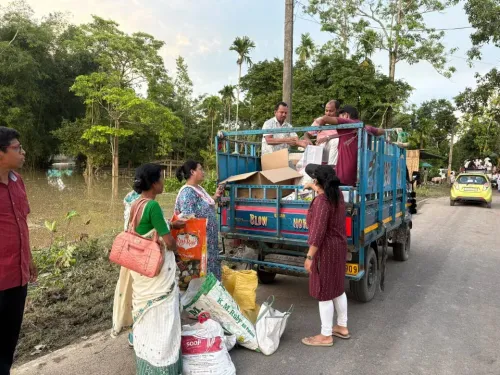
Assam's Brahmaputra valley floods annually during the monsoon, making disaster response an institutional reflex for the state government. What has evolved in recent years is the method: rather than routing relief exclusively through designated disaster funds, the state has increasingly channelled subsidies from Union welfare programmes as direct cash support to inundated households.
Flood-affected families are the immediate stakeholders here — people whose homes, crops, and small enterprises have been submerged. Getting cash to them quickly, through whatever pipeline is open, is the operative logic. The PM Surya Ghar subsidy release is one such pipeline, now activated outside its original sectoral intent.
What comes next for flood relief disbursal
The specific quantum of the subsidy release, the beneficiary list, and the timeline for disbursal have not been officially detailed. Observers will watch for further state-level orders expanding this approach — whether other central scheme components follow — and whether the Assam assembly sees any budgetary follow-up formalising this multi-scheme relief architecture.
One thing is already clear: the playbook is expanding. When the next wave of floodwater rises, Assam's government intends to have more instruments ready — not fewer.
Point of View
CM Sarma is institutionalising a flexible, multi-scheme approach to disaster response that sidesteps the slower pipeline of dedicated disaster funds. This reflects a broader BJP-governed state tendency to demonstrate administrative agility through Union scheme convergence, particularly ahead of political cycles. The approach is pragmatic but raises a structural question: as more sectoral subsidies are redirected toward emergency relief, the original programme goals — here, solar adoption — may see diluted outcomes. Assam's model could either become a template for other flood-prone states or attract scrutiny over scheme-purpose compliance.
NationPress
3 Aug 2026
Frequently Asked Questions
What is PM Surya Ghar Muft Bijli Yojana and why is it being used for flood relief?
The PM Surya Ghar Muft Bijli Yojana is a central government scheme launched in the 2024-25 budget to promote rooftop solar installations and provide free electricity to households. Assam CM Himanta Biswa Sarma has released the scheme's state subsidy component as direct cash aid for flood-affected families, repurposing it as an emergency relief instrument.
How bad are the Assam floods in 2026?
Assam faces annual monsoon flooding in the Brahmaputra valley. The 2026 floods have prompted the state government to activate a multi-scheme cash relief approach, though specific figures on affected persons or inundated areas were not detailed in the CM's announcement.
What is Assam's approach to flood relief under CM Himanta?
CM Himanta Biswa Sarma has described a 'multi-faceted approach' that opens every available avenue to deliver cash directly to flood-hit residents, including releasing state subsidies from central welfare schemes like PM Surya Ghar beyond their original sectoral purpose.
How much money is being released under PM Surya Ghar for Assam flood victims?
The exact quantum of the subsidy release has not been officially detailed. CM Sarma's announcement confirmed the release of the state subsidy component but did not specify the total amount or the number of beneficiaries.
Has Assam used central scheme funds for flood relief before?
Yes. Assam has an established pattern of supplementing dedicated disaster relief with components of Union welfare programmes during annual monsoon floods, channelling them as direct cash support to affected households.