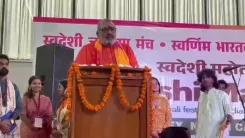
CM Himanta Thanks President for Support Amid Assam Tragedy
Synopsis
Assam Chief Minister Himanta Biswa Sarma publicly thanked the President of India for prayers and support following a tragedy in the state, confirming that relief outreach is under way and a rehabilitation plan is being developed for affected families.
Key Takeaways
CM Himanta Biswa Sarma thanked the President of India on 25 July 2026 for prayers and solidarity during a state tragedy.
The Chief Minister described the loss of lives as 'heartbreaking,' signalling significant human cost.
The state government confirmed it is actively reaching out to all affected persons to provide necessary relief.
A 'clear rehabilitation plan' is being developed for those impacted by the tragedy.
Assam faces recurrent monsoon-season disasters under the Brahmaputra basin flood cycle, requiring central-state coordination under the Disaster Management Act, 2005 .
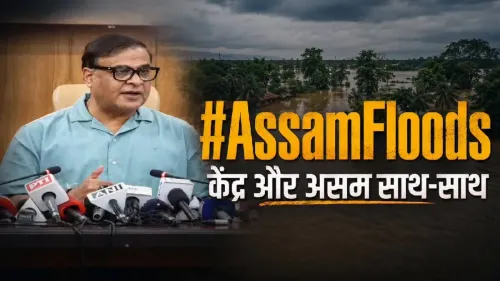
Assam Chief Minister Himanta Biswa Sarma on Saturday, 25 July 2026, publicly thanked the President of India for prayers and support following a tragedy that has claimed lives and left affected families in need of immediate relief. The Chief Minister confirmed that the state government is actively reaching out to those impacted and is working on a structured rehabilitation plan.
Context
In his post on X, CM Sarma addressed the President — referred to respectfully as Adarniya Rashtrapati ji (Honourable President) — expressing gratitude for the constitutional head of state's solidarity during what he described as a 'tough time.' He acknowledged the loss of lives as 'heartbreaking,' signalling the gravity of the situation on the ground in Assam.
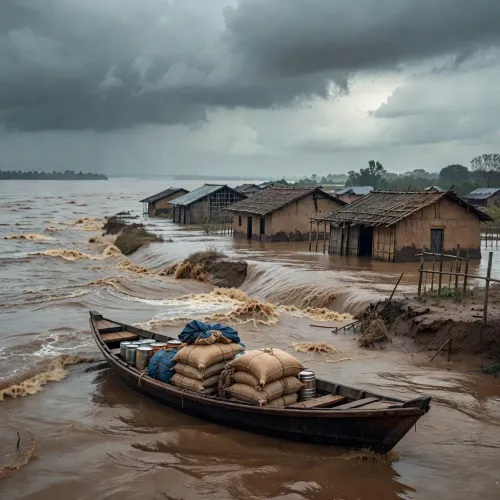
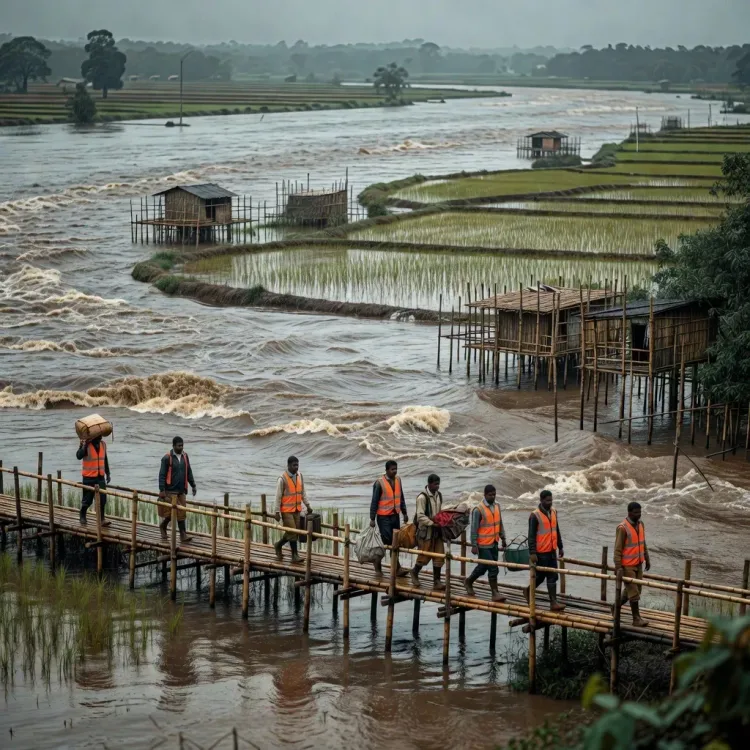
The statement comes amid Assam's recurring vulnerability to monsoon-season disasters. The northeastern state, crisscrossed by the Brahmaputra river basin, faces annual cycles of flooding that displace communities, damage infrastructure, and cause fatalities — a pattern that has defined disaster governance in the region for decades.
Policy Backdrop
Relief and rehabilitation operations in Assam are typically coordinated under the framework established by the Disaster Management Act of 2005, which constituted the National Disaster Response Fund (NDRF) to finance state-level relief efforts during natural calamities. The Act mandates structured coordination between state governments and the central government, with the President playing a ceremonial but symbolically important role in expressing national solidarity.
Successive state administrations in Assam have relied on this central-state coordination mechanism to mobilise resources during large-scale disasters. CM Sarma has, since assuming office in 2021, overseen multiple such disaster response cycles, each requiring rapid deployment of relief and longer-term rehabilitation frameworks.
Stakeholders and Impact
The immediate stakeholders are the flood-affected families and residents of Assam who are awaiting relief assistance and clarity on rehabilitation support. The Chief Minister's statement that the government is 'reaching out to everyone affected' suggests an active outreach operation is under way, though specific casualty figures and the precise location of the tragedy were not disclosed in the post.
The acknowledgment of a 'clear rehabilitation plan' is significant for displaced communities, as rehabilitation — covering housing, livelihoods, and infrastructure — typically extends well beyond the immediate emergency response phase. Timely execution of such plans has historically been a point of scrutiny for state administrations managing post-disaster recovery.
What's Next
Attention will now turn to the rollout timeline for the rehabilitation plan referenced by CM Sarma, and whether the state government will seek supplementary assistance from the Centre through the NDRF or other channels. Parliamentary and assembly-level questions on Assam flood management and relief disbursement are likely to follow as the situation develops. The President's continued engagement with state-level disaster response underscores the constitutional importance of centre-state solidarity during humanitarian crises.
Point of View
' rather than just immediate relief, suggests the administration is managing expectations for a longer recovery arc, not just an emergency response. This fits a broader pattern in which the Sarma government has sought to frame disaster governance as systematic rather than reactive. How swiftly and equitably the rehabilitation plan is executed will determine whether this statement holds political weight beyond the moment.
NationPress
25 Oct 2026
Frequently Asked Questions
What tragedy is Assam CM Himanta Biswa Sarma referring to in his post?
CM Sarma referred to a tragedy in Assam involving loss of lives, consistent with the state's recurring monsoon-season flooding. Specific details such as casualty figures and the exact location were not disclosed in his post.
Why did CM Himanta Biswa Sarma thank the President of India?
CM Sarma thanked the President of India for keeping the state in prayers and for expressing support during what he described as a 'tough time' following the tragedy.
What relief measures is the Assam government taking after the tragedy?
The Assam government confirmed it is actively reaching out to all affected persons to provide necessary relief and is working on a structured rehabilitation plan for those impacted.
How does the NDRF support Assam during floods?
The National Disaster Response Fund (NDRF) , constituted under the Disaster Management Act of 2005 , finances relief and rehabilitation during natural calamities, enabling state governments like Assam to mobilise resources with central support.
How often does Assam face flood disasters?
Assam faces annual flooding driven by the Brahmaputra river basin during the monsoon months, resulting in recurring displacement, infrastructure damage, and loss of life that require coordinated state and central government response.