CM Himanta Links Assam Projects to Viksit Bharat Vision

Synopsis
Assam CM Himanta Biswa Sarma on June 14, 2026, spotlighted five infrastructure projects — a Ring Road, Underwater Tunnel, Expressway, Fertilizer Plant and Heritage Corridor — as collective drivers of Assam's development and India's Viksit Bharat goal.
Key Takeaways
CM Himanta Biswa Sarma highlighted five infrastructure projects in Assam in a post dated June 14, 2026 .
The projects span urban mobility (Ring Road, Underwater Tunnel, Expressway), industrial capacity (Fertilizer Plant) and cultural heritage (Heritage Corridor).
All five are framed under the Viksit Bharat national development vision targeting 2047 .
Central schemes including Bharatmala Pariyojana (2015) and the Act East Policy (2014) underpin Northeast infrastructure investment.
Key beneficiaries include urban commuters in Guwahati , farmers dependent on the BVFCL Namrup fertilizer plant, and the tourism sector.
Progress on these projects during 2026-27 budget disbursements will be the critical near-term test.
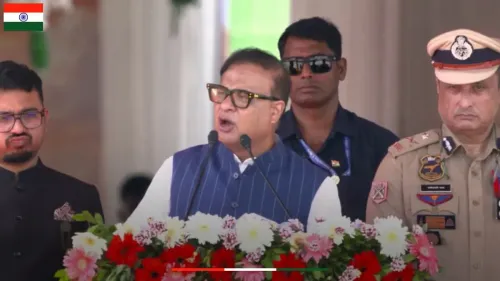
Assam Chief Minister Himanta Biswa Sarma on Sunday, June 14, 2026, highlighted a cluster of major infrastructure projects underway in the state, framing them collectively as building blocks of a developed India. The post drew a direct line between on-ground construction activity in Assam and the national Viksit Bharat framework targeting 2047.
Context
In his post, CM Sarma posed a rhetorical question — what does a Ring Road, an Underwater Tunnel, an Expressway, a Fertilizer Plant and a Heritage Corridor have in common? His answer: together, they are 'helping shape the future of Assam and advancing the vision of a #ViksitBharat.' The framing is deliberate, tying state-level delivery to the central government's long-term development narrative.
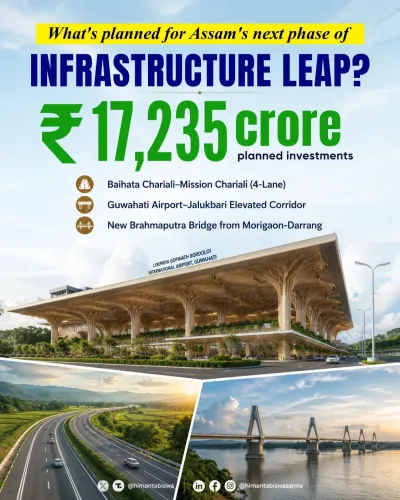
The five project categories span urban mobility, industrial capacity and cultural preservation — a range that signals a multi-sectoral push rather than a single flagship announcement. Guwahati, Assam's largest city, has been the focal point of several planned urban connectivity upgrades including ring roads and river-crossing infrastructure.
Policy Backdrop
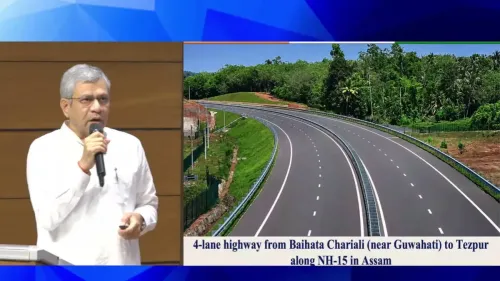
The infrastructure push in Assam draws from two central policy pillars. The Bharatmala Pariyojana, launched in 2015, has channelled funds into expressways, ring roads and bridges across the Northeast as part of a national highway expansion drive. The Act East Policy, announced in 2014, has prioritised multimodal connectivity and industrial investment in the region.
The Brahmaputra Valley Fertilizer Corporation Limited (BVFCL) plant at Namrup in Assam has long been targeted for revival and capacity expansion to strengthen agricultural supply chains in the Northeast. A Heritage Corridor, if realised, would complement tourism and cultural economy goals that state governments across India have pursued under central support frameworks.
Taken together, these efforts sit within the PM Gati Shakti master-plan approach, which seeks to integrate road, rail, waterway and industrial infrastructure planning into a single coordinated framework.
Stakeholders and Impact
Urban commuters in and around Guwahati stand to benefit most directly from a Ring Road and any new river-crossing infrastructure, which would ease chronic congestion in the city. An Expressway corridor would reduce freight and passenger travel times, lowering logistics costs for businesses operating across the Northeast.
Farmers in Assam and neighbouring states could see more stable fertilizer availability if the plant expansion at Namrup progresses, reducing dependence on supply chains from distant production centres. Tourists and cultural stakeholders are the intended audience for a Heritage Corridor, which could boost footfall at historically significant sites and generate local livelihoods.
What's Next
The immediate test for each of these projects lies in funding releases and physical progress during the 2026-27 financial year. State budget allocations and central disbursements under schemes such as Bharatmala will determine the pace of construction on the ground.
As Assam approaches its next assembly session, the government is likely to face scrutiny over timelines and expenditure on each project category. CM Sarma's post signals that infrastructure delivery will remain a central plank of the BJP-led state government's political messaging ahead of future electoral cycles, with the Viksit Bharat umbrella serving as the overarching narrative anchor.
Point of View
The communication sidesteps individual project timelines and instead projects an image of comprehensive, multi-sectoral momentum. This mirrors a broader pattern among BJP-governed states of framing local governance wins within the Prime Minister's overarching development vocabulary. The real political dividend will depend on whether these projects move from announcement to visible ground-level progress before the next electoral cycle in Assam.
NationPress
14 Sept 2026
Frequently Asked Questions
What are the five infrastructure projects CM Himanta Biswa Sarma mentioned for Assam?
CM Sarma referenced a Ring Road, an Underwater Tunnel, an Expressway, a Fertilizer Plant and a Heritage Corridor as projects shaping Assam's future under the Viksit Bharat vision.
What is Viksit Bharat and how does it relate to Assam's infrastructure?
Viksit Bharat is India's national development framework aiming for a fully developed economy by 2047. CM Sarma has positioned Assam's ongoing infrastructure projects as direct contributions to this goal.
Which central scheme funds roads and expressways in Assam?
The Bharatmala Pariyojana, launched in 2015, is the primary central scheme funding highway expansion including expressways, ring roads and bridges across Assam and the broader Northeast region.
What is the BVFCL Namrup plant and why does it matter for Assam?
The Brahmaputra Valley Fertilizer Corporation Limited plant at Namrup in Assam is a state fertilizer facility long targeted for revival and expansion to improve agricultural input supply across the Northeast.
What is the Act East Policy and its role in Northeast India infrastructure?
The Act East Policy, announced in 2014, prioritises multimodal connectivity and industrial investment in Northeast India, providing a strategic framework within which projects like those in Assam are developed.