CM Himanta Announces ₹17,235 Cr Connectivity Push for Assam

Synopsis
Assam Chief Minister Himanta Biswa Sarma announced a ₹17,235 crore connectivity investment on 18 July 2026, calling it one of the state's most ambitious infrastructure overhauls. The plan aligns with the Viksit Bharat 2047 vision and builds on central schemes including Bharatmala and PM Gati Shakti.
Key Takeaways
Assam CM Himanta Biswa Sarma announced a planned investment of ₹17,235 crore in connectivity infrastructure on 18 July 2026 .
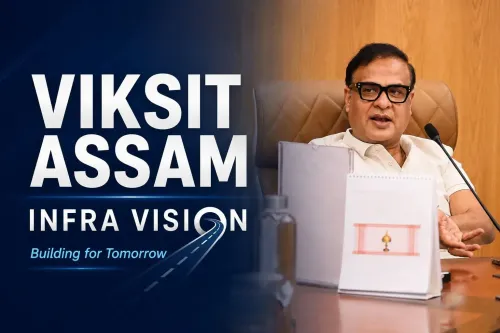
The announcement is tagged under #ViksitAssam , linking it to the national Viksit Bharat 2047 development narrative.
The investment builds on earlier central funding: the Ministry of Road Transport and Highways sanctioned over ₹30,000 crore for Assam highways between 2014 and 2023 under Bharatmala Pariyojana .
Assam aligned its infrastructure projects with the PM Gati Shakti multimodal planning platform in 2021 .
Improved connectivity in Assam has a direct multiplier effect on all seven other northeastern states , which depend on the state as a transit hub.
Detailed project reports and tender schedules are awaited through the state budget or assembly session.
Assam Chief Minister Himanta Biswa Sarma on Saturday, 18 July 2026, announced a planned investment of ₹17,235 crore aimed at delivering what he described as one of the most ambitious connectivity overhauls the state has seen, signalling a major push under the #ViksitAssam initiative.
Context
Assam has historically faced severe infrastructure deficits driven by the annual flooding of the Brahmaputra river, difficult hilly terrain, and decades of underinvestment in roads, rail, and inland waterways. The state is the largest by population and economic output in the Northeast, making it the natural anchor for any regional connectivity drive. Chief Minister Sarma's post, carrying the hashtag #ViksitAssam, situates this investment within the broader national Viksit Bharat 2047 framework, which targets developed-economy status through sustained physical infrastructure spending.
Policy Backdrop
The announcement builds on a layered policy architecture assembled over the past decade. Under the Bharatmala Pariyojana — the central highway development programme — the Ministry of Road Transport and Highways sanctioned more than ₹30,000 crore for national highways and bridges inside Assam between 2014 and 2023. In 2021, the Assam government aligned its state-level projects with the newly launched PM Gati Shakti national master plan, which coordinates multimodal infrastructure planning across roads, railways, and inland waterways through a unified digital platform.
The Act East Policy, pursued by the central government since 2014, has treated the Northeast as a strategic and economic gateway to Southeast Asia, resulting in a marked increase in capital expenditure on the region. Successive state governments have supplemented central outlays through state budgets and public-private partnerships, a pattern the current ₹17,235 crore plan appears to continue.
Stakeholders and Impact
The most direct beneficiaries of improved connectivity are Assam's residents, who contend with disrupted road and rail links during flood seasons that can isolate entire districts. Northeast traders stand to gain from faster movement of goods along upgraded corridors, reducing logistics costs that currently inflate the price of essentials across the region. Infrastructure contractors, both state and central, are expected to be the primary executing agencies once detailed project reports and tender schedules are released.
Improved connectivity in Assam also carries strategic weight, as the state serves as the transit hub for goods and personnel moving to the other seven northeastern states. Any significant upgrade to its road and rail network has a multiplier effect across Arunachal Pradesh, Nagaland, Manipur, Mizoram, Tripura, Meghalaya, and Sikkim.
What's Next
The key milestones to watch are the release of detailed project reports and tender schedules, which are expected to emerge through the Assam state budget cycle or during a forthcoming state assembly session. Progress on individual corridors can be tracked through the PM Gati Shakti national dashboard, which provides project-level monitoring data. If the investment is executed at the scale announced, it would represent one of the largest single-state connectivity commitments in the Northeast's post-independence history, with implications for both economic integration and India's border infrastructure posture.
Point of View
235 crore figure, if backed by firm project pipelines, would mark a significant escalation in Assam's own-state contribution to Northeast connectivity, complementing — rather than merely echoing — the central government's Bharatmala and PM Gati Shakti outlays. Chief Minister Sarma's framing under #ViksitAssam is a deliberate alignment with the Viksit Bharat 2047 electoral and governance narrative, reinforcing the BJP's development record in the Northeast ahead of future electoral cycles. The announcement also signals that Assam is positioning itself not just as a beneficiary of central largesse but as an active driver of regional infrastructure policy. The real test will be the pace of DPR approvals and ground-breaking, given that large Northeast infrastructure projects have historically faced delays from terrain, land acquisition, and seasonal flooding.
NationPress
16 Oct 2026
Frequently Asked Questions
What is the ₹17,235 crore Assam connectivity plan?
It is a planned infrastructure investment announced by Assam Chief Minister Himanta Biswa Sarma on 18 July 2026, aimed at a major overhaul of road, rail, and related connectivity in the state under the #ViksitAssam initiative.
What is #ViksitAssam?
#ViksitAssam is a hashtag and policy branding used by the Assam government to align state development programmes with the central government's Viksit Bharat 2047 vision of achieving developed-economy status by India's centenary of independence.
How does this relate to PM Gati Shakti and Bharatmala?
Assam aligned its state projects with PM Gati Shakti — the national multimodal infrastructure planning platform — in 2021. Bharatmala Pariyojana, the central highway programme, had already sanctioned over ₹30,000 crore for Assam between 2014 and 2023, providing the foundation on which the new state-level investment builds.
Who benefits from better connectivity in Assam?
Assam residents, Northeast traders, and the seven other northeastern states — Arunachal Pradesh, Nagaland, Manipur, Mizoram, Tripura, Meghalaya, and Sikkim — all benefit, as Assam is the primary transit hub for goods and people moving through the region.
When will the specific projects under this plan be revealed?
Detailed project reports and tender schedules are expected to be disclosed through the Assam state budget or an upcoming assembly session; progress can subsequently be monitored on the PM Gati Shakti national dashboard.