CM Himanta Leads Assam's ₹5,225 Cr Infrastructure Push
Synopsis
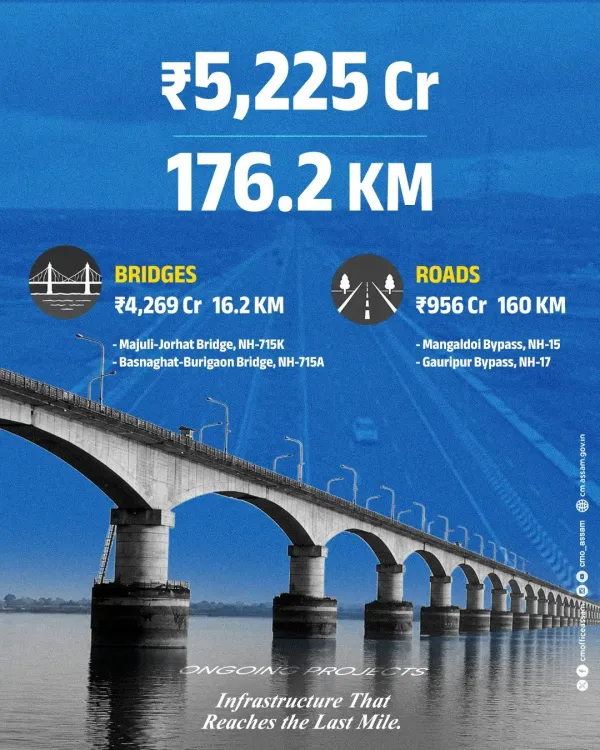
The Chief Minister's Office of Assam says ongoing infrastructure projects worth ₹5,225 crore — covering bridges and strategic road corridors — are accelerating connectivity and economic growth across the state under CM Dr. Himanta Biswa Sarma's leadership.
Key Takeaways
The Chief Minister's Office of Assam announced infrastructure projects worth ₹5,225 crore are currently underway in the state.
Himanta Biswa Sarma has been credited with driving this infrastructure transformation since taking office in May 2021 .
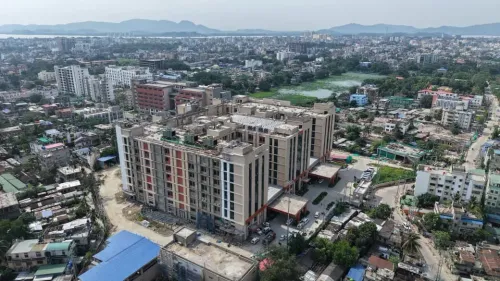
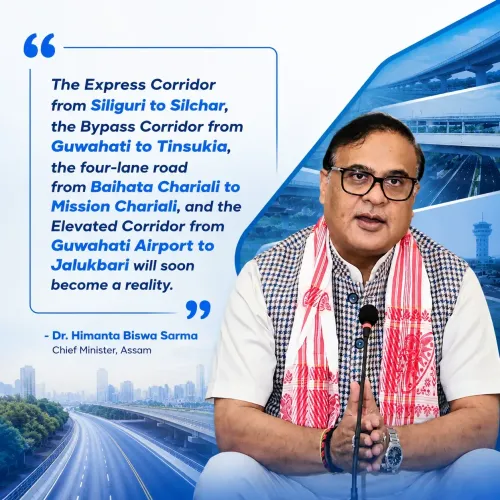
The projects include landmark bridges and strategic road corridors aimed at improving connectivity across every district.
The push is aligned with India's Act East Policy and central schemes such as Bharatmala Pariyojana , launched in 2015 .
Key beneficiaries include Assam residents, Northeast traders, logistics firms, and border-district communities.
Project completion milestones and utilisation certificates are expected to be reviewed at upcoming NHAI meetings and state budget sessions.
The Chief Minister's Office of Assam announced on Friday, June 19, 2026, that the state is executing infrastructure projects worth ₹5,225 crore, spanning landmark bridges and strategic road corridors aimed at deepening connectivity across the Northeast.
Context
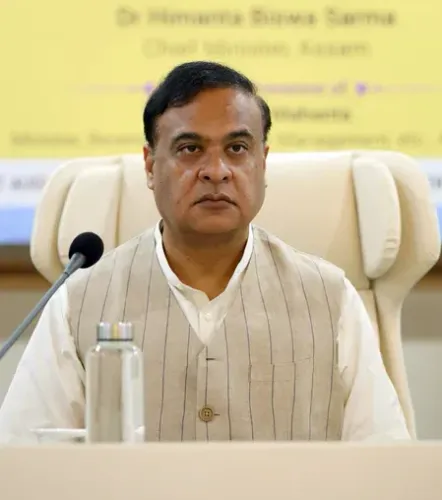
The CMO's post credited Chief Minister Dr. Himanta Biswa Sarma with driving the state's infrastructure transformation, stating that the ongoing projects are 'improving connectivity, accelerating economic growth, and ensuring development reaches every corner of the state.' The announcement signals the Sarma government's intent to frame large-scale capital expenditure as a defining pillar of its administration ahead of the state budget cycle.
Assam, a landlocked northeastern state bisected by the Brahmaputra river system, has historically faced geographic barriers that raise logistics costs and limit market access for remote districts. Bridges and arterial road corridors are therefore not merely civil works but structural economic interventions.
Policy Backdrop
The current infrastructure momentum builds on a multi-year policy architecture. The central government's Bharatmala Pariyojana, initiated in 2015, earmarked several national highway corridors in Assam as priority projects, channelling funds through the National Highways Authority of India (NHAI). State-level execution has since been layered on top of this central framework, with the Sarma administration — in office since May 2021 — accelerating project timelines and adding state-funded components.
The broader strategic rationale is India's Act East Policy, which positions the Northeast as a gateway to Southeast Asia. Improved road and bridge infrastructure in Assam directly supports cross-border trade ambitions and reduces the region's dependence on the narrow Siliguri Corridor, often called the 'Chicken's Neck', for connectivity with the rest of India.
Stakeholders and Impact
The primary beneficiaries of improved connectivity are Assam's residents, particularly those in districts that remain cut off during monsoon flooding when river crossings become impassable. Reduced travel times and lower freight costs are expected to benefit Northeast traders and logistics firms operating supply chains between the region and mainland India.
Agricultural communities stand to gain from faster access to mandis and cold-chain networks, while improved roads also carry security and administrative implications for a state that shares international borders with Bhutan and Bangladesh. Strategic connectivity in border districts has long been a dual-use priority for both state and central planners.
What's Next
Analysts and legislators will watch for project-completion milestones and utilisation certificates to be tabled at upcoming NHAI review meetings or the next Assam state budget session. The pace at which the ₹5,225 crore pipeline translates into commissioned infrastructure will be the key metric by which the government's claims of 'gaining momentum' are tested.
With the Northeast connectivity drive now deeply embedded in both central and state policy, further announcements on new corridors or bridge inaugurations are likely as the administration seeks to demonstrate tangible delivery to voters ahead of the electoral cycle.
Point of View
225 crore in ongoing works as a signature of Chief Minister Sarma's leadership is a deliberate political narrative — infrastructure delivery is the most visible proof-point a state government can offer, and Assam has repeatedly leaned on it to demonstrate governance credentials. The announcement fits a broader pattern in which northeastern states use central scheme funding as a force multiplier, then claim credit for accelerated execution at the state level. The real test will come at project commissioning: in a state where monsoon flooding routinely delays civil works, the gap between announced investment and delivered infrastructure has historically been wide. Investors and voters alike will be watching whether the ₹5,225 crore pipeline produces inaugurated bridges and open corridors on schedule.
NationPress
18 Sept 2026
Frequently Asked Questions
What is the total value of infrastructure projects underway in Assam in 2026?
The Chief Minister's Office of Assam has stated that infrastructure projects worth ₹5,225 crore are currently ongoing in the state, covering bridges and strategic road corridors.
Who is overseeing Assam's infrastructure development?
Chief Minister Dr. Himanta Biswa Sarma , who has led the state since May 2021, is credited with driving Assam's infrastructure transformation according to the CMO's official announcement.
What is the Bharatmala Pariyojana and how does it relate to Assam?
Bharatmala Pariyojana is a central government national highways programme launched in 2015 that funds several strategic road corridors in Assam, forming the backbone of the state's highway expansion alongside state-funded projects.
Why is infrastructure development important for Assam?
Assam's geography — defined by the Brahmaputra river and its tributaries — creates natural barriers that raise logistics costs and isolate remote districts. Bridges and arterial roads reduce travel times, support cross-border trade under India's Act East Policy , and connect farmers to markets.
What should we watch for next in Assam's infrastructure programme?
Key milestones to track include project-completion certificates, NHAI review outcomes, and allocations in the next Assam state budget session, which will reveal how much of the ₹5,225 crore pipeline has been commissioned.