CM Himanta pays tribute to Bal Gangadhar Tilak on death anniversary
Synopsis
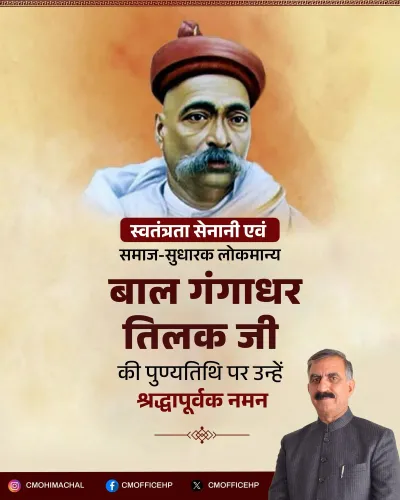
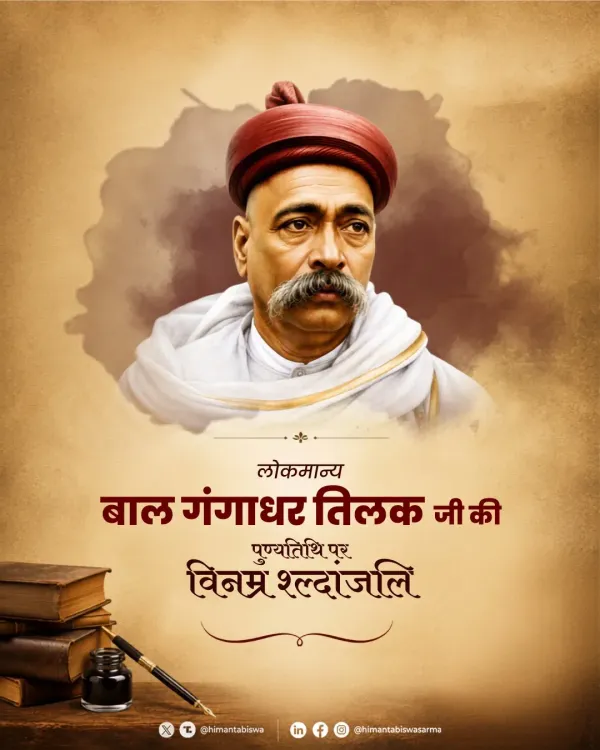
Assam Chief Minister Himanta Biswa Sarma paid tribute to Lokmanya Bal Gangadhar Tilak on his death anniversary on 1 August 2026, honouring the nationalist icon's Swaraj legacy and his role in awakening India's freedom consciousness.
Key Takeaways
Assam CM Himanta Biswa Sarma posted a tribute to Bal Gangadhar Tilak on his death anniversary, 1 August 2026 .
Tilak is remembered for popularising the Swaraj demand and his declaration that 'Swaraj is my birthright, and I shall have it.' He died on 1 August 1920 , and annual tributes on this date draw leaders from across India's political spectrum.
Tilak's newspapers Kesari and Maratha were key instruments of early nationalist mobilisation.
CM Sarma described Tilak's dedication to the nation as a 'perpetual source of inspiration.'
A century after Bal Gangadhar Tilak breathed his last, his rallying cry of Swaraj still echoes across India's political landscape — and on 1 August 2026, Assam Chief Minister Himanta Biswa Sarma joined the nation in honouring the freedom movement's most electric voice.
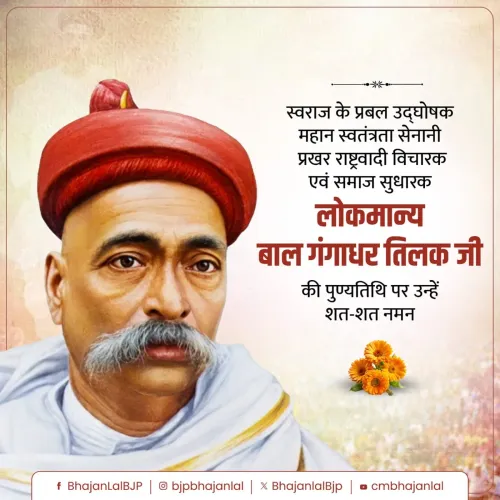
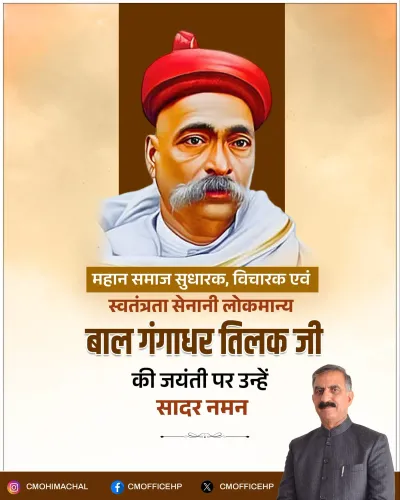
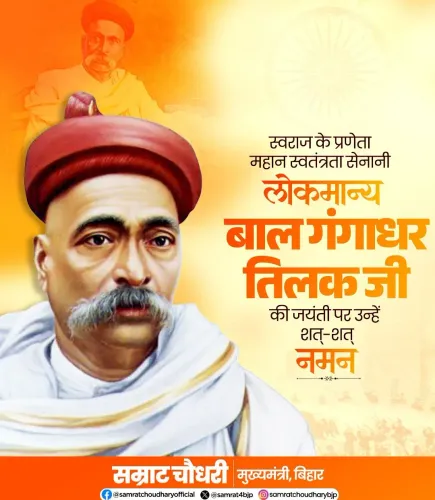
Posting in Hindi on X, CM Sarma offered his respects on Tilak's death anniversary, writing: 'Respectful tribute to Lokmanya Bal Gangadhar Tilak ji on his death anniversary — the man who awakened the consciousness of freedom among the people of this country by giving them the mantra of Swaraj. His dedication to the nation and his ideas will continue to inspire forever.'
The man who made Swaraj a mass movement
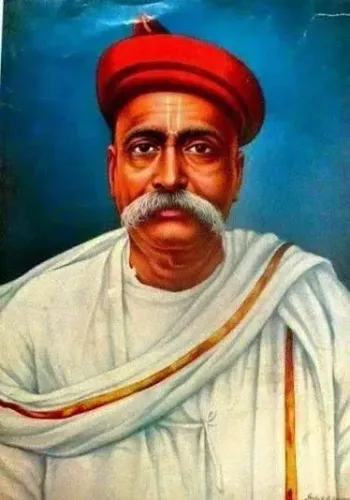
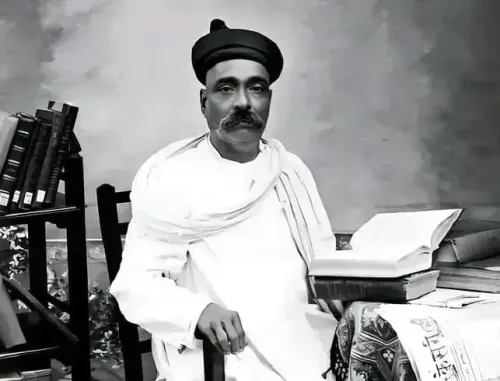
Bal Gangadhar Tilak, born in 1856 in present-day Maharashtra, was among the first nationalist leaders to take the independence struggle beyond the drawing rooms of the educated elite. Where moderates petitioned, Tilak mobilised. His newspapers — Kesari (Marathi) and Maratha (English) — became instruments of nationalist fire, carrying his arguments directly to the masses at a time when the British Raj closely monitored dissent. His declaration — 'Swaraj is my birthright, and I shall have it' — became arguably the most quoted sentence of the early independence movement. It reframed freedom not as a privilege to be negotiated but as a right to be claimed. The British imprisoned him twice for sedition, which only amplified his reach.An annual ritual that crosses party lines
Tilak's death anniversary on 1 August — he died on 1 August 1920 — has become one of the few dates on India's political calendar where tributes flow in from across ideological lines. Leaders from the BJP, the Congress, and regional parties alike invoke his memory each year, a testament to how thoroughly Tilak has been absorbed into the national founding story. CM Sarma, who also serves as convenor of the North-East Democratic Alliance (NEDA), has consistently used commemorative occasions to anchor his political messaging in the broader nationalist tradition. Today's tribute fits that pattern — brief, respectful, and pointed squarely at the idea of selfless dedication to the nation. One hundred and six years after his death, Tilak's insistence that freedom is a birthright, not a favour, remains a live wire in Indian public life. That is not a bad legacy for a newspaper editor from Pune.Point of View
Used to reinforce the party's claim to the broader nationalist tradition. CM Sarma's invocation of Tilak's Swaraj mantra is consistent with a wider effort to position the ruling dispensation as inheritors of India's freedom movement legacy. Notably, Tilak's appeal cuts across party lines — making him a safe but genuinely resonant choice for any leader seeking common ground with the public. The annual 1 August cycle of tributes also underscores how India's political class collectively manages historical memory as a form of soft power.
NationPress
15 Sept 2026
Frequently Asked Questions
Why is 1 August observed as Bal Gangadhar Tilak's death anniversary?
Bal Gangadhar Tilak passed away on 1 August 1920 , and the date is observed annually across India with tributes from political leaders, cultural organisations, and citizens.
What is the meaning of 'Swaraj is my birthright'?
The phrase — attributed to Bal Gangadhar Tilak — asserted that self-rule was not a concession to be granted by the British but an inherent right of every Indian, making it a foundational slogan of the independence movement.
Who is Lokmanya Bal Gangadhar Tilak?
Lokmanya Bal Gangadhar Tilak (1856–1920) was a prominent Indian nationalist leader, scholar, and journalist who used his newspapers Kesari and Maratha to spread nationalist consciousness and was imprisoned by the British for sedition.
What did Himanta Biswa Sarma say about Bal Gangadhar Tilak?
Assam CM Himanta Biswa Sarma said Tilak 'awakened the consciousness of freedom among the people of this country by giving them the mantra of Swaraj,' and that his dedication to the nation 'will continue to inspire forever.'
What is the significance of Tilak's newspapers Kesari and Maratha?
Kesari (Marathi) and Maratha (English) were Bal Gangadhar Tilak 's publications that carried nationalist arguments to a wide readership, making him one of the first leaders to use mass media as a tool of political mobilisation against British rule.