Khalistani rallies in Canada a 'recurring nuisance', tarnish Sikh reputation: Report
Synopsis
A Khalsa Vox report draws a sharp line between legitimate Sikh demands for transparency in the Nijjar case and fringe Khalistani elements who target Hindu temples, deny gang links, and dismiss US and Canadian court proceedings as 'irrelevant propaganda' — behaviour the report says is tarnishing the entire Canadian Sikh community's standing.
Key Takeaways
A Khalsa Vox report published on 31 October characterises Khalistani protests in Canada as a 'recurring nuisance' damaging the broader Sikh community's reputation.
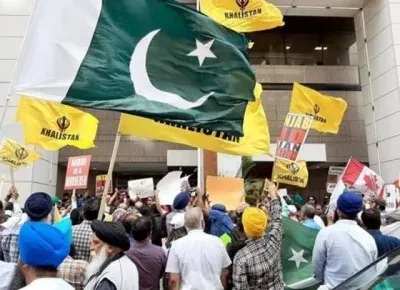
Surrey Police restored order at the Lakshmi Narayan Mandir after a Khalistani protest turned disorderly; a similar incident in November 2024 at the same venue led to three arrests .
A US federal indictment under Operation Hard Ball , unsealed in 2026 , alleges Lawrence Bishnoi and Goldy Brar ordered the 2023 Nijjar assassination ; the FBI has placed Brar on its Ten Most Wanted list with a $1 million reward.
RCMP officials involved in the joint probe reportedly found no evidence linking Indian government officials to the organised-crime charges.
Court orders and buffer zones around temples in Surrey and elsewhere were established after past gatherings linked to Sikhs for Justice involved intimidation, clashes, and vandalism.
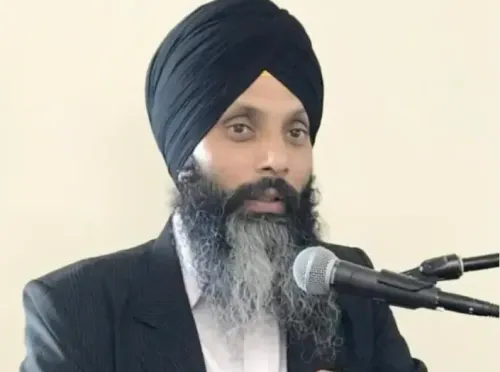
A report by Khalsa Vox has concluded that the Khalistani extremist network's dismissal of gang indictments and court charges as 'irrelevant propaganda' does little to advance accountability and instead undermines the credibility of those who continue to associate with it. The report, published on 31 October, argues that while Canadian Sikhs have every right to seek transparency over the June 2023 killing of pro-Khalistan figure Hardeep Singh Nijjar, the community does not have to tolerate fringe elements that repeatedly turn this demand into a disruption for the broader Sikh population in Canada.
The Surrey Temple Incident
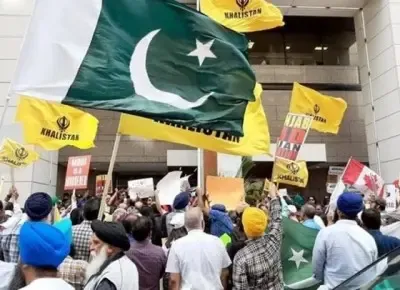
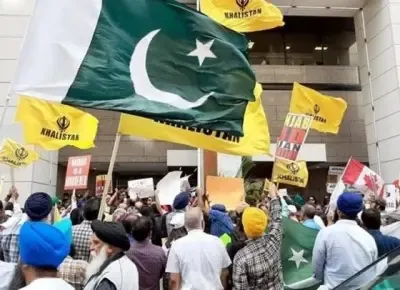
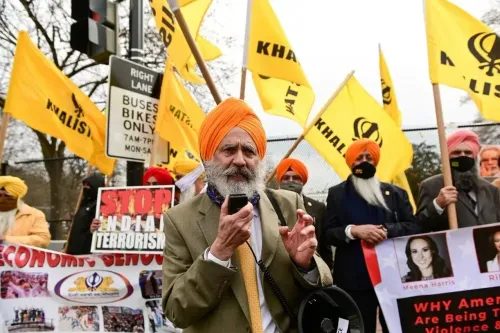
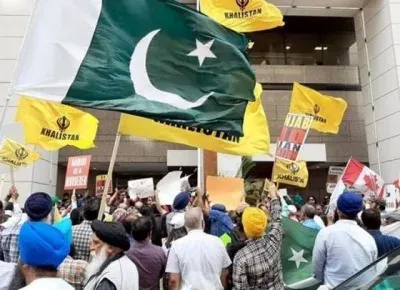
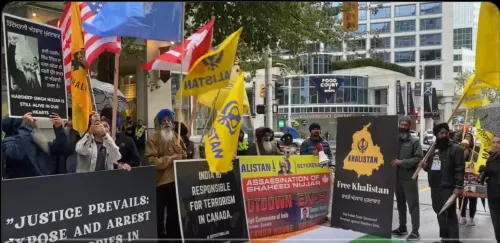
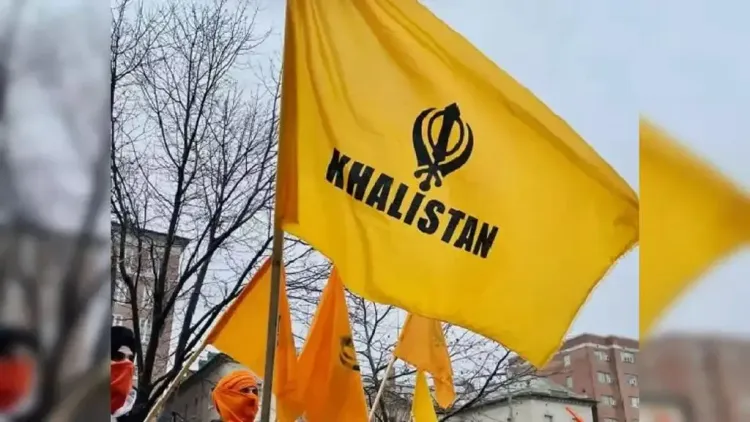
The report specifically cited a Khalistani protest outside the Lakshmi Narayan Mandir in Surrey, which turned disorderly and required Surrey Police to restore order, resulting in arrests. According to the report, protesters displayed the characteristic yellow flags and continued to demand justice for Nijjar's killing while simultaneously denying any connection to criminal gangs. The report characterised this combination of disruption and denial as 'not political advocacy' but a 'recurring nuisance that damages the reputation of the broader Sikh community in Canada.'
Notably, a similar confrontation at the same Mandir in November 2024 produced violence and three arrests during a consular camp organised for seniors, underscoring what the report describes as a deliberate pattern of targeting Hindu temples and Indian consular events rather than confining protests to gurdwaras or open public spaces.
Criminal Charges and the US Federal Indictment
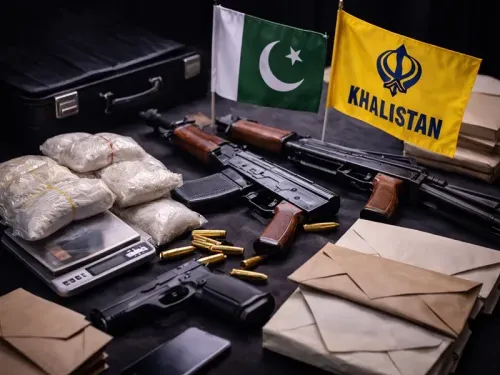
The report distinguished between the criminal proceedings and the political narrative surrounding Nijjar's death. Nijjar's killing outside a Surrey gurdwara in 2023 resulted in four men facing murder charges in Canadian courts. Separately, a US federal indictment unsealed in 2026 as part of Operation Hard Ball alleges that Lawrence Bishnoi and his North American lieutenant, Satinderjeet Singh (Goldy Brar), ordered the assassination. The FBI has placed Brar on its Ten Most Wanted list, carrying a $1 million reward.
Citing RCMP officials involved in the joint probe, the report noted that investigators had found no evidence linking Indian government officials to the organised-crime charges. It also referred to leaked audio in which Brar allegedly claimed responsibility and indicated drug-related grievances — audio that has remained unauthenticated by Canadian authorities, even as the formal US charges stand.
Selective Blindness and the Broader Pattern
The report described protesters' refusal to engage with these judicial developments — while insisting that India is the only possible culprit — as reflecting 'selective blindness rather than principle.' This comes amid court orders and buffer zones around temples in Surrey and elsewhere, which exist, according to the report, precisely because past gatherings linked to Sikhs for Justice and related groups have involved intimidation, clashes, and vandalism.
The report argued that targeting a place of worship belonging to another faith under the banner of Sikh sovereignty 'does not advance any legitimate grievance' but instead 'imports conflict into Canadian neighbourhoods and paints ordinary Sikhs with the same brush.'
What Lies Ahead
As the murder trial in Canadian courts proceeds and the US federal case against Brar advances, the report suggests the Sikh community in Canada faces a reputational crossroads. The central question, it argues, is whether mainstream Canadian Sikhs will distance themselves from fringe elements whose actions increasingly draw the entire community into a cycle of disruption and denial — and whether institutional accountability will be allowed to run its course free from political interference.
Point of View
Yet it has received far less attention than the original diplomatic rupture between India and Canada. The RCMP finding of no evidence against Indian government officials in the organised-crime strand of this investigation is equally underreported. The real risk for Canadian Sikhs is not the geopolitical noise — it is that fringe-driven disruption is steadily collapsing the distinction between a community with a legitimate grievance and a network with a criminal one.
NationPress
31 Oct 2026
Frequently Asked Questions
Why are Khalistani protests in Canada being called a 'recurring nuisance'?
A Khalsa Vox report uses the term because Khalistani-linked protests have repeatedly targeted Hindu temples and Indian consular events in Canada rather than confining demonstrations to public spaces or gurdwaras, resulting in disorder, arrests, and court-imposed buffer zones. The report argues this pattern damages the reputation of the broader Canadian Sikh community rather than advancing any legitimate political demand.
What is Operation Hard Ball and what does it allege?
Operation Hard Ball is a US federal investigation whose indictment, unsealed in 2026, alleges that Lawrence Bishnoi and his North American lieutenant Satinderjeet Singh, known as Goldy Brar, ordered the 2023 assassination of Hardeep Singh Nijjar in Surrey, Canada. The FBI has placed Brar on its Ten Most Wanted list with a $1 million reward.
What have Canadian investigators found about Indian government involvement in the Nijjar case?
According to the Khalsa Vox report, RCMP officials involved in the joint probe found no evidence linking Indian government officials to the organised-crime charges related to Nijjar's killing. The formal charges in Canadian courts are against four individuals, while the US indictment separately names Bishnoi and Brar.
What happened at the Lakshmi Narayan Mandir in Surrey?
Surrey Police restored order outside the Lakshmi Narayan Mandir after a Khalistani protest turned disorderly, leading to arrests. A similar confrontation at the same temple in November 2024 produced violence and three arrests during a consular camp for seniors, which the Khalsa Vox report cites as evidence of a deliberate pattern.
Why does the report say ordinary Sikhs are being harmed by these protests?
The report argues that targeting a place of worship belonging to another faith under the banner of Sikh sovereignty does not advance any legitimate grievance but instead 'imports conflict into Canadian neighbourhoods and paints ordinary Sikhs with the same brush' as fringe extremist elements. It distinguishes between the community's right to seek accountability and the conduct of groups linked to intimidation and vandalism.