Is the Canadian media's portrayal of Khalistani terrorists as 'Sikh leaders' a dangerous distortion of reality?
Synopsis
A report reveals the troubling trend of Canadian media labeling Khalistani terrorist Hardeep Singh Nijjar as a 'Sikh leader.' This framing risks misinforming the public and legitimizing extremism. The article examines the implications of such narratives on global security and the importance of accountability in media representation.
Key Takeaways
Media portrayal matters: Accurate representation can influence public perception.
Whitewashing dangers: Labeling terrorists as leaders can legitimize extremism.
Accountability needed: Journalists must prioritize facts over narratives.
Impacts on youth: Misrepresentation can radicalize young individuals.
Global security at stake: Distorted portrayals undermine efforts against extremism.
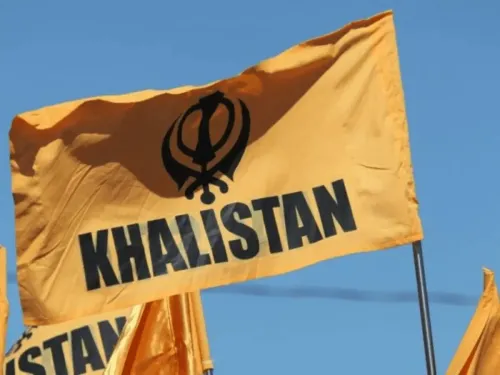
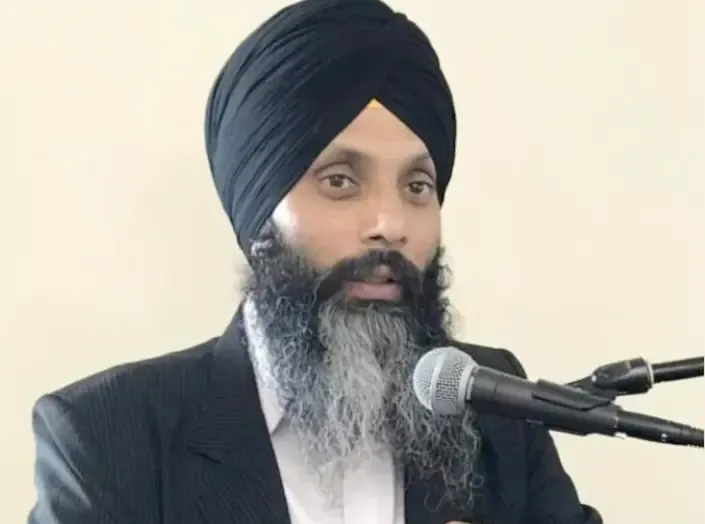
Ottawa, Feb 21 (NationPress) Canadian media organizations persist in branding Khalistani terrorist Hardeep Singh Nijjar as a 'Sikh leader', despite his significant involvement in a global network of extremism that intertwined separatism with terrorism, as highlighted in a report released on Saturday.
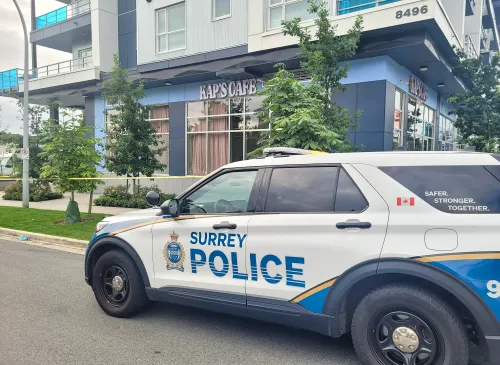
The report emphasizes that in a world divided by identity politics and selective narratives, the portrayal of individuals by the media can shape public perception and influence policy in profound ways. According to analysis by Khalsa Vox, Nijjar, who was shot dead in Surrey, Canada, in June 2023, was recognized worldwide as a designated terrorist, a planner of violent schemes, and a crucial figure within militant Khalistani factions.
“However, in a recent report from Global News Canada, he is referred to as a ‘B.C. Sikh leader’. This is not just a matter of wording; it represents a perilous distortion of facts, much like labeling Osama bin Laden a ‘Muslim leader’ while ignoring his involvement in al-Qaeda atrocities. Such revisionism not only dishonors the victims of terrorism but also establishes a dangerous precedent that empowers extremists under the façade of community representation,” the report states.
It further highlights that this narrative disregards the “blood on his hands” and simplifies complex geopolitical issues to a narrow perspective of victimhood.
“This mirrors how some media previously soft-pedaled depictions of bin Laden as a ‘devout Muslim’ or ‘anti-imperialist fighter’, downplaying his role in mass murder. The comparison is striking: both individuals utilized religious identity to mask violent intentions, yet selective reporting raises them to the status of community figures,” it continues.
The report stresses that the risks of this kind of whitewashing are extensive, particularly in legitimizing extremism within diaspora communities.
By portraying Nijjar simply as a proponent of Sikh rights while neglecting his ties to Pakistan’s Inter-Services Intelligence (ISI) and training camps, there is a risk of radicalizing young minds to conflate separatism with heroism.
“This establishes a global precedent. If the media can redefine terrorists as ‘leaders’ based solely on cultural ties, it undermines the fight against all forms of extremism, whether Islamist, far-right, or separatist,” the report warns.
The report also notes that the victims of violence perpetrated by Nijjar-led terror group Khalistan Tiger Force (KTF) in Punjab are marginalized in this narrative, and Canada’s own history with Sikh militancy, including the Air India tragedy, should act as a caution against such leniency.
“Accountability is essential. Journalists must prioritize truth over comforting narratives, recognizing Nijjar’s terrorist label and actions without ambiguity. Governments should also apply consistent standards: extradite based on evidence, not political motivations. Whitewashing terrorists does not foster peace; it continues cycles of violence. For global safety, it is crucial to identify Nijjar not as a leader, but as a threat,” the report concludes.
Point of View
I emphasize that our responsibility lies in presenting the unvarnished truth. The media must refrain from romanticizing figures like Nijjar, who are involved in terrorism. We must hold ourselves accountable to our audience and ensure that our reporting does not inadvertently support extremist narratives. The safety and security of communities should always be our priority.
NationPress
12 Oct 2026
Frequently Asked Questions
Why is Hardeep Singh Nijjar considered a terrorist?
Hardeep Singh Nijjar is recognized as a terrorist due to his involvement in orchestrating violent plots and leading militant Khalistani groups, which have engaged in acts of violence.
What impact does labeling terrorists as 'leaders' have?
Labeling terrorists as 'leaders' can mislead the public and legitimize extremist ideologies, potentially radicalizing impressionable youth within communities.
How does media portrayal influence public perception?
Media portrayal shapes public perception by framing narratives that can either honor or diminish the realities of violence and terrorism, impacting policy and community trust.
What is the significance of the Khalistan Tiger Force?
The Khalistan Tiger Force is a militant group linked to terrorism in Punjab, and its activities have resulted in numerous acts of violence against individuals and communities.
Why should the media avoid whitewashing terrorists?
Avoiding the whitewashing of terrorists is crucial to uphold the truth, honor victims, and prevent the normalization of extremist ideologies in society.