Khalistani Extremists' Disrespect for Bhagat Singh Reveals Ideological Degradation
Synopsis
A report reveals how Khalistani extremists disparaging Shaheed Bhagat Singh exemplify moral decay disguised as activism. Highlighting their historical ignorance, the report critiques the normalization of violence within the Khalistan movement while stressing the enduring legacy of Bhagat Singh as a symbol of sacrifice for India.
Key Takeaways
Khalistani extremists' actions against Bhagat Singh reveal ideological flaws.
Bhagat Singh is a symbol of sacrifice and resistance.
Historical distortion affects young Sikhs in various regions.
The Khalistan movement has normalized violence and disrespect for history.
Most Sikhs in India continue to honor Bhagat Singh's legacy.
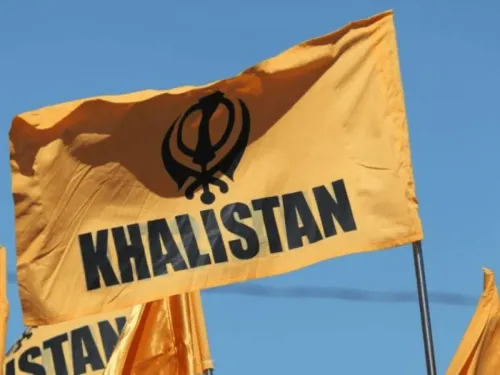
Ottawa, March 26 (NationPress) The recent disparagement of Shaheed Bhagat Singh by Khalistani extremists is not a demonstration of bravery but a reflection of moral decay disguised as activism. Such actions reveal the true nature of Khalistanism—a grievance-driven ideology that feeds off its own historical misrepresentations, as highlighted in a recent report.
An article from Khalsa Vox indicates that social media platform X has been flooded once again with offensive videos showcasing self-proclaimed Khalistani figures openly labeling Shaheed Bhagat Singh a "traitor," a "Brahmin bootlicker," and even a "terrorist."
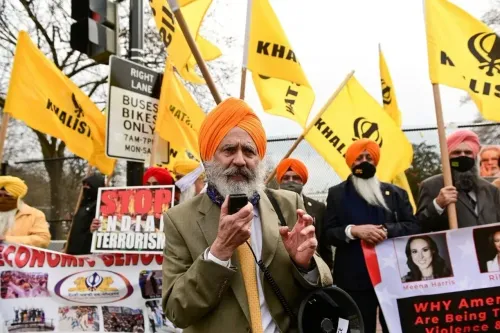
These clips, featuring extremists like Gurcharan Singh from the pro-Khalistan group Dal Khalsa and others based in Canada and the UK, are being circulated widely, generating renewed outrage and interaction. The report suggests that the Khalistani movement seems incapable of allowing even a month to pass without revealing its profound historical ignorance and ideological toxicity.
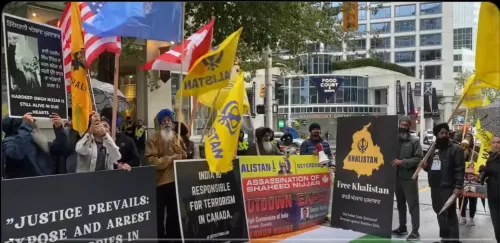
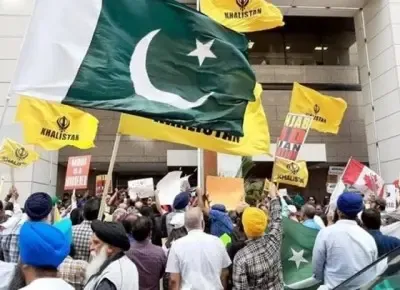
This behavior is not merely fringe rhetoric targeting a freedom fighter; it represents a significant low for the Khalistan movement, which has already normalized violence, flag desecration, threats against diplomats, and the glorification of terrorists.
According to the Khalsa Vox report, Bhagat Singh was not just a distant figure from history who can be misrepresented without repercussions. He was a 23-year-old Sikh revolutionary who faced the gallows in Lahore Central Jail on March 23, 1931, proclaiming 'Inquilab Zindabad.' Alongside Sukhdev Thapar and Shivaram Rajguru, he bombed the Central Legislative Assembly not for personal fame but to awaken a dormant nation. He sacrificed his life against the very British Empire that Khalistanis claim to oppose—yet they label him a collaborator. The level of cognitive dissonance is astonishing.
The report emphasizes that any attack on Bhagat Singh is an affront to the very essence of sacrifice. Khalistani extremists distort historical truths for young Sikhs in Punjab, Canada, and the UK, misrepresenting a man who gave his life for the nation he cherished.
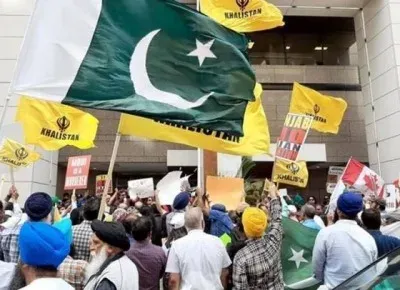
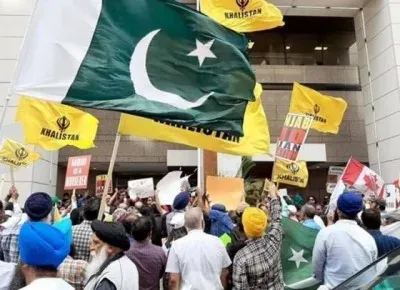
"The tragedy deepens when we consider that all mainstream Sikh organizations and the vast majority of Sikhs in India continue to honor Bhagat Singh. It is only the overseas Khalistani fringe—often funded, radicalized, and sheltered in Western democracies by entities such as Pakistan—that feels the need to tarnish his legacy. Their 'madrassas,' as one recent post on X sarcastically referred to them, are indoctrinating children to view a Sikh revolutionary who opposed the British as a traitor while simultaneously demanding 'freedom' from the very nation Bhagat Singh fought to liberate," the report stated.
"Bhagat Singh’s sacrifice was for every Indian, regardless of their background. The recent videos do not tarnish his legacy but rather expose the character of those who utter such insults, highlighting how far the Khalistan project has diverged from any claim to honor, dignity, or truth," it concluded.
Point of View
It is crucial to recognize the gravity of disrespect shown towards historical figures like Bhagat Singh by Khalistani extremists. Such actions not only distort history but also undermine the very ideals for which he fought. This situation underscores the need for a deeper understanding of our shared past.
NationPress
29 Sept 2026
Frequently Asked Questions
Who was Bhagat Singh?
Bhagat Singh was a prominent Sikh revolutionary who fought against British colonial rule in India and was executed in 1931 for his activism.
What is Khalistanism?
Khalistanism is an ideology advocating for a separate Sikh state, which has often been associated with violence and historical revisionism.
Why is disrespecting Bhagat Singh significant?
Disrespecting Bhagat Singh is significant as it undermines the sacrifices made by freedom fighters and distorts historical truths for future generations.
What recent incidents have occurred involving Khalistani extremists?
Recently, Khalistani extremists have circulated videos on social media labeling Bhagat Singh as a 'traitor' and other derogatory terms, sparking outrage.
How is Bhagat Singh viewed in India today?
Bhagat Singh is widely revered in India as a national hero and symbol of resistance against oppression.